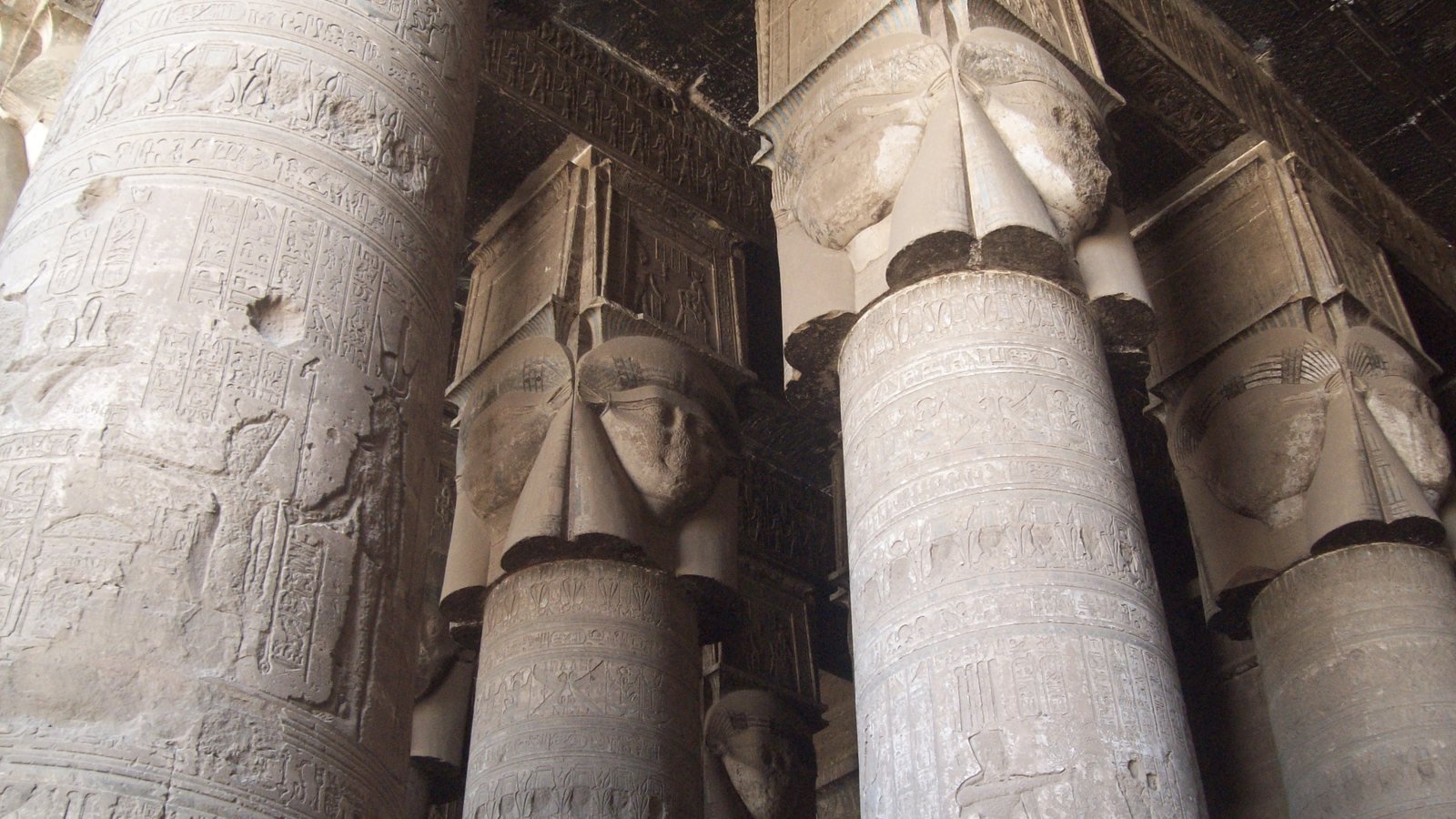
Ask most travelers to name an Egyptian temple and you'll hear Karnak, Luxor, maybe Abu Simbel if they've done their reading. Almost nobody says Dendera or Abydos, and that is precisely what makes them worth the trip. Both sit within range of a single long day out of Luxor, and both preserve something the famous sites largely lost: color, ceiling, and carving depth that survived the millennia instead of weathering away or ending up in a museum case.
The Temple of Hathor at Dendera and the Temple of Seti I at Abydos are not lesser versions of Karnak. They are, in several respects, better — more intact, less restored into ambiguity, and quiet enough that you can stand alone under a painted ceiling for several minutes without another visitor crossing your frame. That combination, intact plus empty, barely exists anywhere else in Egypt.
Dendera: The Temple That Kept Its Roof
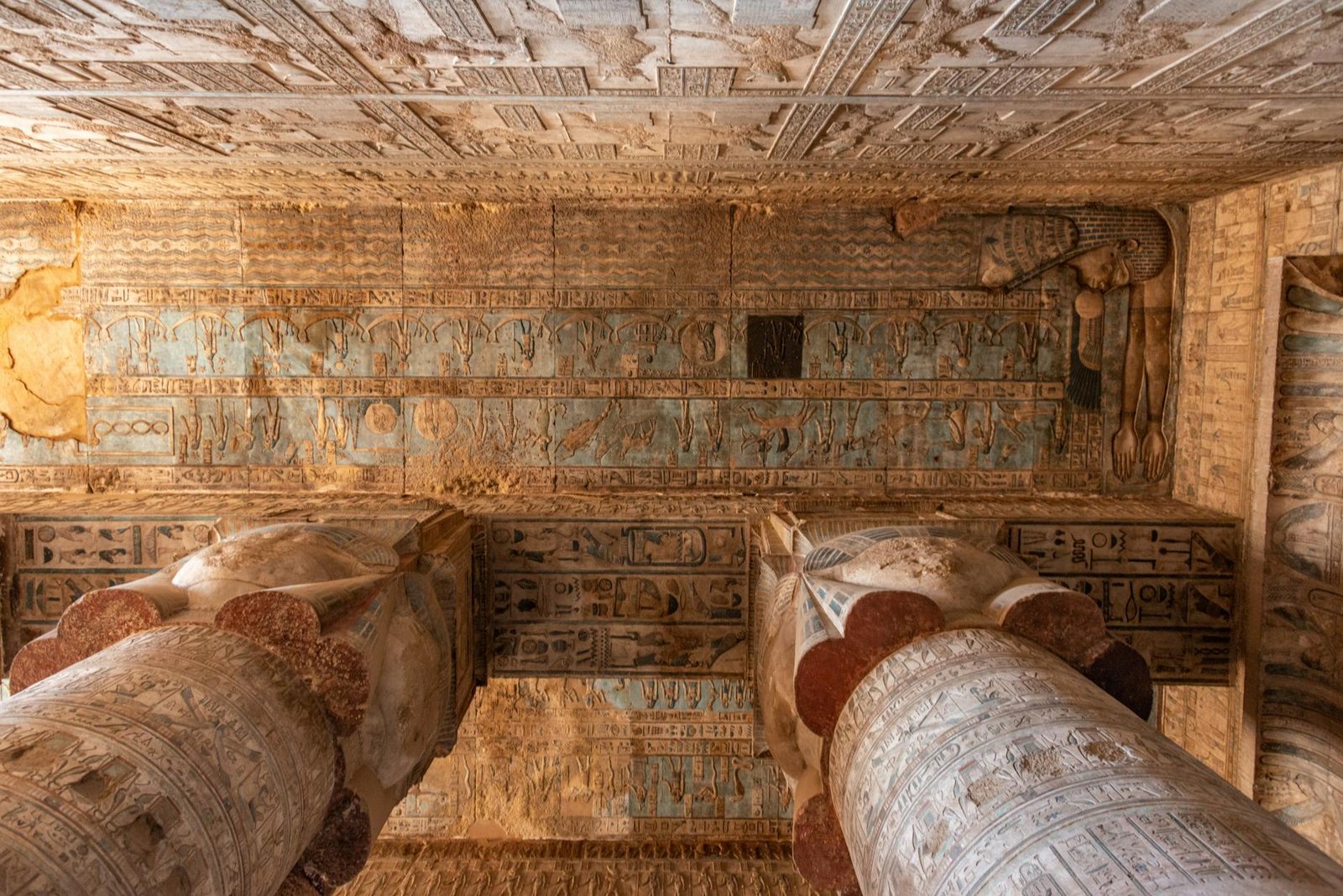
What sets the Temple of Hathor apart is almost structural: it has a roof, and that roof has ceilings, and those ceilings still carry their original color. Most Egyptian temples open to the sky today were open to the sky two thousand years ago too, or became that way through collapse. Dendera's hypostyle hall, with its rows of soaring columns crowned by the face of Hathor on every capital, still has its stone ceiling intact — and across much of it, you can see blue, yellow, and ochre pigment that has survived since the Ptolemaic period with astonishing clarity.
The temple as it stands today was built relatively late by Egyptian standards, mostly under the Ptolemaic dynasty and finished under Roman rule, on a site where earlier temples to Hathor had stood for centuries before. That late construction date is part of why it survived so well: the techniques and materials were refined by then, and the site escaped the worst of the flooding, quarrying, and settlement-building that stripped stone from older monuments elsewhere along the Nile.
The Zodiac on the Ceiling
The single most famous image to come out of Dendera isn't on display at Dendera at all. The Dendera Zodiac, a circular relief mapping the constellations, planets, and zodiac signs across the ceiling of a small chapel dedicated to Osiris, was cut out of the stone in 1820 by a team working for a French engineer and shipped to Paris, where it remains in the Louvre today. It is the only known circular representation of the sky from ancient Egypt — every other surviving astronomical ceiling in the country is rectangular — and the circular format itself reflects Greek influence arriving late in Egyptian religious art, blending Babylonian zodiac signs with native Egyptian constellations.
What greets visitors at the temple now is a precise plaster cast, installed in the spot where the nine-ton sandstone original once sat. It's a faithful enough copy that you can still trace each figure clearly, and standing beneath it, in the low chapel it was carved for, gives a better sense of its original context than the brightly lit Louvre gallery ever could. The removal itself is still cited in Egypt as one of the earliest and most consequential cases of antiquities leaving the country without full consent — a debate that resurfaces periodically and remains unresolved.
See Them Before Everyone Else Does
Dendera and Abydos reward travelers precisely because so few make the detour. This Egypt Sun Travel tour covers both temples in a single day from Luxor, with a licensed Egyptologist who can actually read the walls you're standing in front of.
Abydos: Seven Chapels and a List of Kings
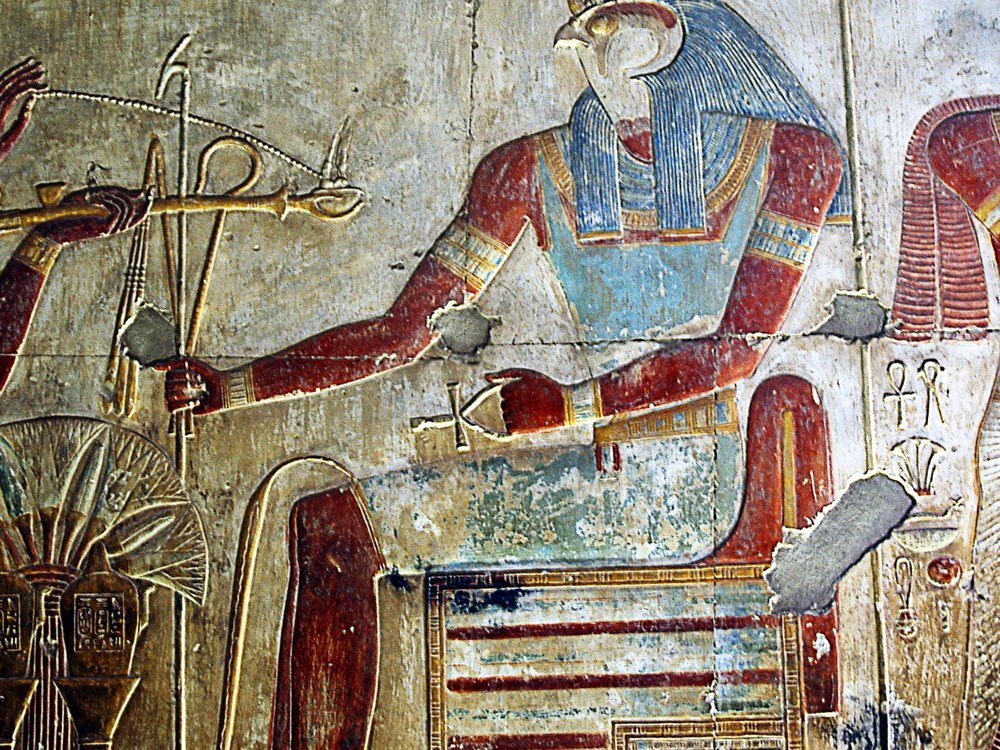
About two and a half hours north of Dendera lies Abydos, one of the oldest sacred sites in Egypt and, for much of its early history, believed to be the burial place of Osiris himself. The Temple of Seti I, built in the 13th century BC and completed by his son Ramesses II, is unusual in plan: instead of a single sanctuary, it holds seven parallel chapels, each dedicated to a different deity — Seti I among them, worshipped here as a god in his own right alongside Ptah, Ra-Horakhty, Amun-Ra, Osiris, Horus, and Isis.
On one interior wall is the Abydos King List, a carved roster of 76 pharaohs running from Egypt's legendary first king, Narmer, down to Seti I himself. It's one of the most important chronological records to survive from ancient Egypt, used for over a century to help reconstruct the sequence of early dynasties — and it's also a document with a clear agenda, since it quietly omits Hatshepsut, Akhenaten, and other rulers Seti's priests considered illegitimate. Reading it is less like viewing a history book and more like watching a government edit its own archives in stone.
The Finest Raised Relief in Egypt
Where Dendera is known for color, Abydos is known for depth. The temple walls here carry raised relief carved with a precision that specialists still point to as some of the finest surviving work from the New Kingdom — figures of gods and the king rendered with carefully modeled musculature, fine linear detail in crowns and jewelry, and a sculptural quality that low, angled light brings out in a way flash photography (banned here, for good reason) never could. Much of the original paint survives alongside the carving, particularly in the inner chapels, giving the figures a vividness rare even among Egypt's best sites.
Behind the temple, reached by a short walk, lies the Osireion — a separate, lower structure built from massive stone blocks, believed to have been commissioned by Seti I as a symbolic tomb of Osiris. Its heavy, almost brutal architecture stands in deliberate contrast to the delicate carving above it, and its partial flooding (it sits close to the water table) only adds to its atmosphere: dark water reflecting enormous columns, with almost nobody else there to see it.
Why the Detour Is Worth It
Egypt's major sites earn their fame honestly, but fame has a cost: crowds, restoration work, roped-off sections, and a version of the past that's been smoothed by millions of visitors a year. Dendera and Abydos offer something closer to an unfiltered encounter — temples where the ceiling is still a ceiling, the color is still color, and the carving still has the depth the original sculptors gave it, not a shadow of what it used to be.
They are not a substitute for Karnak or the Valley of the Kings, and nobody should treat them as one. But paired with the sites everyone already plans to see, they complete the picture in a way few other additions to an Egypt itinerary can: proof that the ancient world here didn't end with the famous temples, it simply kept building — quietly, two and a half hours up the road, where comparatively few people ever thought to look.