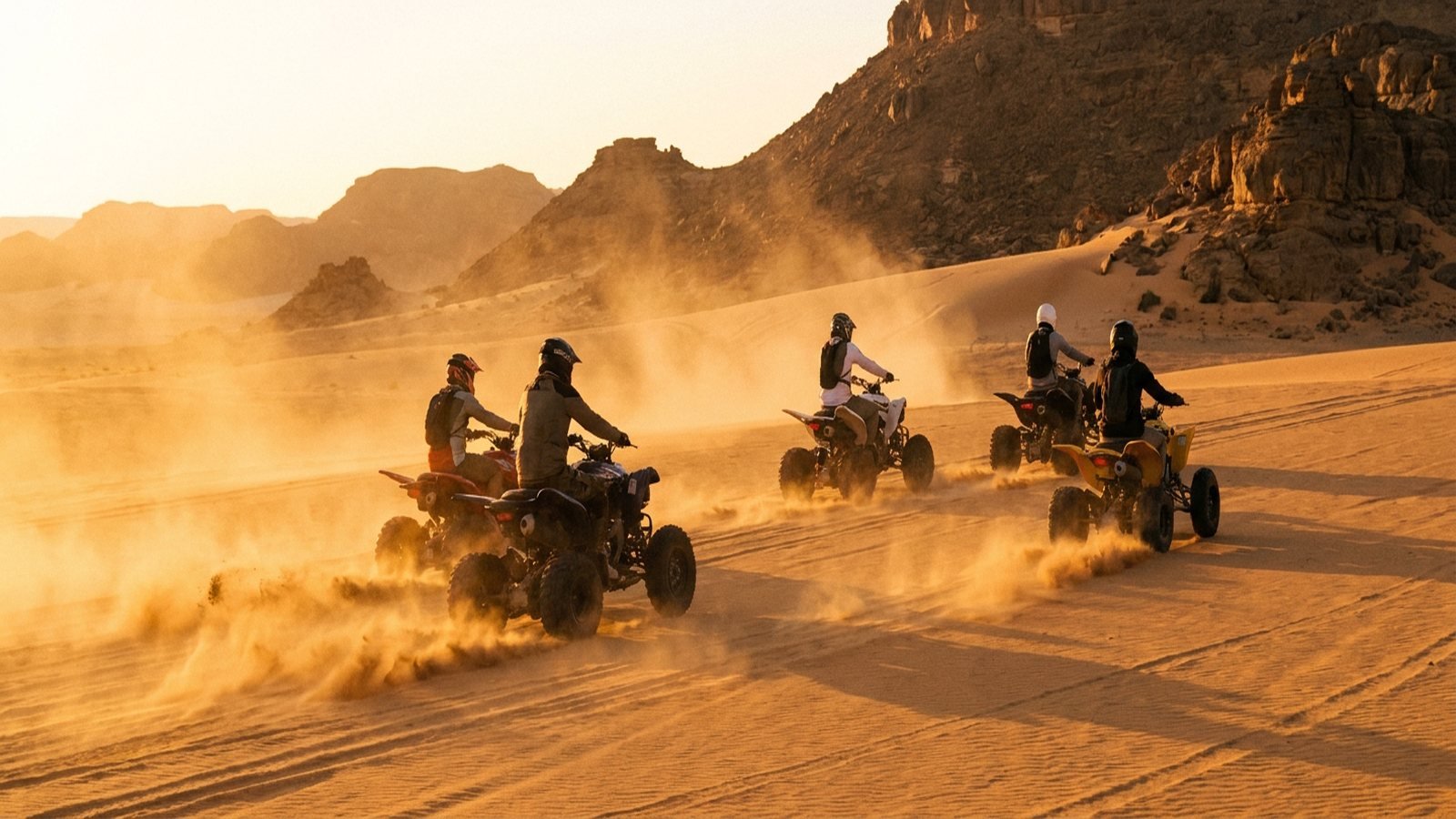
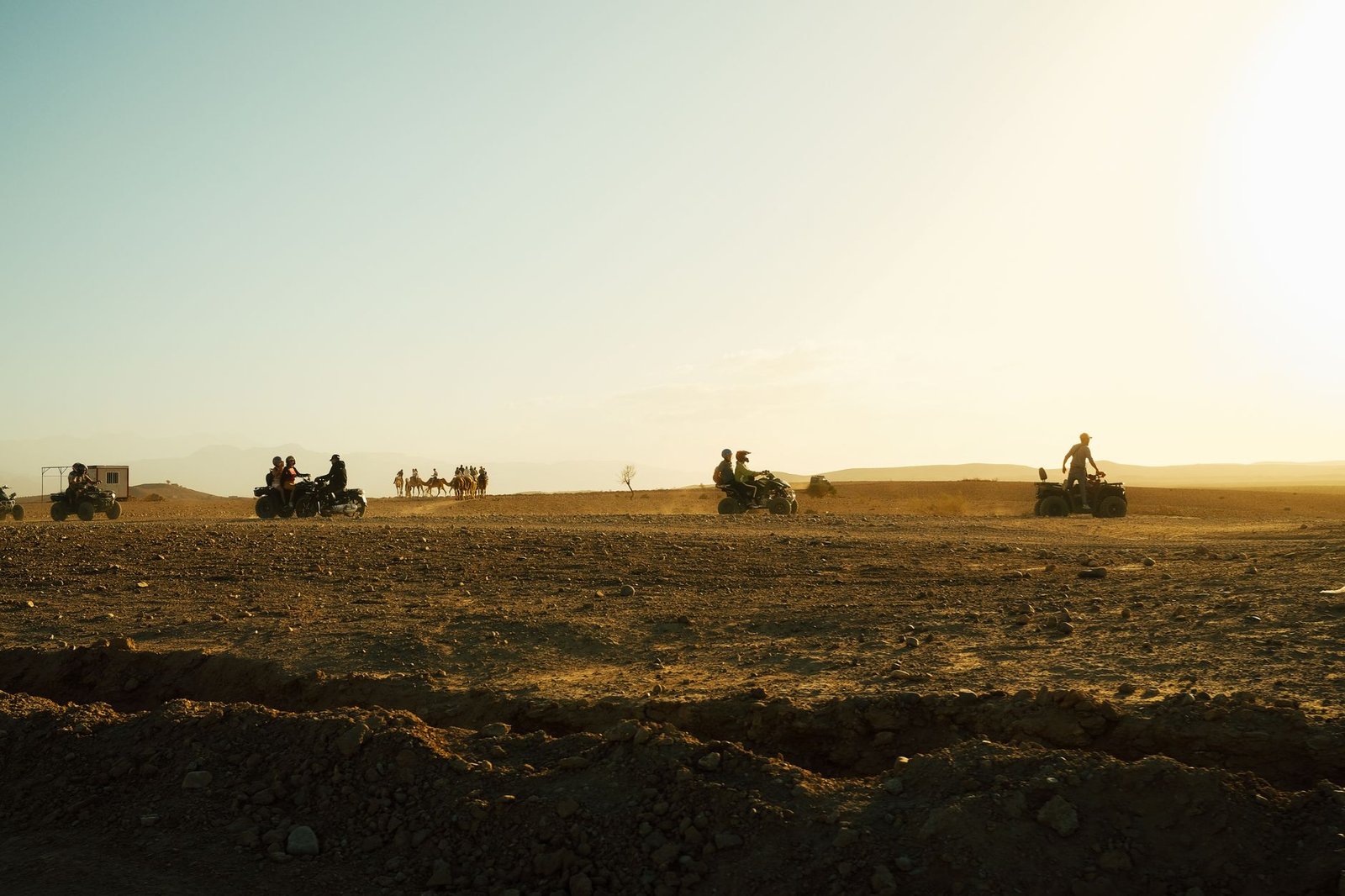
The Eastern Desert has a particular kind of silence — the ringing, slightly disorienting quiet of a place with no traffic, no birdsong competing for your attention, nothing but wind moving over sand that has been there, more or less unchanged, for thousands of years. Then a line of quad bikes rolls in from the direction of Hurghada, engines flat and buzzing against the open space, and for the next couple of hours that silence is gone entirely.
This is the contradiction at the heart of a desert safari in Egypt, and it is also the appeal of it. You come for the noise and the dust kicked up behind a dune buggy at speed, and you leave remembering the quiet that follows it just as much — the tea, the firelight, the sudden stillness of a Bedouin camp at the edge of nowhere. Few excursions out of Hurghada or Sharm El Sheikh pack that much contrast into a single afternoon.
Two Deserts, One Feeling
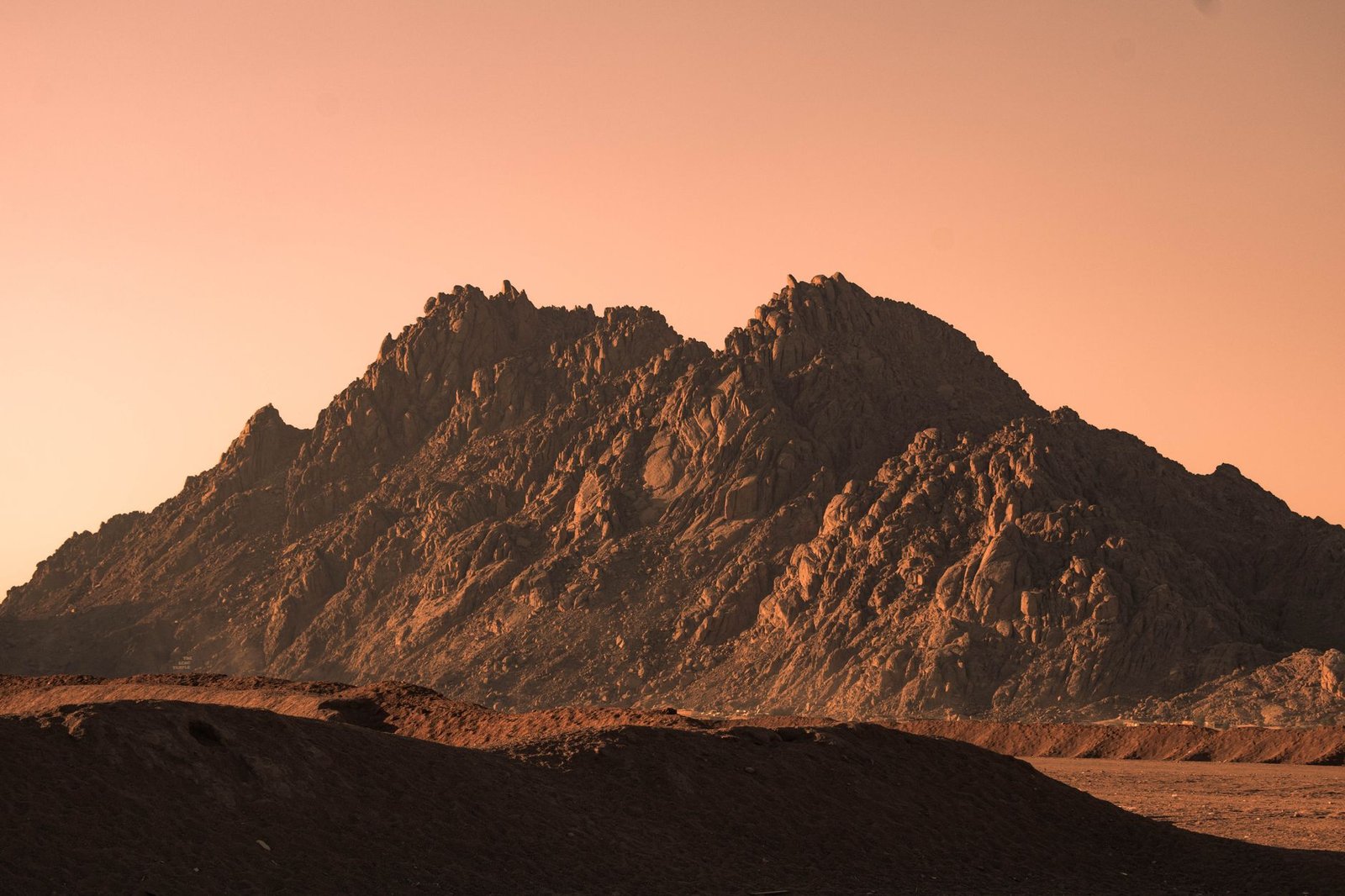
Most quad bike safaris run out of Hurghada and Sharm El Sheikh, and the two sit in genuinely different landscapes. Hurghada's Eastern Desert is a rolling expanse of soft sand, gravel plains, and low ochre hills running inland from the Red Sea coast toward a horizon that looks the same in every direction until it suddenly doesn't. The Sinai Peninsula, by contrast, is sharper and more dramatic — granite mountains rise directly out of the sand around St. Catherine and the interior routes out of Sharm El Sheikh, giving a Sinai desert safari a backdrop that feels closer to a lunar canyon than a beach-town day trip.
Both are technically desert, and both are capable of the same trick: within twenty minutes of leaving a hotel strip lined with sunbeds and souvenir shops, there is nothing man-made in sight. That transition is faster and more total than most first-time visitors expect, and it is a large part of why a desert safari, whether by quad bike or dune buggy, reads less like a theme-park activity and more like an actual excursion into a different Egypt than the one on the postcards.
What the Ride Actually Involves
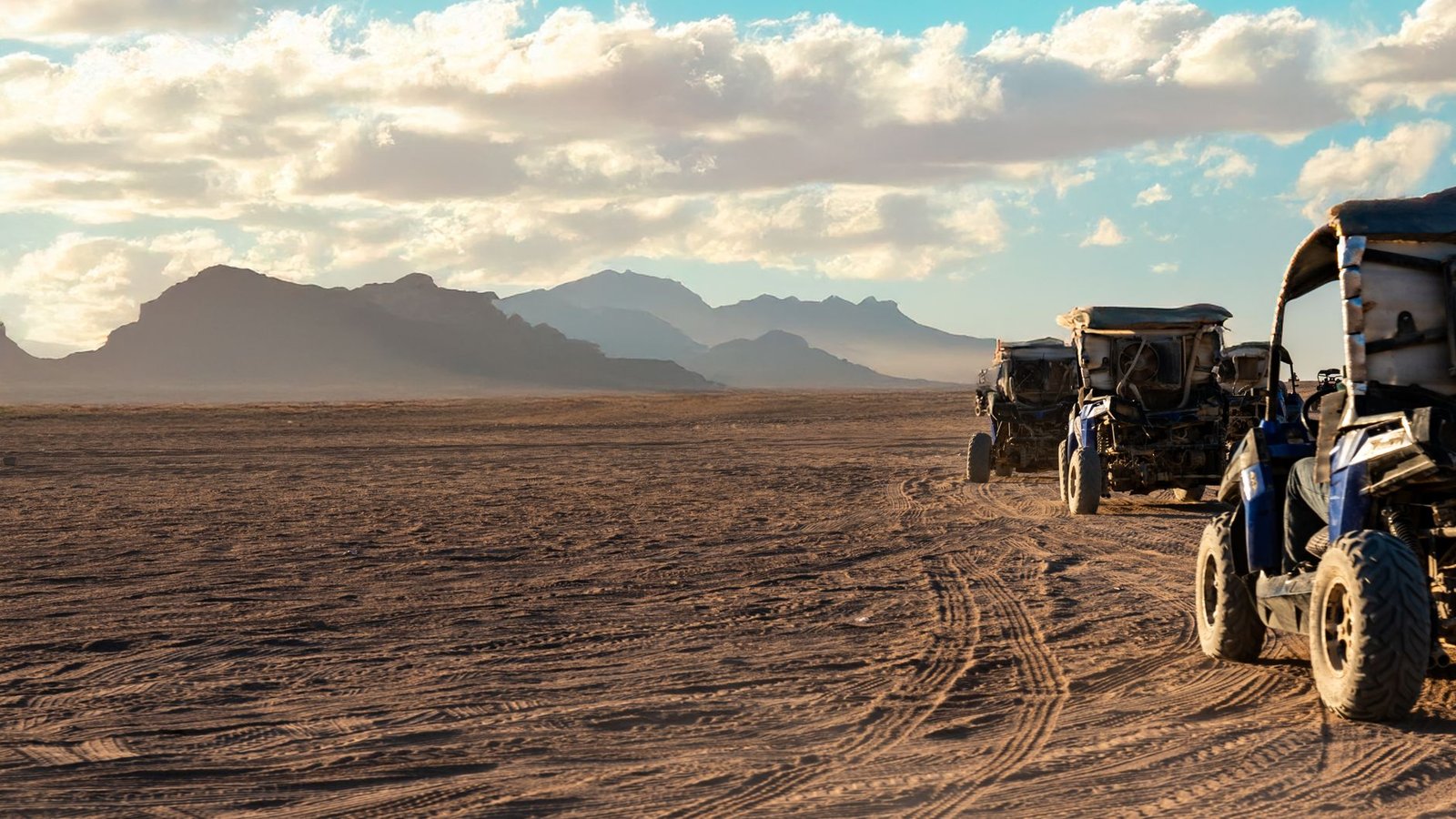
Before anyone touches a throttle, there is a briefing, and it is not optional. A helmet goes on first, then an instructor runs through the controls on a stationary bike or buggy — accelerator, brake, how to lean into a turn on loose sand — followed by a short practice loop so the guide can see who needs more supervision before the group heads out. Tours typically run as a single-file convoy behind a lead guide on their own bike, with a sweep rider at the back, and groups are usually capped at a manageable size rather than left to scatter across the dunes unsupervised.
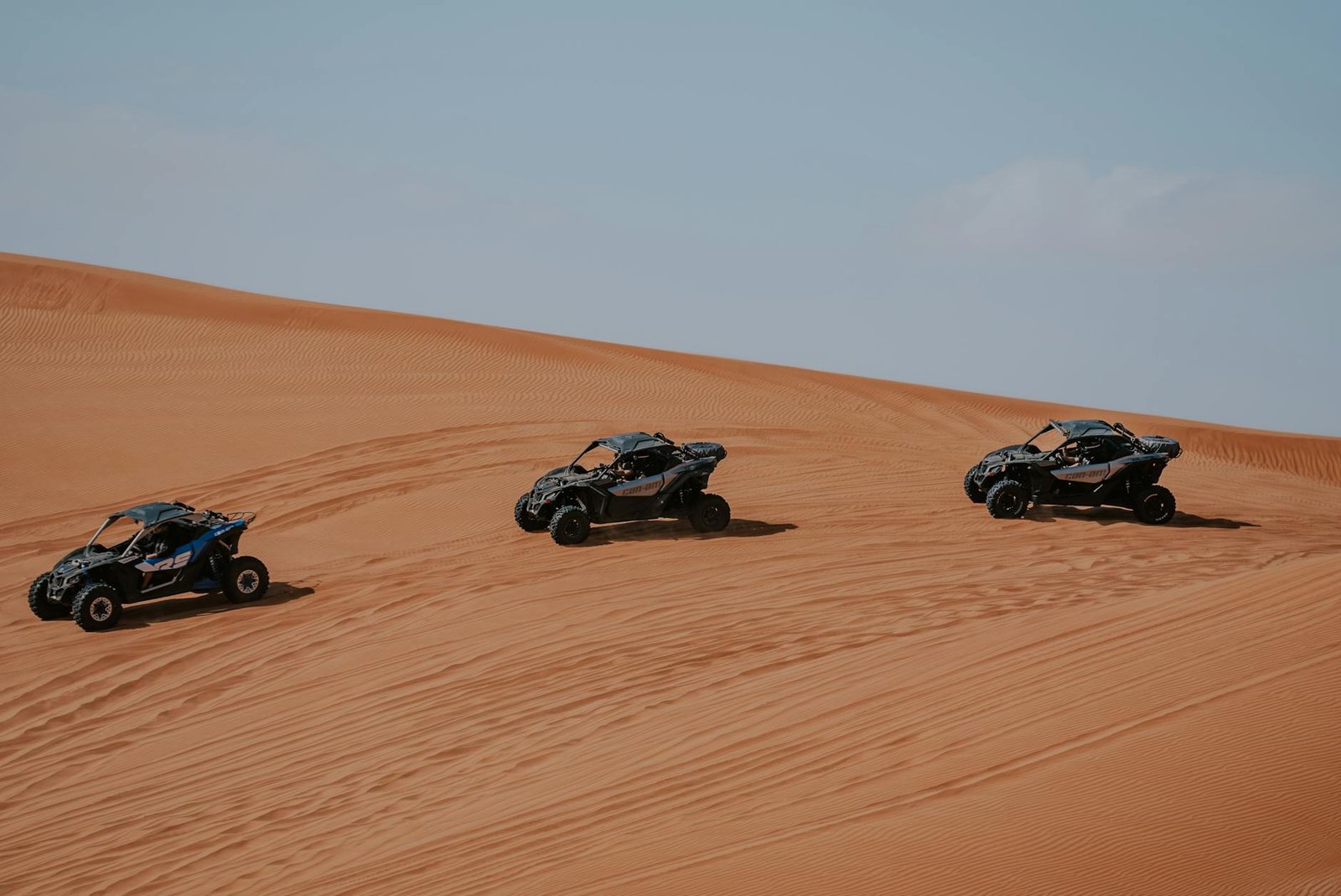
A full excursion, door to door from a Hurghada or Sharm El Sheikh hotel, generally runs somewhere between three and five hours, though the actual riding time over the dunes is shorter — often around ninety minutes to two hours, broken up by stops. Dune buggies, which seat two and have a roll cage and seatbelts, are the gentler option for anyone nervous about balancing a quad bike alone; quads themselves are automatic, so no gear-shifting is required, which is part of why first-timers with zero riding experience are able to join at all.
Get Out Into the Dunes
If the sand, the engines, and the tea by firelight sound like your kind of afternoon, these Egypt Sun Travel desert safaris handle the vehicle, the guide, and the Bedouin stop, so all you have to do is hold on.
Tea with the Bedouin, Not a Performance of It
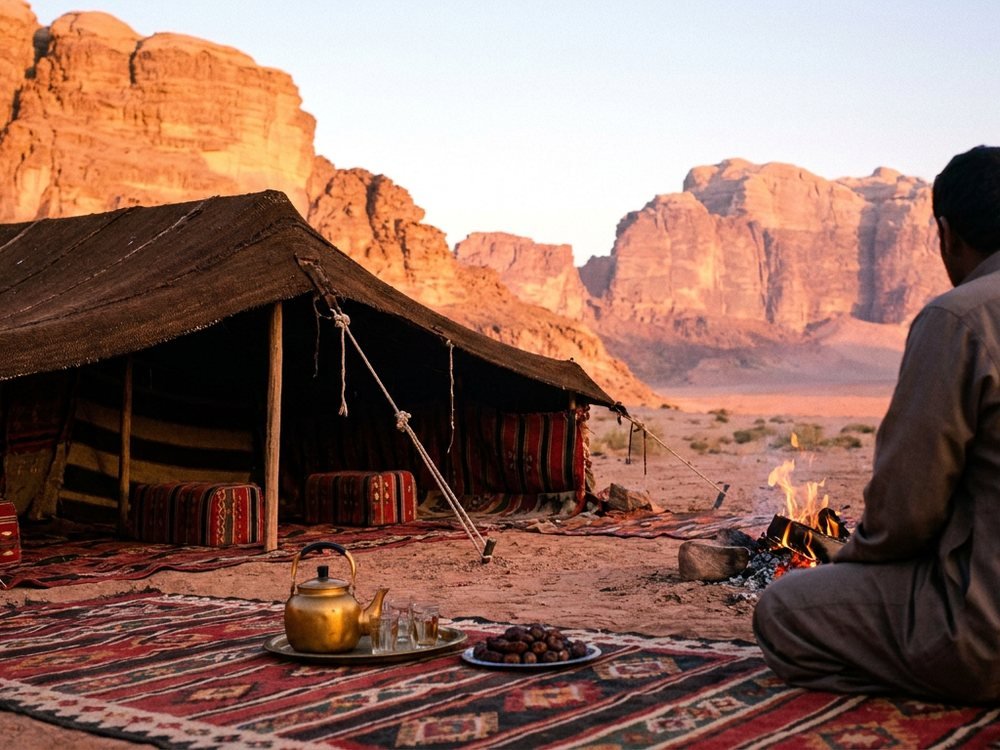
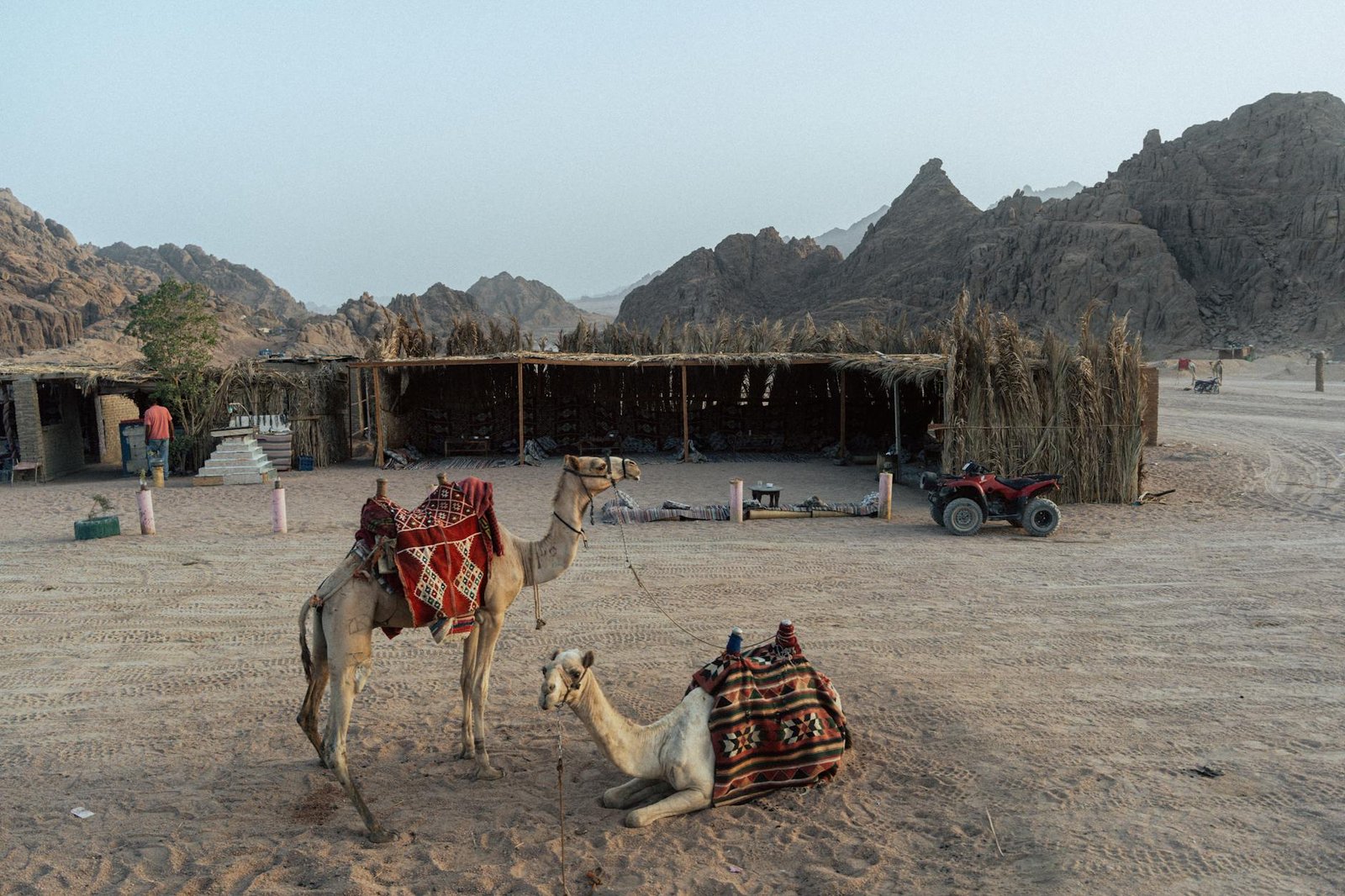
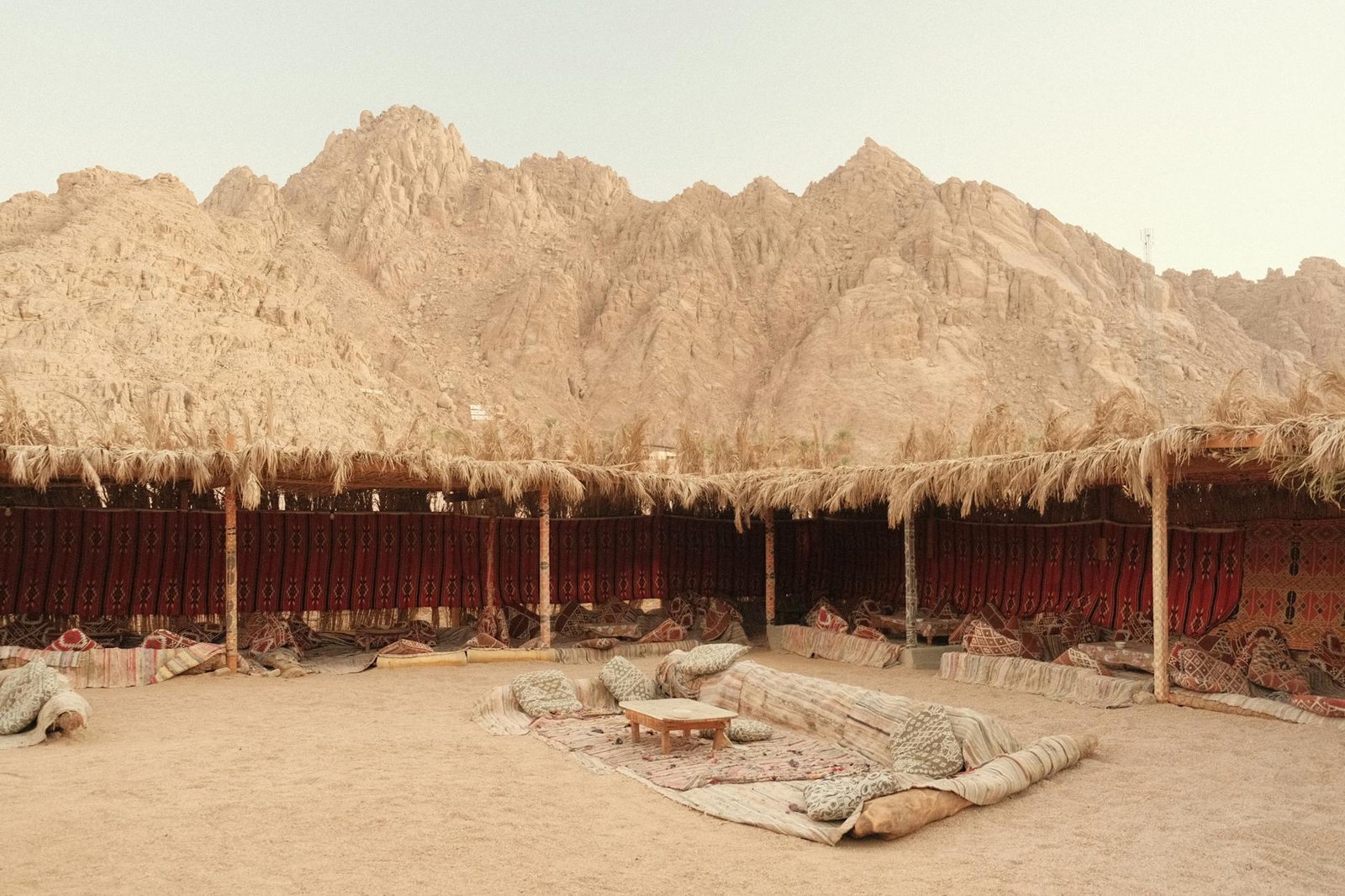
The engines cut out at a Bedouin camp roughly halfway through most itineraries, and the shift in register is immediate. Bedouin hospitality runs on an old, specific logic: a guest who has entered your space is owed tea, shade, and conversation, regardless of how briefly they are passing through. The tea itself is usually glass-strong, heavily sweetened black tea, sometimes brewed with fresh mint or herbs gathered locally, served in small glasses rather than cups — a detail that traces back to Bedouin tradition rather than tourist styling.
What happens at the camp varies by operator, but the honest version involves sitting on low cushions or carpets inside a woven tent, drinking that tea, and talking — through a guide if needed — with people whose families have lived in these specific stretches of desert for generations, long before any safari tour existed to bring visitors there. Some stops add a shisha pipe, flatbread baked on a heated metal dome, or a short explanation of desert plants and how water is historically found and stored. None of it is a reenactment; it is a genuinely older set of customs, briefly opened to outsiders.
The Hour Everyone Actually Comes For
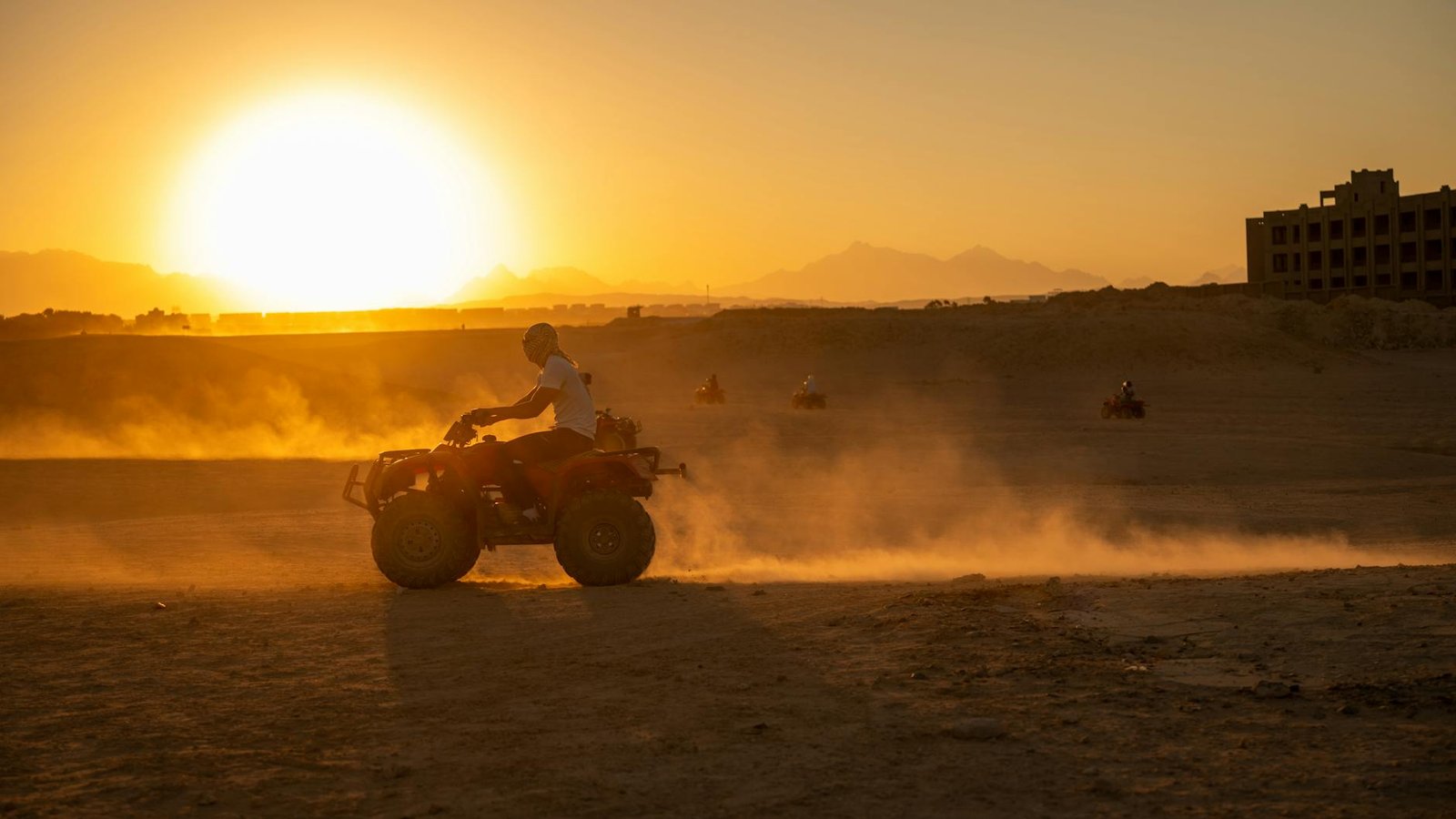
Sunset desert safari tours are timed deliberately, and the timing is the whole point. Dune colors that look flatly beige at midday shift through gold, copper, and eventually a deep violet as the sun drops toward the hills, and the temperature finally breaks from the day's heat into something comfortable enough to actually stand still and look around. Guides who know the terrain will usually angle the final stretch of the route toward a high dune or ridge specifically so the group is in position when the light turns.
What follows the sunset, if the tour runs into early evening, is arguably the more memorable part: full desert dark, with none of the light pollution that mutes the sky over Hurghada or Sharm El Sheikh. Stars appear in numbers that genuinely surprise visitors from large cities, and that darkness, paired with the dying warmth of the sand underfoot, is usually what people describe first when asked about the trip afterward — not the quad bikes.
A Different Side of the Same Country
Egypt's big-ticket sites — the pyramids, the temples of Luxor, the Nile itself — tell a story about settled civilization: rivers, agriculture, dynasties, stone built to outlast empires. The desert tells the other half of that story, the one about the people who never settled, who built a way of living around scarcity and distance long before any of those monuments existed and who still, in pockets, live something close to that life today.
A few hours on a quad bike or dune buggy will not teach anyone the desert the way a lifetime in it does, and it does not pretend to. But it puts the contrast directly in front of you — hotel to open sand in twenty minutes, roaring engines to a quiet glass of tea, and finally to a sky with more stars in it than most travelers have seen in years. That contrast, more than the ride itself, is usually what stays with people.