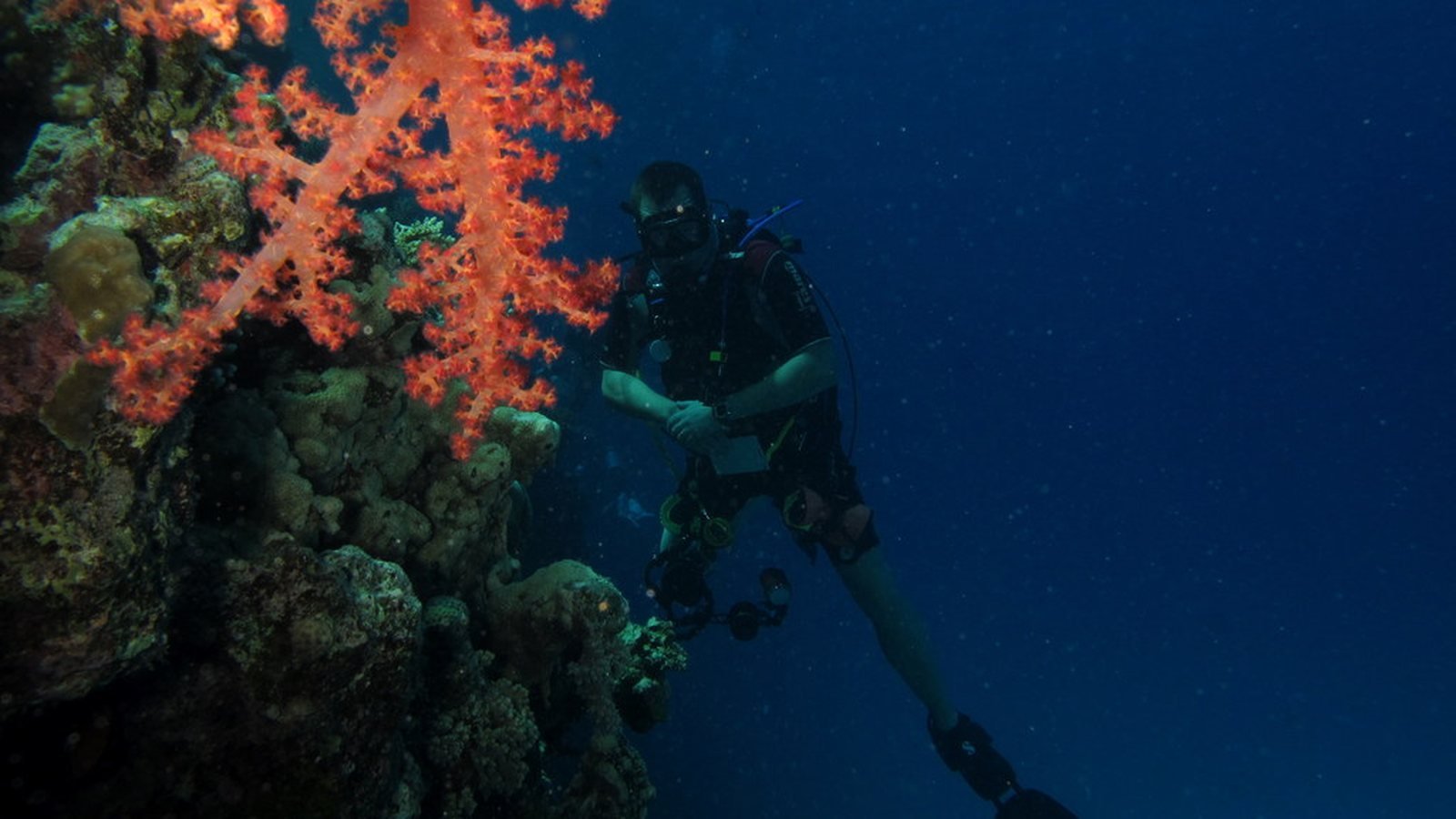
There is a specific moment, a few seconds after you first put your face in the water with a regulator between your teeth, when your brain simply refuses to believe what is happening. You are breathing. Underwater. The sound is wrong — a loud mechanical rasp of air in, a stream of bubbles out — and every instinct built over a lifetime of staying above the waterline is telling you this cannot be fine. Then you take a second breath, and a third, and somewhere around the fifth your nervous system quietly accepts the new rule, and you look up to realize you are floating, weightless, over a reef that ten minutes ago was just a word on a brochure.
That moment is what separates scuba diving from snorkeling, and it is also exactly why most first-time visitors to the Red Sea never try it. Snorkeling is easy to imagine — you already know how to float face-down and watch the world below. Scuba, with its tank and regulator and the idea of going properly underwater, sounds like something that requires training, confidence, maybe even a tolerance for danger most people don't think they have. The reality, for a first "Discover Scuba Diving" experience, is almost nothing like that. It is closer to a long, calm swimming lesson than an extreme sport, and it happens to take place in some of the clearest, warmest, most alive water on the planet.
What a Discover Scuba Diving Session Actually Involves
The program most dive centers run for total beginners is called Discover Scuba Diving (PADI) or a Try Dive (SSI), and it is deliberately built so that nobody needs a certification, a swimming badge, or any prior knowledge to take part. It starts on dry land or in shallow water with a briefing: an instructor walks you through the handful of pieces of gear you'll be wearing — the BCD vest that controls your buoyancy, the regulator that delivers air from the tank, the mask — and teaches you four or five hand signals that cover everything you'll need to communicate underwater, since talking obviously isn't an option.
After the briefing comes the part that actually matters: a short confined-water session in water shallow enough to stand up in, where you practice breathing through the regulator, clearing water out of your mask, and recovering the regulator if it slips from your mouth. Only once you're visibly comfortable does the instructor lead you out to the open water dive itself, staying within arm's reach the entire time. The whole experience, briefing included, runs about two to three hours, with the actual underwater portion lasting 25 to 45 minutes.
The Three Fears Everyone Has, and What Actually Happens to Each One
Almost every first-time diver is quietly carrying the same three worries, and almost none of them survive contact with the actual dive. The first is the ears — the fear that depth will hurt, or that "equalizing" is some technical skill you'll fumble. In practice it's as simple as holding your nose and gently blowing, the way you would on a descending airplane, done every meter or two on the way down; instructors watch for it constantly and will stop your descent instantly if anything feels off. The second is breathing itself, the irrational worry that air just won't come, which dissolves the instant you take that first full breath through the regulator and realize it flows exactly like breathing through a straw, just louder.
The third, and the one people admit to least, is a flicker of claustrophobia — the mask on your face, the regulator in your mouth, the sense of being sealed into equipment. This is precisely why the confined-water practice exists before the real dive: it gives your body time to discover, in water shallow enough to simply stand up in if anything feels wrong, that none of it is actually confining at all. Beginner dives on Discover Scuba programs are also capped at a shallow maximum depth — typically no more than 12 meters, and most Red Sea operators stay closer to 6 to 10 meters, which keeps sunlight, visibility, and that margin of psychological safety all working in your favor at once.
Try Your First Dive
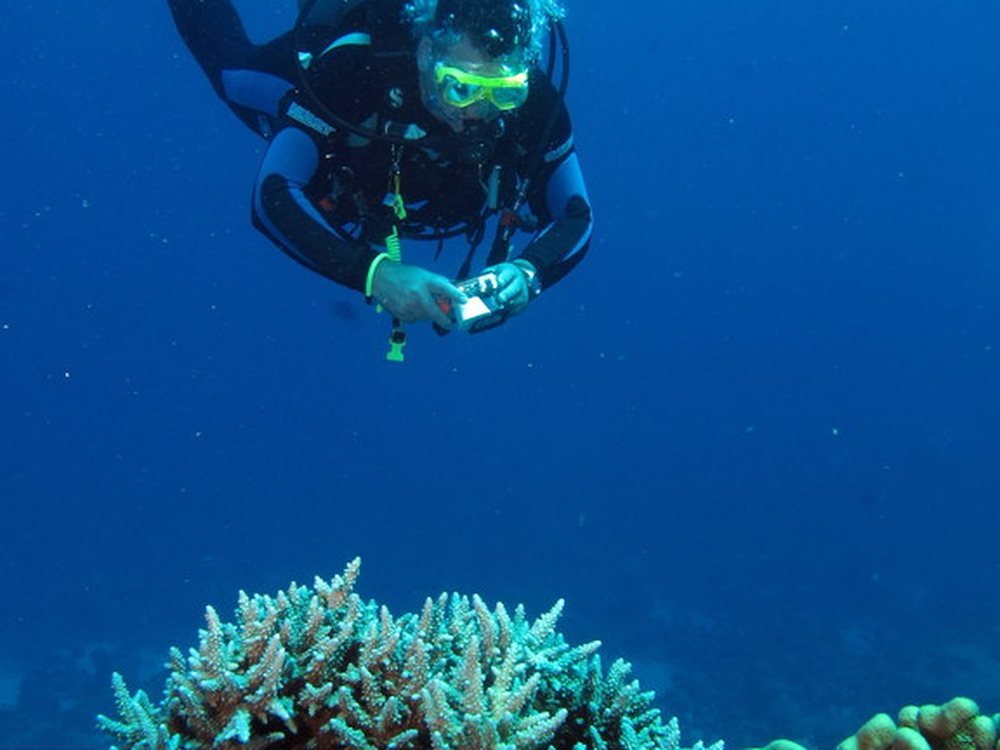
No certification, no experience, no equipment of your own required. An instructor stays within arm's reach from the briefing to the moment you're back on the boat. This is the easiest, safest way to find out what the Red Sea looks like from the inside.
Why the Red Sea Specifically Is Where So Many People Choose to Learn
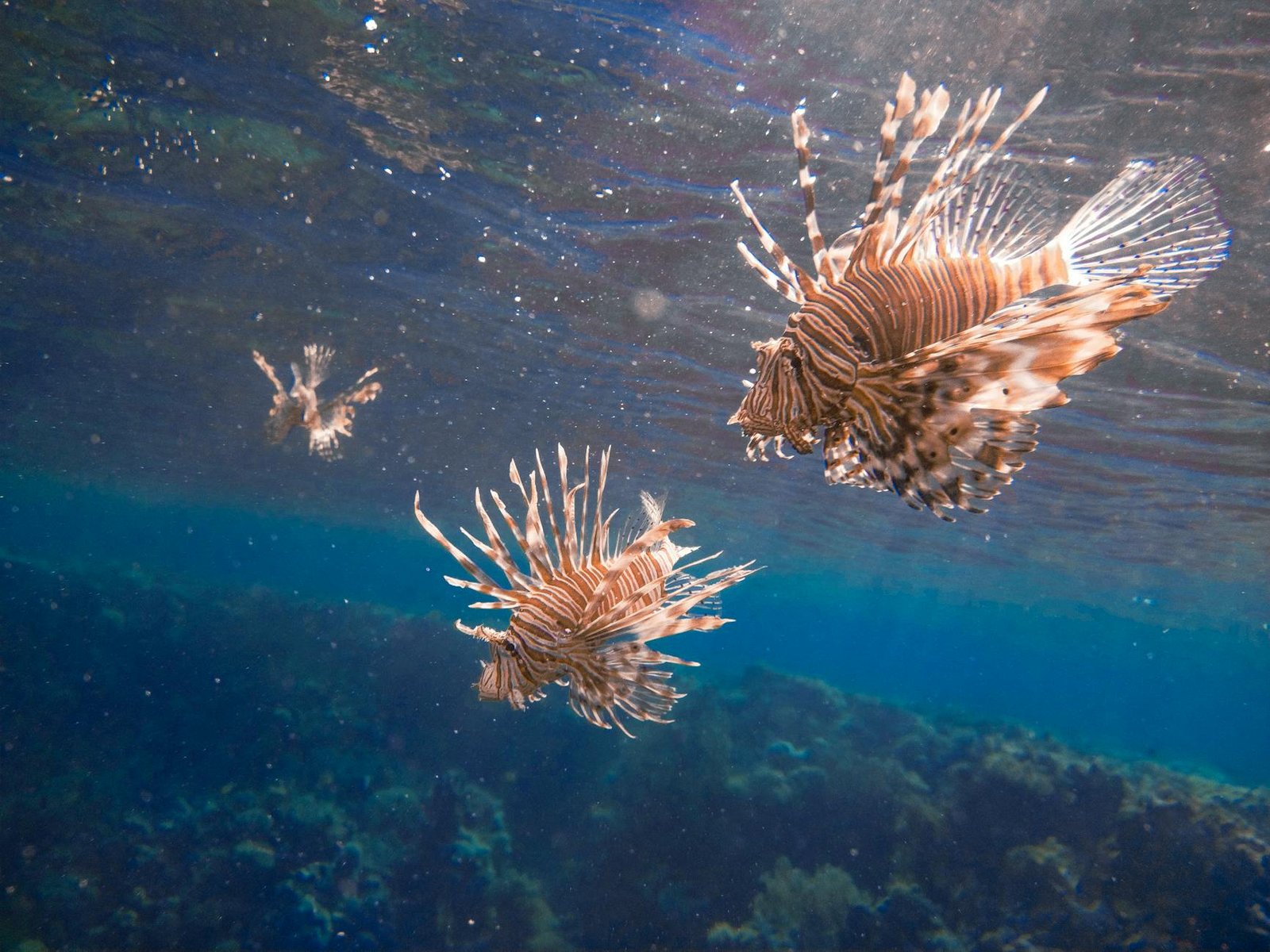
There is a reason dive instructors around the world mention the Red Sea unprompted when you ask where to try diving for the first time. Visibility routinely runs 20 to 30 meters, which means a first-time diver isn't squinting through murk but looking at genuinely sharp, saturated color from the moment they descend. Water temperature sits comfortably between the low-20s and low-30s Celsius depending on season, warm enough that a thin wetsuit is all most people need, removing one more variable that could turn a first dive uncomfortable.
The reefs themselves are also simply healthier than in much of the world's more heavily dived coastline — hard and soft coral in dense, close formation, with the kind of fish density that makes even a conservative, shallow beginner dive feel genuinely rich rather than like a consolation version of "real" diving. Hurghada and Sharm El Sheikh in particular have built enormous beginner-specific infrastructure around this: boats, instructors, and dive sites chosen specifically because they reward a first, cautious 25-minute dive rather than requiring one.
What You Actually Come Away With
Most people who try a Discover Scuba dive describe the same strange sensation afterward: the disproportion between how nervous they were beforehand and how uneventful it felt once they were actually down there. The things you remember are oddly simple — the silence, broken only by your own breathing; the way buoyancy makes you drift rather than swim; a fish passing close enough to see its eye move. None of it requires athleticism, and none of it requires having been a confident swimmer beforehand. What it requires is mostly just showing up and letting the instructor do the part of the job that's actually theirs.
It also tends to answer a question people didn't realize they were asking: whether they'd actually like full certification diving, or whether one taste underwater is enough. Either answer is a reasonable outcome of an introductory dive, and neither one wastes the afternoon — you've still seen a reef from the inside, which is not a small thing.
One More Way to See the Country You Came For
Most trips to Egypt are built around what is visible from land — temples, the Nile, the pyramids rising out of the desert. The Red Sea sits at an odd angle to that itinerary, since almost everything worth seeing there is below the surface, invisible from any shoreline photograph. A first scuba dive is, in a small way, the only part of an Egypt trip that asks you to go somewhere a camera on a tripod simply cannot follow.
For travelers already building a trip around ancient history and desert landscapes, an afternoon spent underwater turns out to be a strange but fitting complement — a different register of the same country, 10 meters down instead of 4,500 years back.