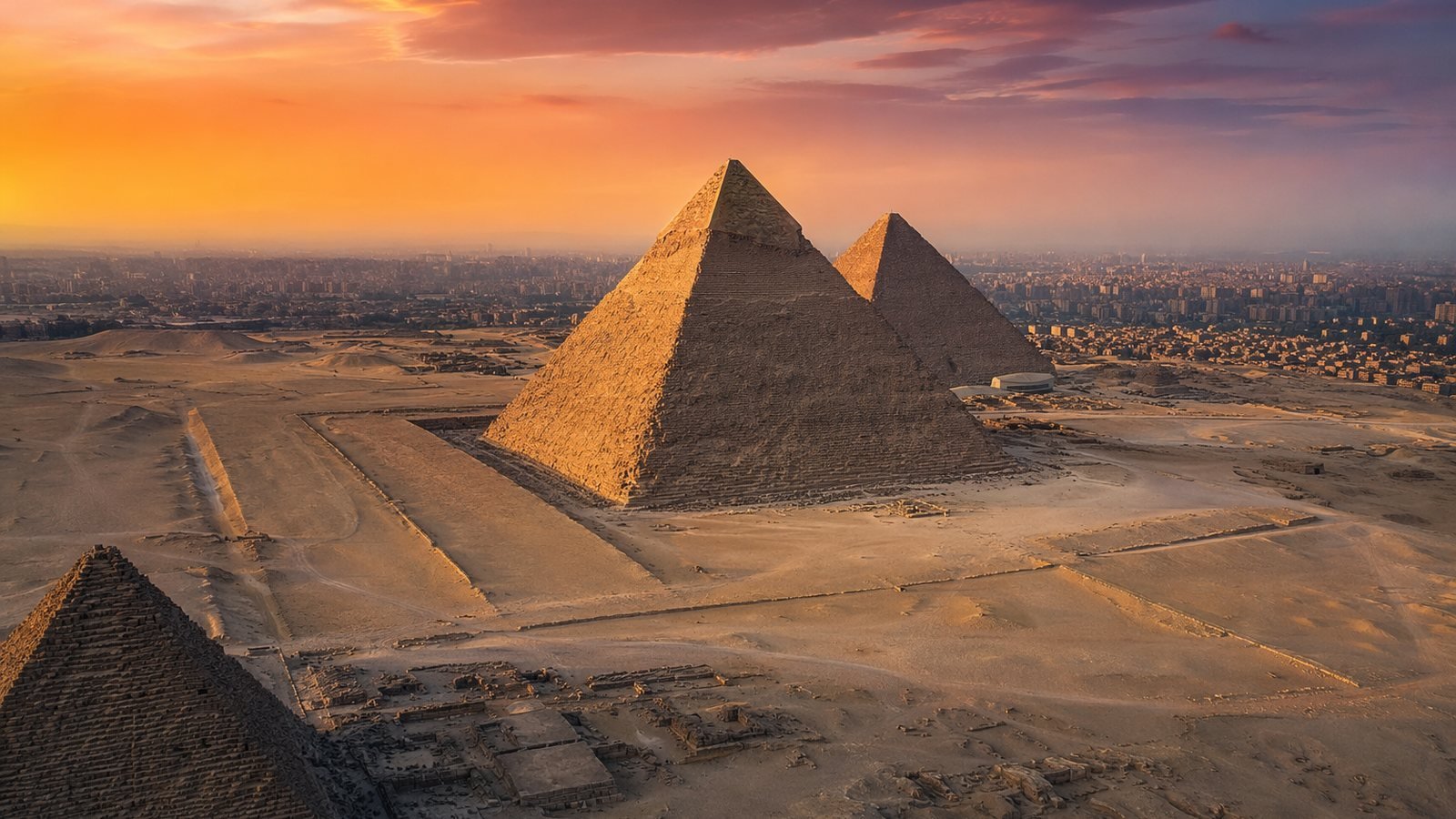
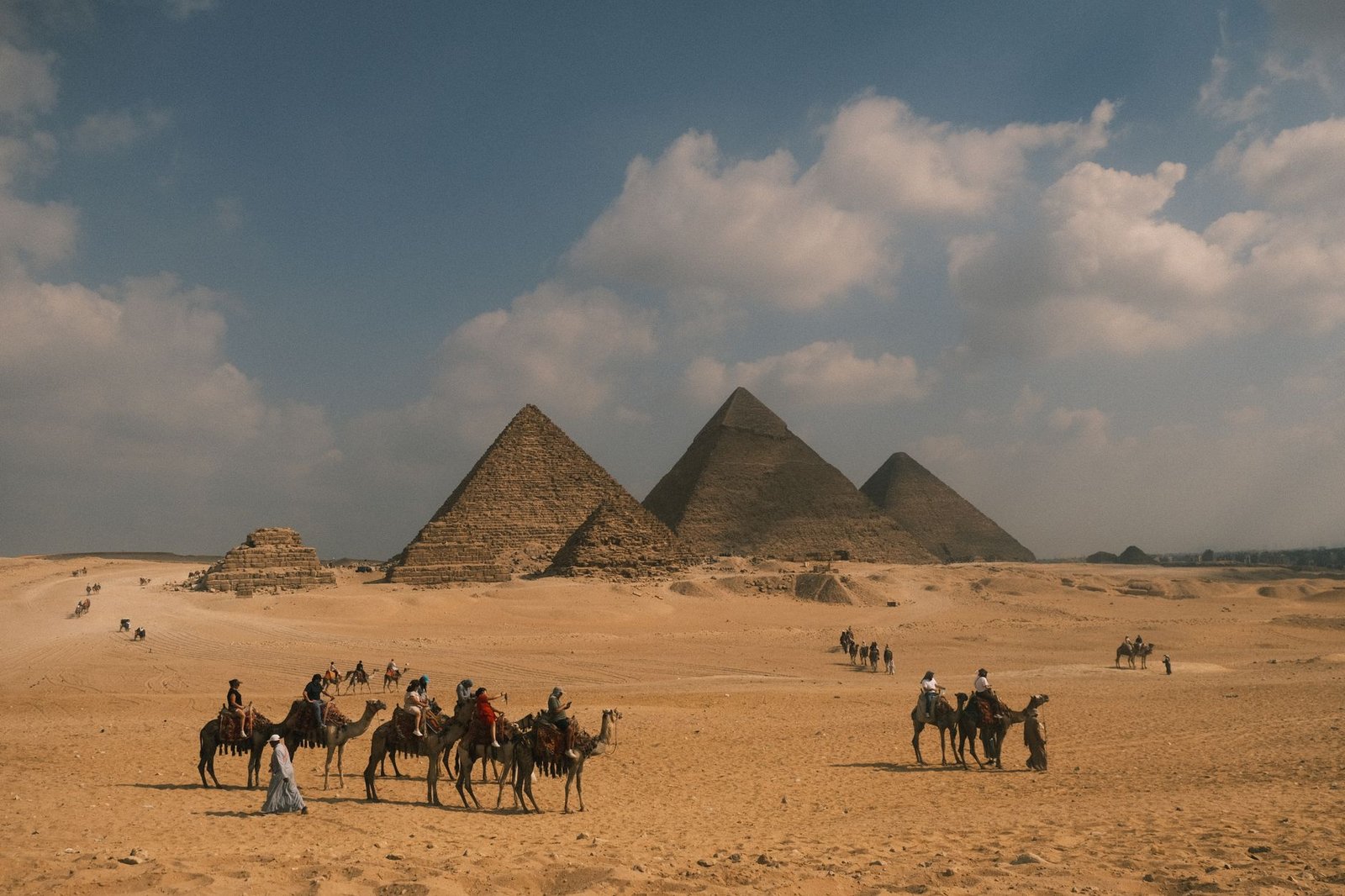
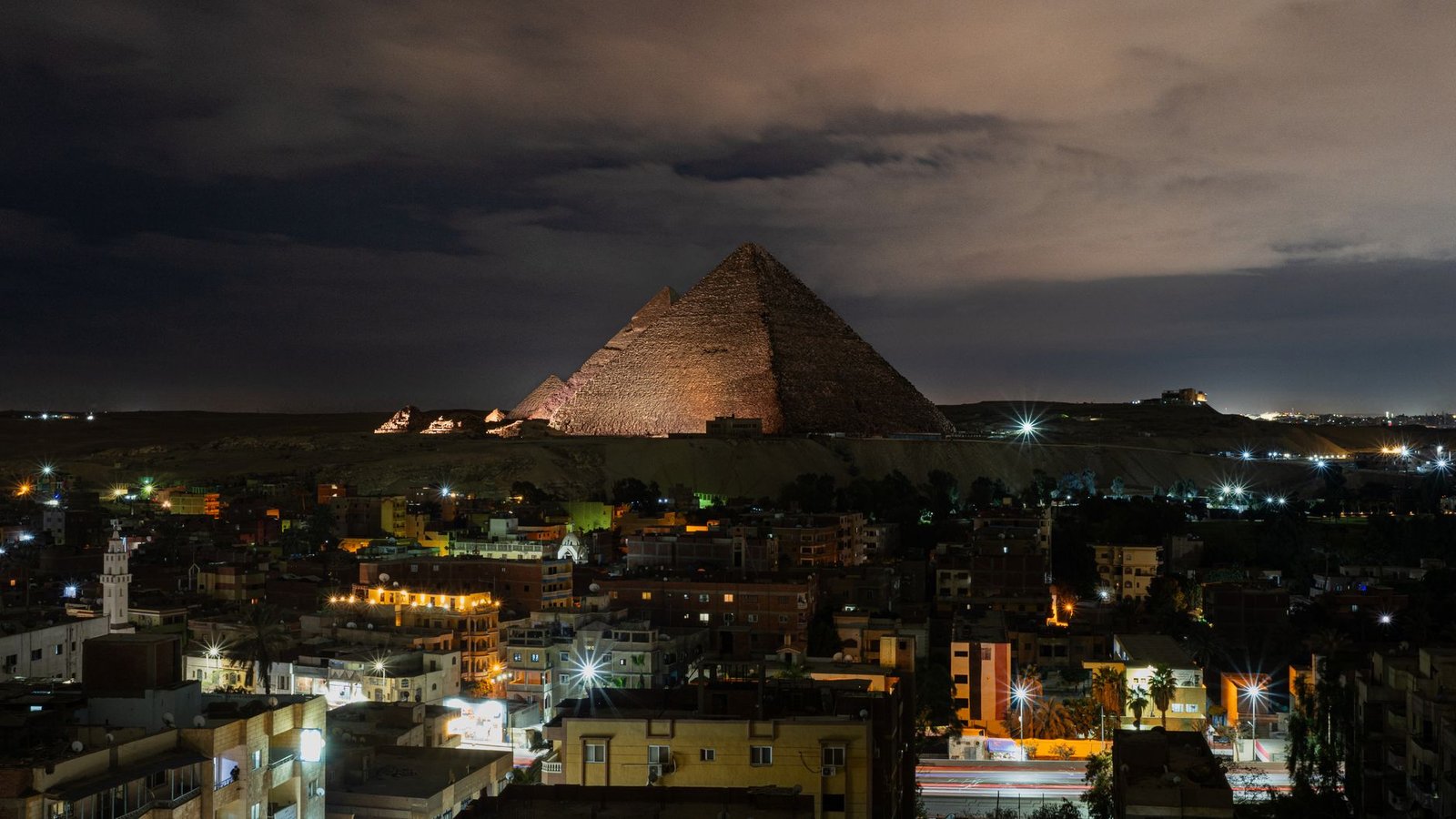
There is exactly one surviving structure from the Seven Wonders of the Ancient World, and it happens to sit on the edge of a city of more than twenty million people. That contrast is almost impossible to process from a photograph: the Great Pyramid of Khufu rising out of the desert with the rooftops of modern Giza visible just behind it, as if two different centuries had agreed to share the same skyline.
Most travelers arrive already knowing the basic facts — 2.3 million stone blocks, built roughly 4,500 years ago, the last wonder standing. What those facts don't convey is what happens physically when you're standing at the base of it, craning your neck upward, and the structure still hasn't ended.
A Scale That Photographs Simply Cannot Hold
The Great Pyramid stood as the tallest man-made structure on Earth for roughly 3,800 years, a record unbroken until the construction of Lincoln Cathedral in the 14th century. Each of its base sides stretches over 230 meters — long enough that from one corner, the opposite corner genuinely recedes into the distance.
Cameras compress all of that into a flat triangle. Standing at the base does the opposite: it restores the sense of scale a photograph quietly erases, and it's usually the first moment visitors describe as 'bigger than I expected' — a cliché that turns out to be almost universally true.
The Sphinx, and What Guidebooks Don't Prepare You For
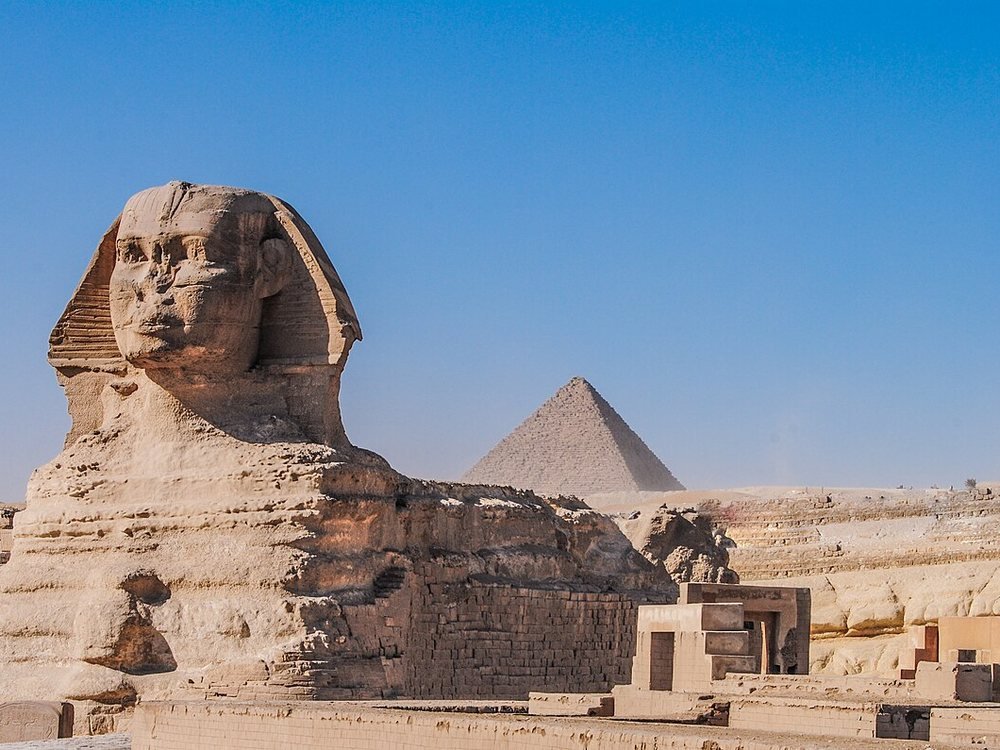
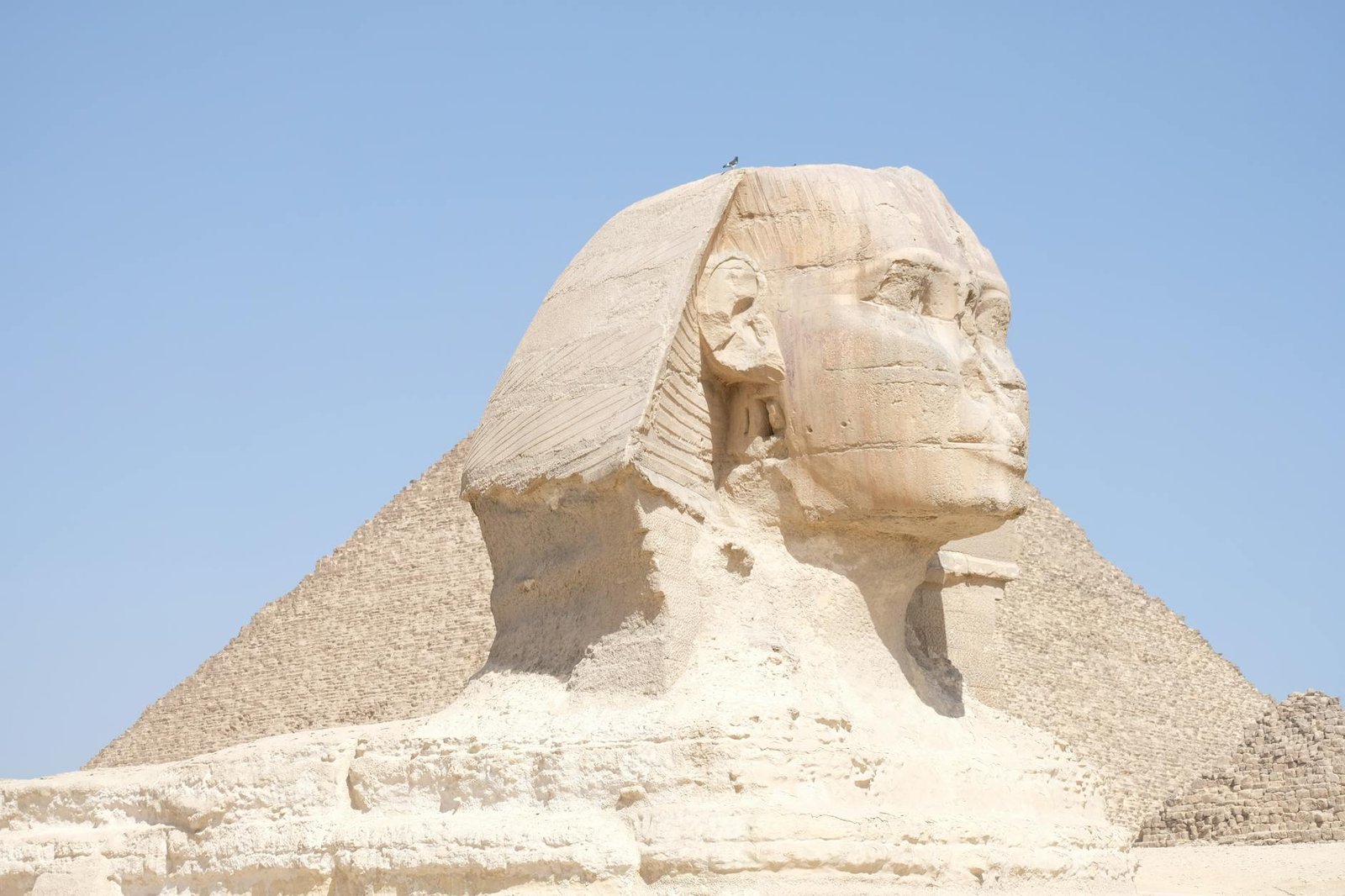
A short walk from the pyramids, the Great Sphinx sits lower to the ground than most visitors expect, carved from a single outcrop of limestone that was already there before construction began — meaning its body follows the natural contour of the bedrock rather than an imported block. Up close, the erosion on its face and the missing nose (a mystery still debated by Egyptologists, Napoleon's soldiers are the popular but unproven suspects) make it feel less like a monument and more like a very old, very weathered witness.
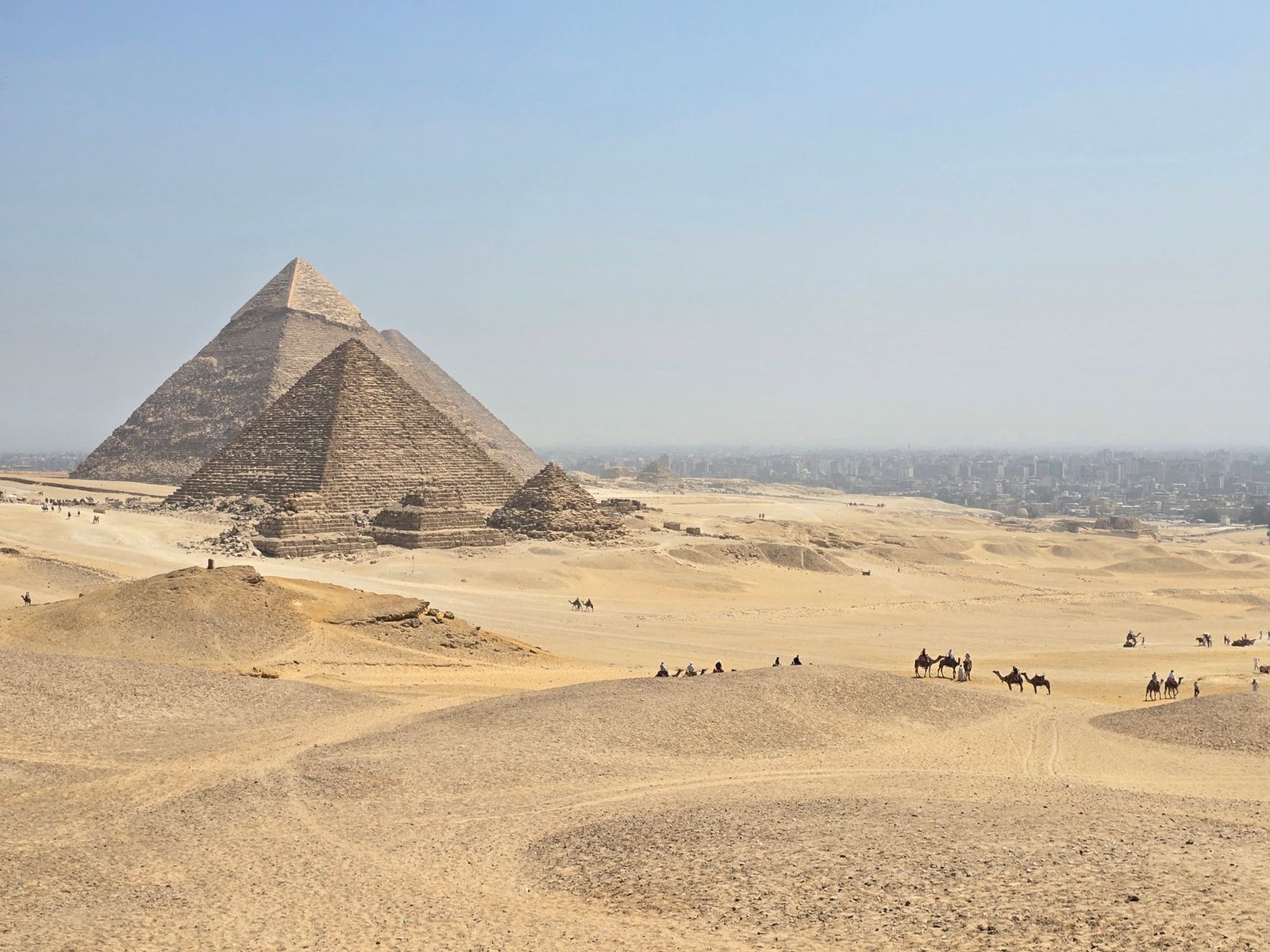
What catches most visitors off guard isn't the Sphinx itself, but the full scene around it: the plateau is working desert, with persistent vendors offering camel rides and 'free' photographs that come with an expected tip, alongside tour groups moving at different paces. A good guide manages this smoothly; without one, it can distract from what you came to see.
Stand There Yourself
A photograph can show you the shape of the Pyramids. It can't show you the scale, the heat on the stone, or the silence once you're past the crowds at the entrance. These Egypt Sun Travel tours get you there with a licensed Egyptologist and a vehicle that handles the rest.
Memphis and Saqqara: The Half of the Story Most Visitors Miss
Giza is almost always the headline, but the full story of Egyptian pyramid-building starts about 30 minutes south, in Saqqara, home to the Step Pyramid of Djoser — the world's oldest large stone building, predating Giza by roughly a century, and the structure that effectively invented the idea of a pyramid at all. Seeing it alongside Giza turns an impressive monument into a traceable architectural evolution: you can watch the idea of the pyramid go from an experimental stack of stone layers to the smooth, perfected geometry Khufu's builders achieved a few generations later.
Nearby Memphis, Egypt's ancient capital for over eight centuries, now exists mostly as an open-air museum — a sprawling site anchored by a colossal fallen statue of Ramesses II. It's quieter, shaded, and far less crowded than Giza, which makes it an easy place to actually slow down after the intensity of the pyramids themselves.
Best Time to Go, and the One Thing Worth Paying For
Early morning, right at opening, is consistently the best window — cooler temperatures, softer light for photographs, and noticeably thinner crowds before tour buses from Cairo hotels arrive mid-morning. Winter months (November to February) bring more comfortable daytime temperatures overall, though the plateau offers essentially zero shade in any season.
The one expense worth not skipping is a licensed Egyptologist guide. Beyond the history itself, a good guide runs interference with the persistent vendor economy around the site, times your visit to avoid the worst crowds, and can get you access to details — the remnants of original polished casing stone at the pyramid's base, for instance — that are easy to walk straight past without knowing what you're looking at.
The One Site That Justifies the Cliché
Travel writing leans hard on words like 'timeless' and 'unforgettable,' often past the point where they mean anything. Giza is one of the rare places where they still land honestly. You are standing next to something that was already ancient when Cleopatra was born, that outlasted entire civilizations built to admire it, and that will likely outlast whatever is written about it next. Few travel experiences carry that much weight quite so plainly.