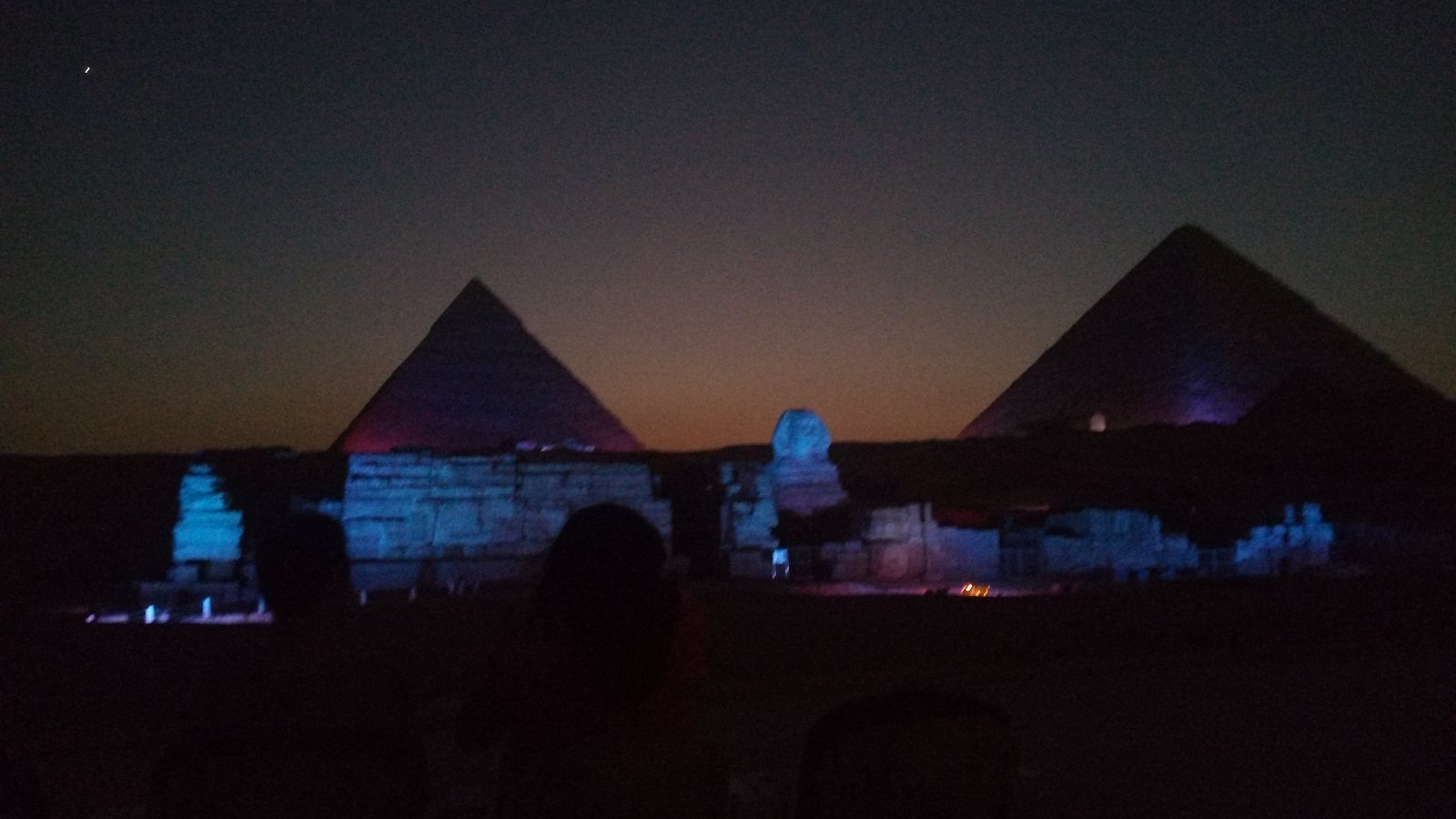
Visit the Giza plateau at midday and you are sharing it with tour buses, souvenir sellers, and a sun that makes lingering in front of any one monument a genuine effort of will. Come back after dark, on the right evening, and the same plateau becomes something closer to an open-air theatre: rows of seating facing the Sphinx, the three pyramids rising behind it, and a 45-minute production that uses nothing but colored light and a recorded voice to turn stone into narrator.
The Sound and Light Show at the Giza Pyramids has been running, in one form or another, for well over sixty years, which makes it almost as much a piece of Cairo's modern history as it is a way of seeing its ancient one.
A Show Older Than Most Visitors Expect
The first performance at Giza took place on April 13, 1961, making it one of the earliest "son et lumière" productions anywhere in the world to use a monument itself as the stage, rather than building a stage in front of one. The format proved popular enough that Egypt extended it to the Citadel of Salah El-Din in Cairo the following year, and to Karnak Temple in Luxor in 1972 — but Giza was the original, and remains the most visited.
Six decades on, the technology has obviously moved far beyond the original lighting rigs, but the core idea has not changed: use the monuments themselves, lit from multiple angles in shifting color, as the only visual the audience needs. No screens, no actors, no stage set dressing — just 4,500-year-old stone doing the work.
What Actually Happens for 45 Minutes
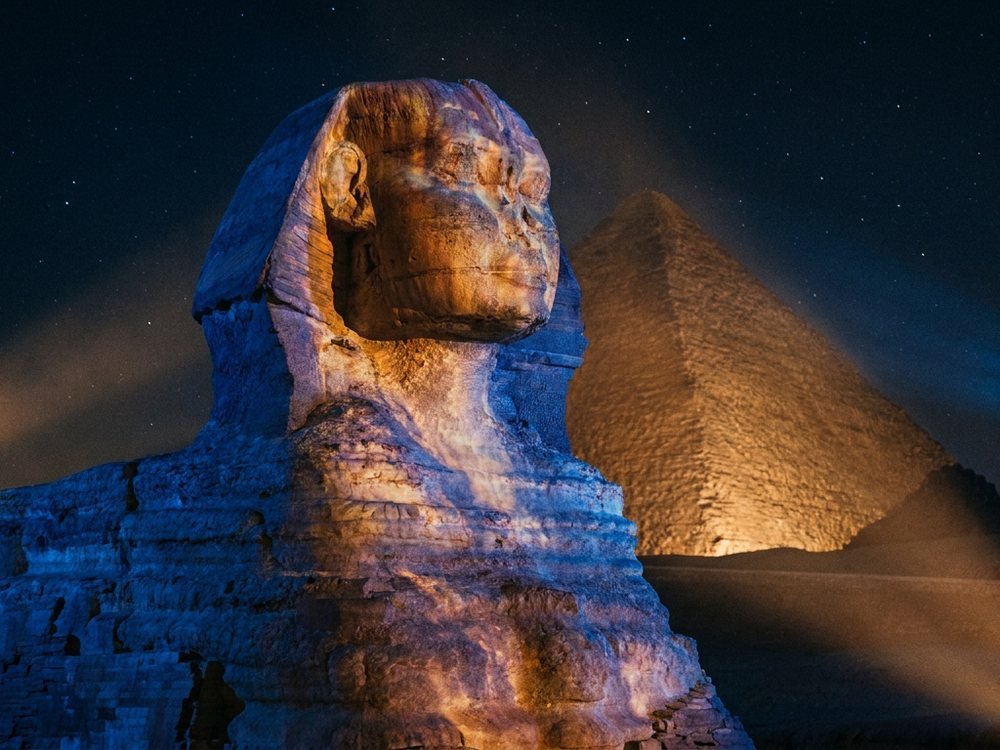
The show runs for roughly 45 minutes to an hour, with the Great Sphinx cast, unusually, as the narrator — a deep recorded voice speaking as though the Sphinx itself is recounting what it has witnessed across the millennia: the building of the pyramids, the reigns of the pharaohs who commissioned them, and the long passage of other civilizations across the same patch of desert. As the narration moves through each era, the lighting shifts to match — warm gold washing over Khufu's pyramid during talk of its construction, cooler blues settling over the Sphinx during more reflective passages.
It is a deliberately theatrical, slightly old-fashioned style of storytelling, closer to a dramatic reading than a modern documentary, and that is largely the point. The show was built as spectacle first, history lesson second, and it works best approached that way — less a substitute for a guided day tour, more a different register entirely.
Book Your Evening at the Plateau
Seats, timing, and the right language session are easy to get wrong if you turn up unplanned. This Egypt Sun Travel booking handles all of it, with transport included.
Choosing Your Night, and Your Language
The narration rotates through a genuinely wide roster of languages across the week — English and Arabic feature most often, with French, German, Spanish, and Italian also running regular slots, and Japanese, Chinese, Russian, and others appearing on a less frequent rotation. It is worth checking the schedule for your preferred language before booking a specific evening, since not every language runs every night.
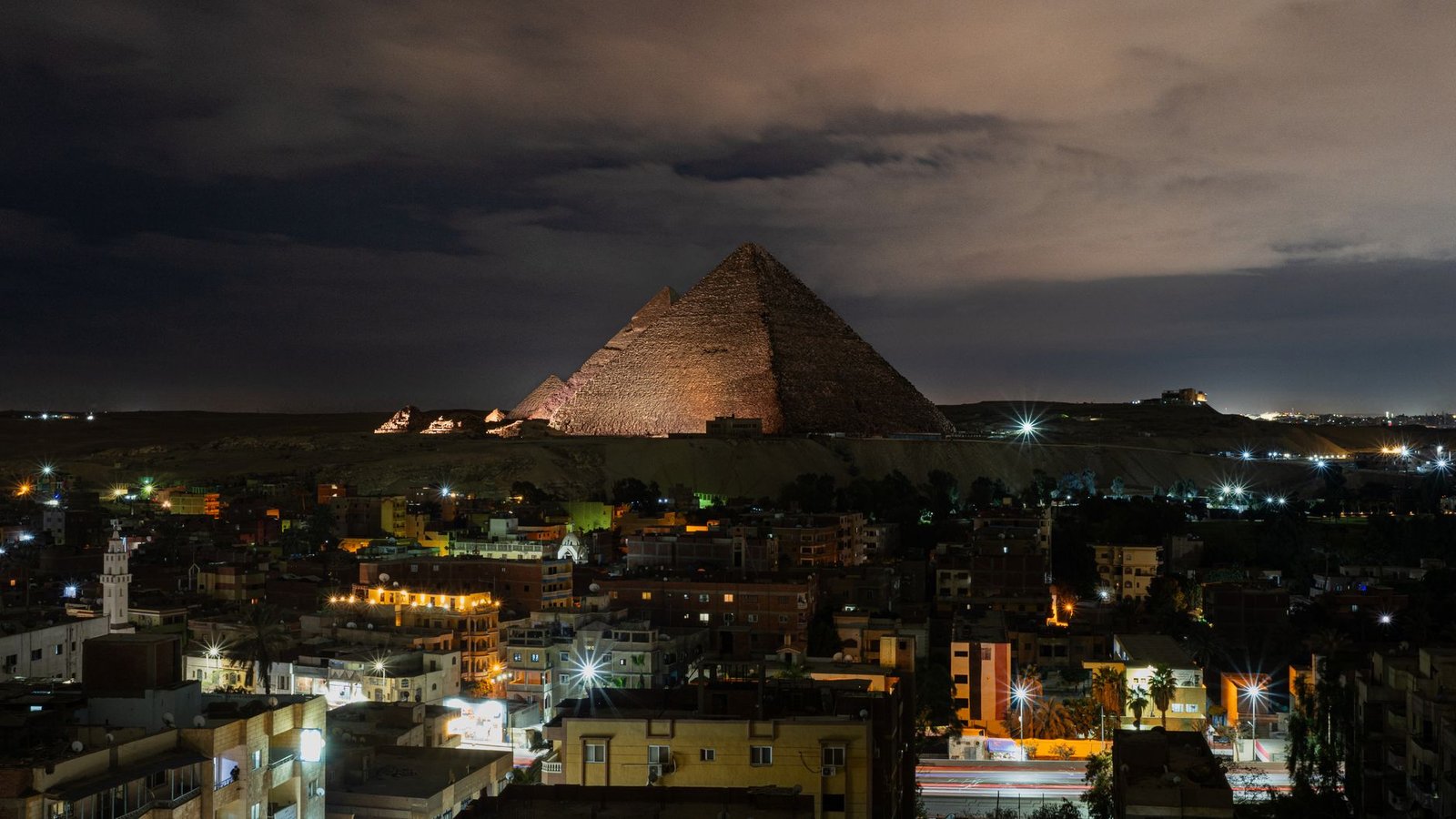
Showtimes shift slightly with the seasons to align with full darkness, so a show that starts at 7:00 pm in winter might start closer to 8:30 pm in summer. Seating is in the open air facing the Sphinx, and a light layer against the evening desert chill is worth packing even after a hot day, since temperatures drop quickly once the sun is down.
Worth Doing Even After You Have Already Seen Giza by Day
Travelers sometimes assume that having already toured the pyramids in daylight makes the evening show redundant. In practice, the two experiences barely overlap. A daytime visit is about proximity and scale — standing at the base, touching the stone, appreciating the sheer size up close. The night show is about atmosphere and story, watching the same monuments from a seated distance while light and narration do the work that walking around them during the day cannot.
It is also, practically speaking, an easier outing after a long day of sightseeing: no walking in heat, no negotiating with vendors, just a seat, a cooling evening, and forty-five minutes of theatre built around some of the oldest stone on Earth.
The Same Stones, a Different Kind of Attention
Most of what travelers remember about the pyramids involves effort — the heat, the climb up to get a better angle, the crowds to filter out of a photograph. The sound and light show asks for the opposite: sit still, let the plateau go dark around you, and let four and a half thousand years of history be told to you rather than walked through. For a monument this famous, that change of pace is its own kind of rare.