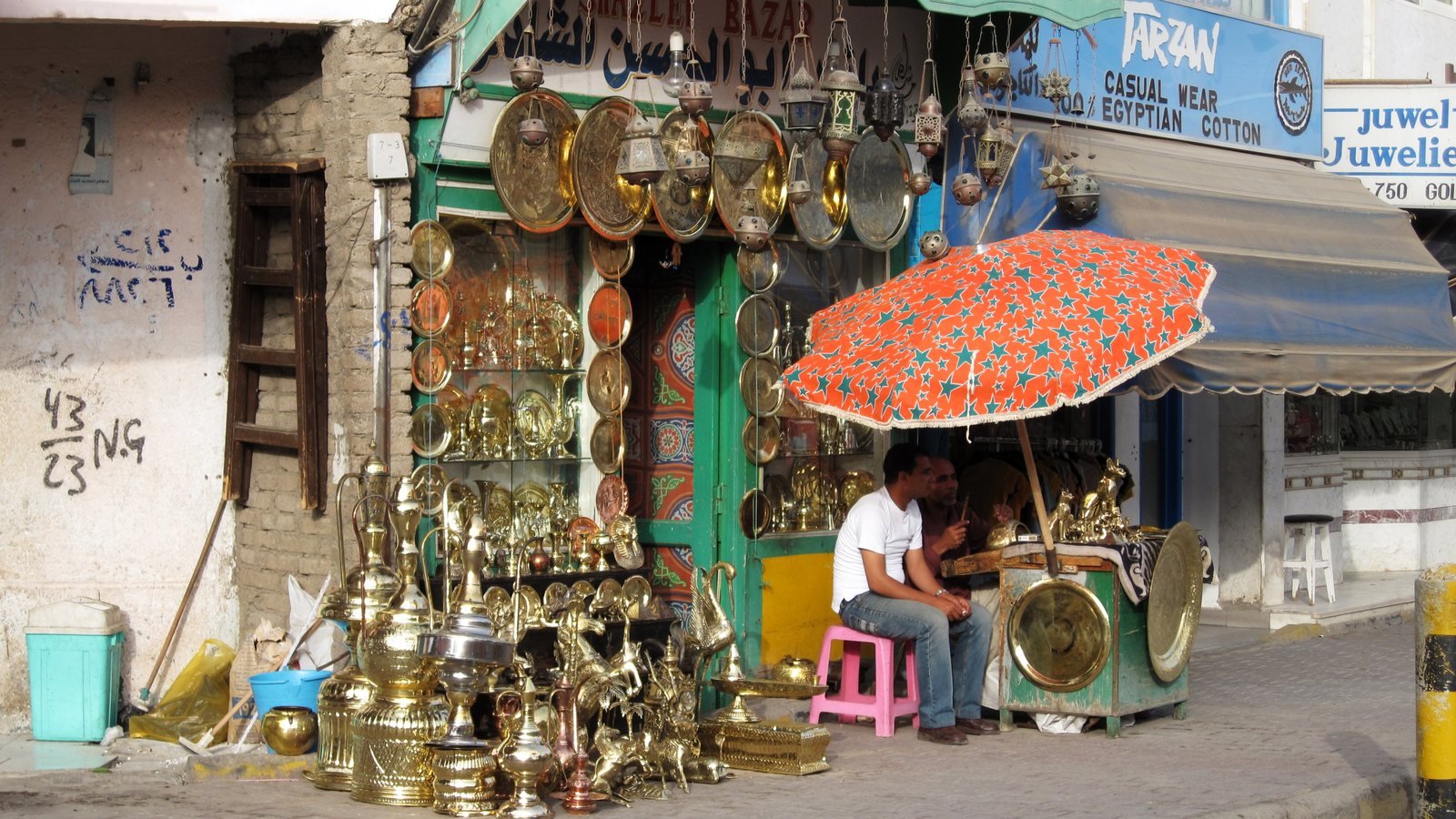
Most visitors to Hurghada or Sharm El Sheikh experience the Red Sea coast from behind a wristband: a stretch of private beach, an all-inclusive buffet, a pool that never quite empties. It is a perfectly pleasant way to spend a week, and it tells you almost nothing about Egypt. A short taxi ride away, in neighborhoods most package itineraries never mention, both cities are getting on with ordinary life — fish markets opening before sunrise, tea glasses clinking in narrow alleys, mosques filling for evening prayer.
That contrast is sharper here than almost anywhere else in the country, because these two cities were built, quite literally, in two different eras. Hurghada's El Dahar district and Sharm's Old Market both predate the resort boom by decades; the glass-fronted promenades and dive-shop strips arrived later, grafted onto towns that already had their own rhythm. Walking between the two versions of each city is less a sightseeing detour than a short lesson in how the Red Sea coast actually came to look the way it does.
El Dahar: Hurghada Before the Resorts
El Dahar is Hurghada's original core, the fishing village the entire city grew out of, and it still functions as the place where residents actually live rather than where tourists are routed. The name itself — roughly "the back" or "the belly" in Arabic — nods to its position slightly inland from the newer coastal strip. Narrow streets climb and dip past barbershops, spice stalls, and corner grocers, with far less English signage and far more real bargaining than anything near the marina.
The best reason to go early is the fish market, which is loud, briny, and entirely unstaged: the night's catch laid out on ice by 6 or 7 a.m., still being sorted and shouted over while most hotel breakfast buffets haven't opened. A few minutes' walk away, the vegetable souk does the same thing with produce — mountains of mango and dates, vendors calling out prices that are, refreshingly, not aimed at tourists at all, since there usually aren't many around to aim at.
Markets, Mosques, and a Working Coptic Cathedral
Beyond the souks, El Dahar carries visible layers of the Red Sea coast's religious and social history side by side. The Al Mina Mosque, with its coastal silhouette, anchors the skyline near the old harbor, while the Coptic Cathedral of Saint Shenouda sits a short walk inland — a reminder that Hurghada's Christian and Muslim communities have shared this stretch of coastline for generations, well before diving tourism gave the city a second identity in the 1980s and 90s.
It is also, unglamorously, where you buy what you actually need rather than what a gift shop stocks: spices by weight, cotton scarves, sandals, phone chargers, fresh bread from a bakery with no sign at all. Haggling here is expected and genuinely good-natured, closer to a conversation than a transaction, and it is one of the few places on this coast where the price you're quoted first is rarely the price anyone actually pays.
See the Other Side of the Red Sea Coast
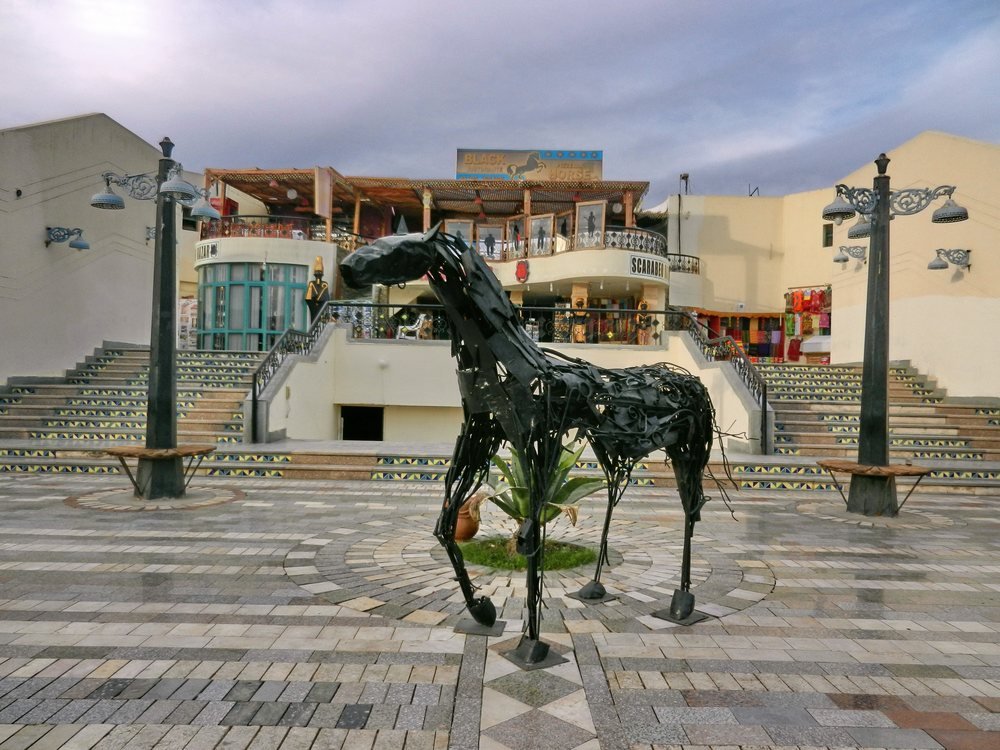
A resort wristband shows you one version of Hurghada and Sharm El Sheikh. These Egypt Sun Travel city tours take you into El Dahar's markets, the Old Market of Sharm, and the streets where the Red Sea coast actually lives.
El Mamsha: Hurghada's Other Face
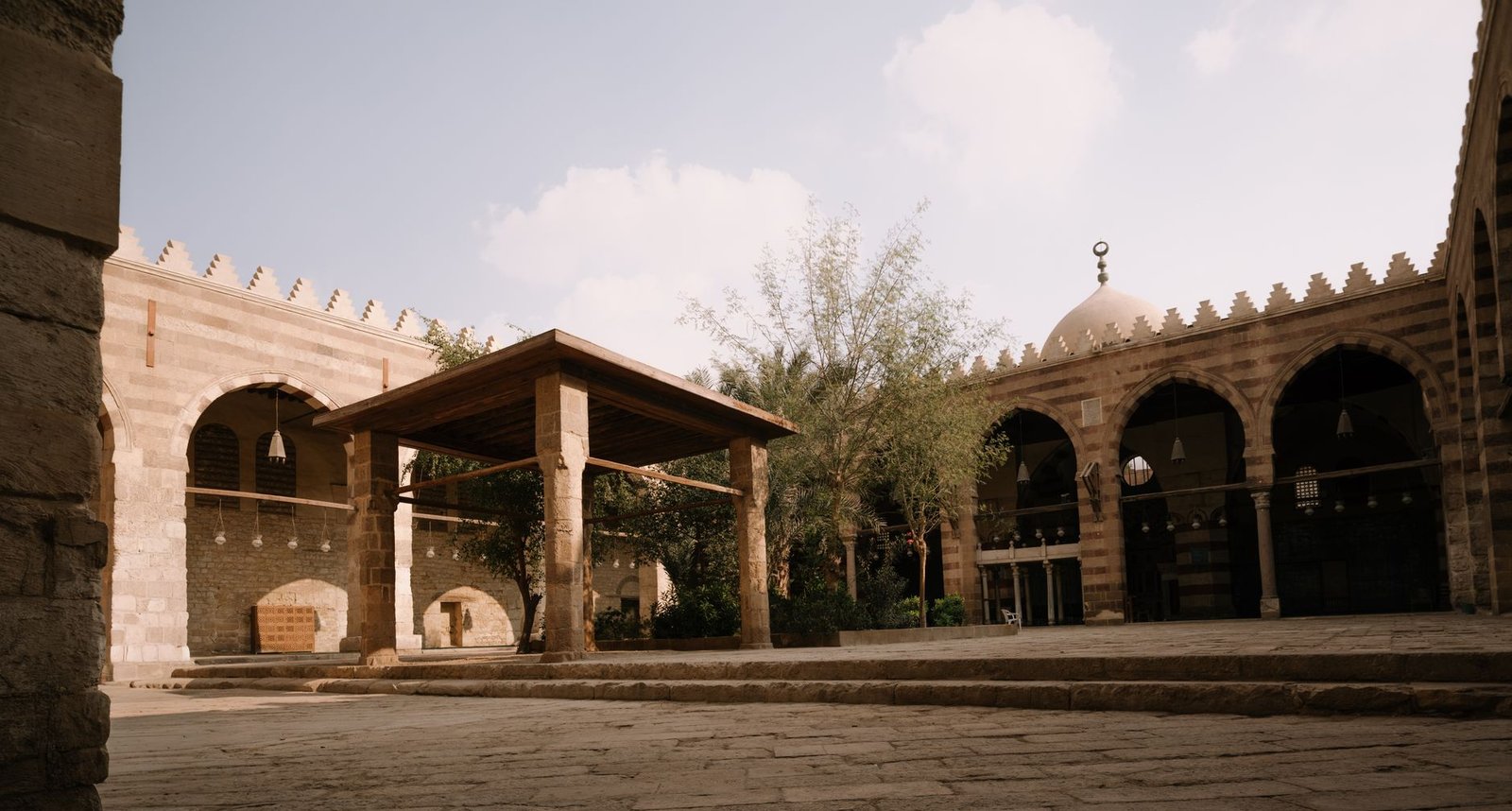
A short drive south, El Mamsha is almost a different city: a paved marina promenade lined with restaurants, shisha cafes, and souvenir shops built specifically for the resort crowd, with the harbor's yachts and dive boats docked along one side. It is unmistakably built for tourists, but it is also where a good number of Hurghada's own residents come in the evening, since the sea breeze and the lit-up corniche make it one of the more pleasant places in the city after dark regardless of who you are.
Seeing El Mamsha after El Dahar — rather than instead of it — makes both places easier to read. One is the city's working memory, the other is its newer economy, and the fact that they sit fifteen minutes apart by taxi says something honest about how fast the Red Sea coast grew once international tourism discovered it in the final decades of the twentieth century.
Sharm's Old Market and the Streets Behind Naama Bay
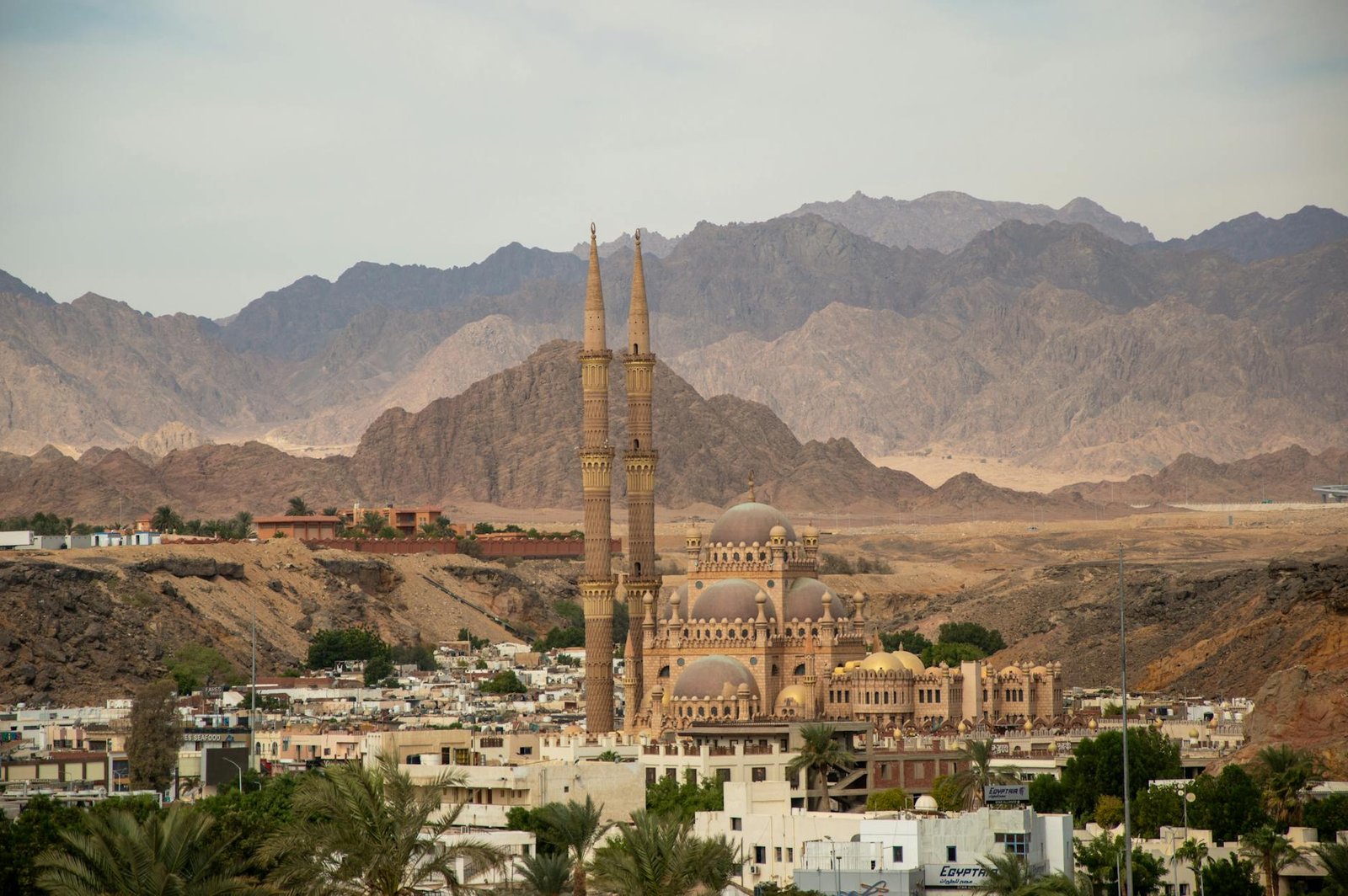
Sharm El Sheikh's equivalent is the Old Market, also known locally as Sharm el-Maya, built around the large square and minarets of the Al Sahaba Mosque. It predates Naama Bay's resort strip and still reads as a genuine souk rather than a tourist stage set: narrow lanes of lanterns, perfume oils, spices, leather goods, and the kind of pottery and textiles that are actually made somewhere in Egypt rather than imported for the shelf. Evenings are when it comes alive, with locals and visitors shopping and eating side by side.
A fifteen-minute walk or short taxi ride away, Naama Bay is the polished counterpart — dive centers, international restaurant chains, and a long paved promenade that was purpose-built for package tourism starting in the 1980s. Prices there run noticeably higher than the Old Market for identical souvenirs, which is itself a useful, if unofficial, way to understand which version of Sharm you're actually standing in at any given moment.
Why This Side of the Coast Is Worth Your Time
Egypt's big-ticket sites — the Pyramids, Luxor's temples, the Nile itself — understandably dominate most people's image of the country. But El Dahar's fish market at dawn and the call to prayer drifting over Sharm's Old Market square belong to that same continuous story: a country where ancient and contemporary, devout and commercial, have always sat close together, often on the same street.
A week by the Red Sea does not need to be only snorkeling and sunbeds to be a real Egyptian trip. An hour or two in El Dahar or the Old Market, taken on its own terms rather than as a photo stop, adds a layer to the resort stay that the beach alone cannot — and it is, by a wide margin, the closest most coastal travelers will get to the Egypt that exists year-round, long after the tour buses leave.