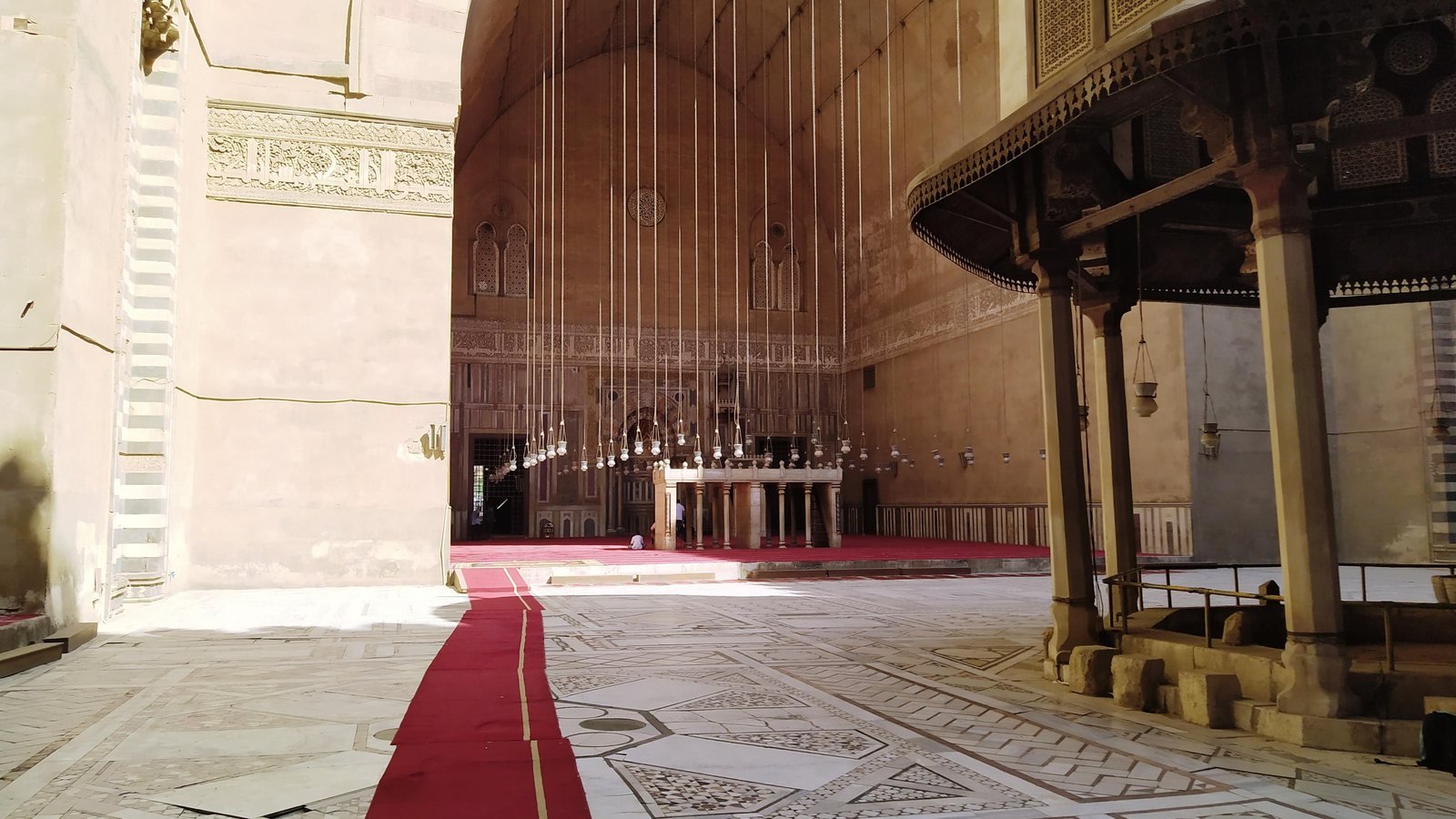
Most visitors come to Cairo for the pyramids, and then discover, almost by accident, that the city itself is a kind of excavation site you can walk through without a shovel. A few kilometers apart sit two districts that rarely make the first page of an itinerary but quietly contain most of Egypt's post-pharaonic story: Old Cairo, built on the bones of a Roman fortress and still home to some of the oldest churches and a synagogue in the country, and Islamic Cairo, a medieval core of mosques, madrasas, and covered markets that functioned as the capital of the Islamic world for centuries.
Neither district is a reconstruction or a museum piece. People still worship in these buildings, still thread through these alleys on their way to work, which is part of what makes the layering so disorienting in the best sense — a Roman gate, a Fatimid mosque, and a Mamluk minaret can all sit within sight of one another, each one still doing, more or less, what it was built to do.
Babylon Fortress: Cairo Before It Was Cairo
Centuries before Islamic Cairo existed, the Romans built a fortress here on the east bank of the Nile, known as Babylon — a name borrowed, most historians believe, from an earlier Persian-era settlement rather than from Mesopotamia itself. Emperor Trajan is generally credited with reinforcing it around 100 CE, and its massive round towers, originally rising beside a now-shifted course of the river, still anchor the district today at roughly ten meters in height.
The fortress gave Old Cairo its physical shape and its name in Arabic, Masr al-Qadima. When Christian communities began building churches inside and around its walls in the centuries that followed, they were building directly into Roman masonry that was already old by the time they arrived — which is why, to this day, visitors can see Roman stonework forming the lower courses of buildings that are otherwise entirely Coptic in style.
The Hanging Church and a Synagogue Built Into a Church
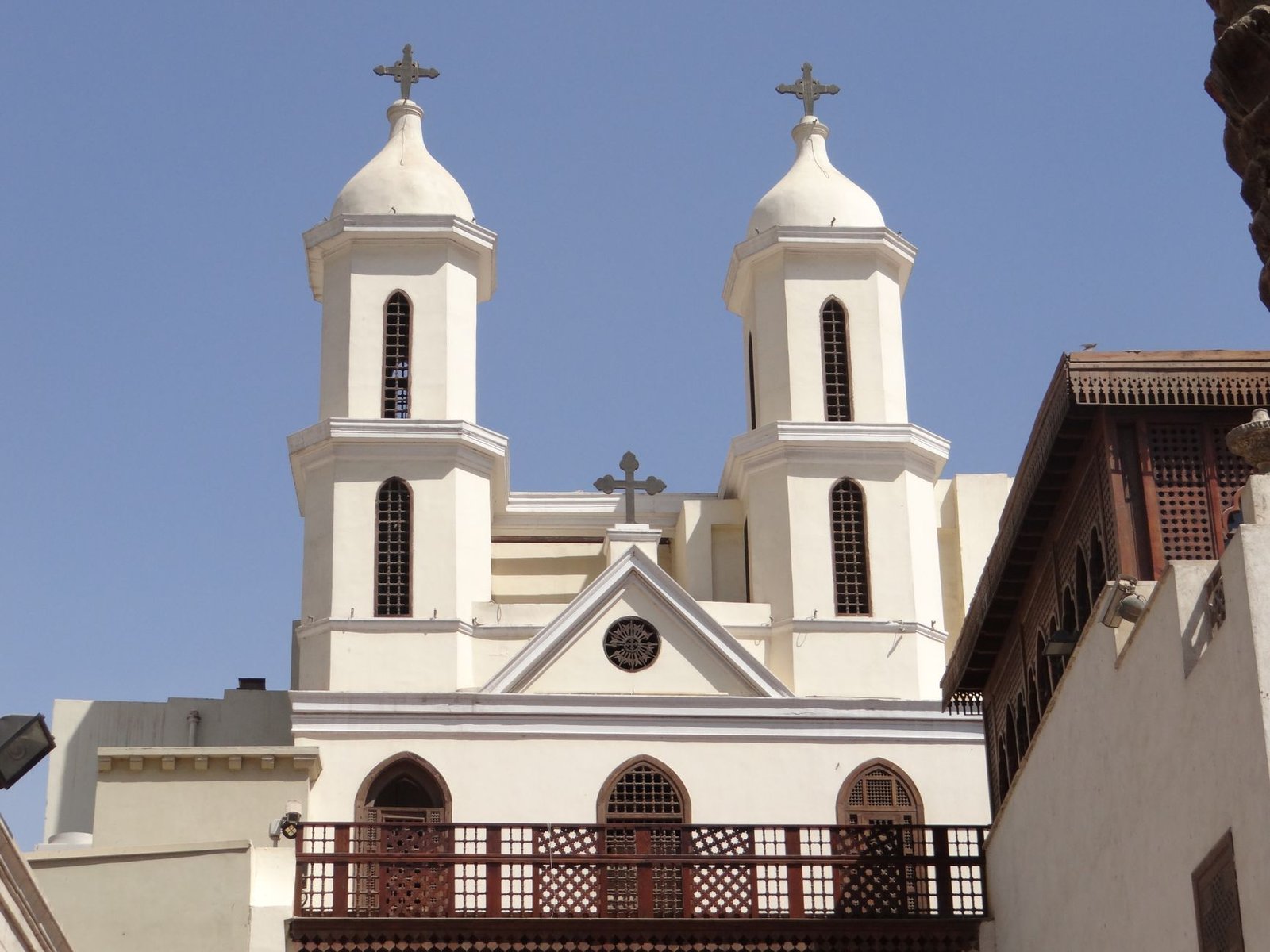
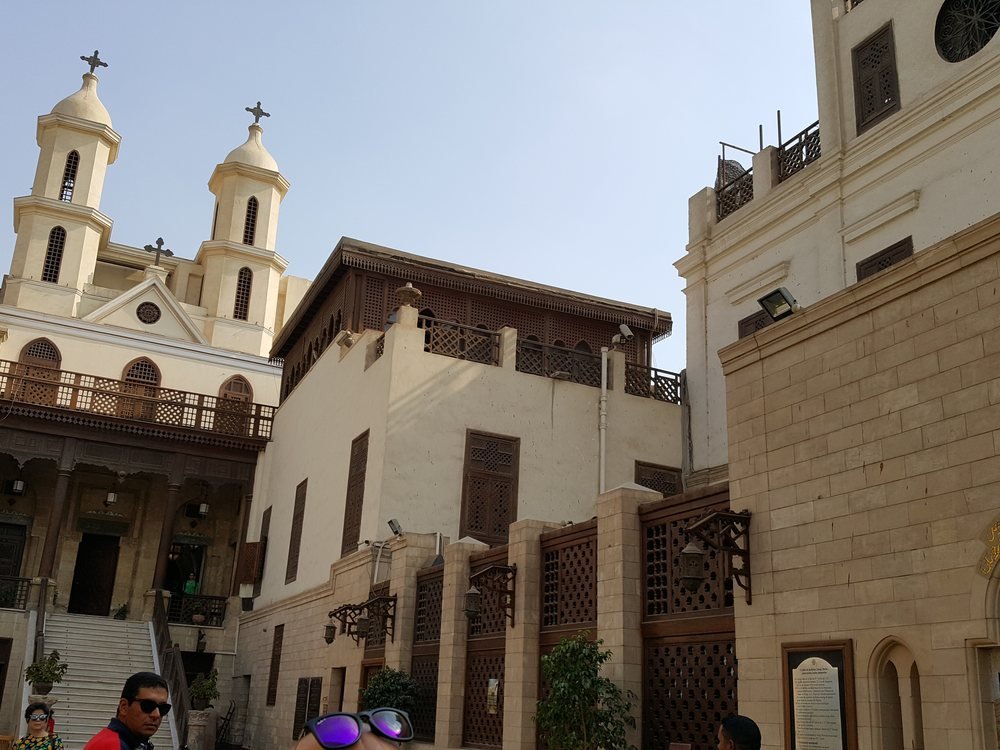
The Hanging Church — officially the Church of the Virgin Mary, and known in Arabic as al-Mu'allaqa, "the suspended one" — earns its name literally: it was built over the Water Gate of the Babylon fortress, its nave resting on the gate's two bastions rather than solid ground. Parts of the structure are generally dated to the 3rd or 4th century, making it one of the oldest churches in Egypt, and it served for long stretches as the seat of the Coptic Patriarch. Its wooden ceiling, shaped to evoke Noah's Ark, and its ebony-and-ivory inlaid screens are still in place.
A short walk away, the Ben Ezra Synagogue tells an even stranger architectural story: it occupies a building that began as a Christian church before being sold to Cairo's Jewish community, with most scholars dating the transition to the 9th century. In the late 19th century, workers restoring the synagogue discovered the Cairo Geniza, a repository of nearly 300,000 manuscript fragments — legal documents, letters, religious texts — that has since become one of the single most important archives for understanding medieval Jewish, and broader Mediterranean, daily life.
Walk Through the Layers Yourself
These neighborhoods reward slow walking and a guide who can explain what you're looking at — a Roman tower wall here, a Mamluk minaret there. Egypt Sun Travel runs dedicated tours through both Coptic Cairo and Islamic Cairo with licensed Egyptologist guides.
Sultan Hassan: A Mosque Built to Outscale an Empire
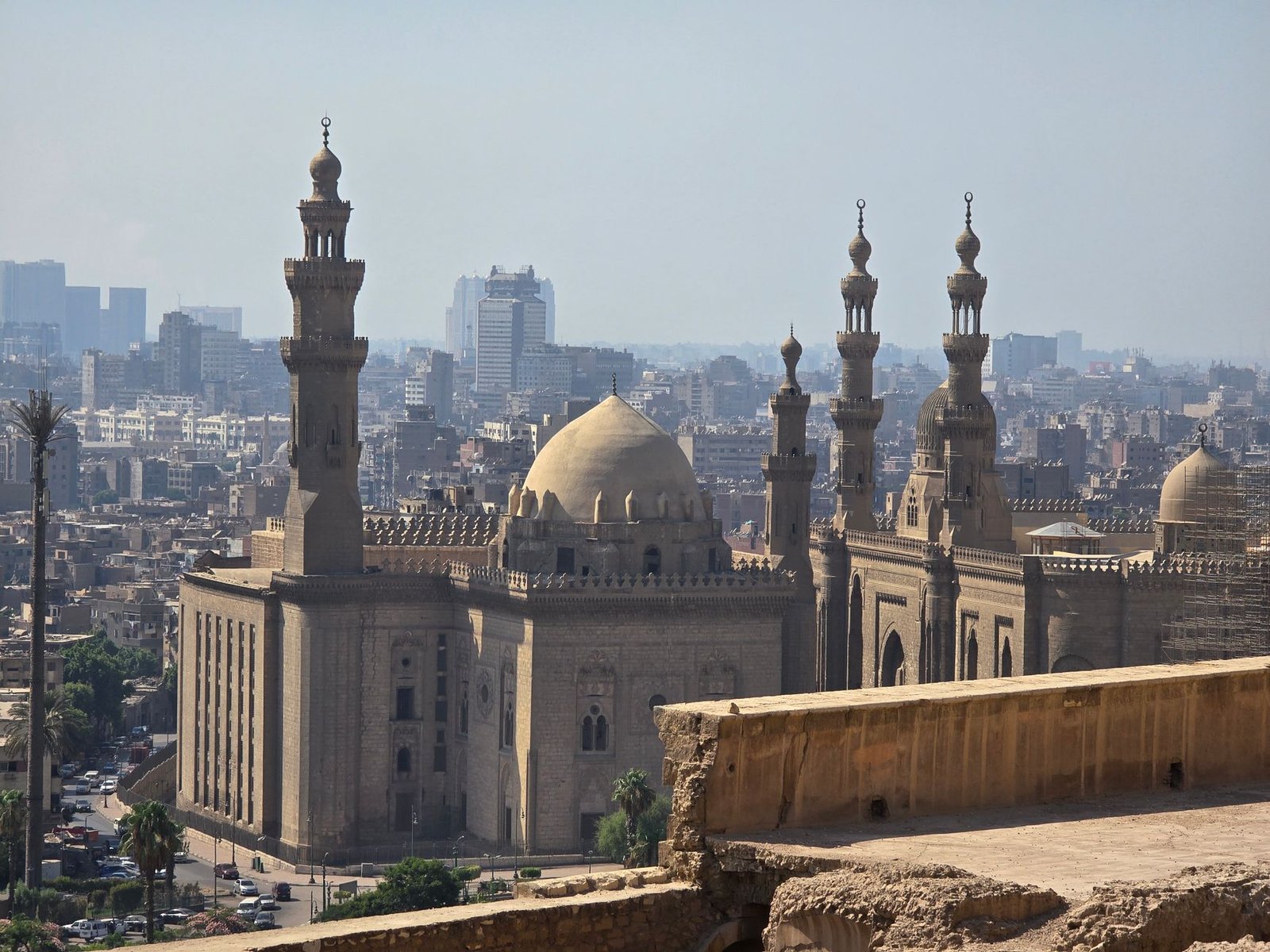
Islamic Cairo tells a different chapter, set centuries later. The Mosque-Madrasa of Sultan Hassan, raised between 1356 and 1363 under the Mamluk sultan an-Nasir Hasan, remains one of the largest religious structures ever built in the city — a cruciform plan organized around a central courtyard with four towering iwans, one for each of the Sunni schools of law it was built to teach simultaneously. Its eastern minaret climbs roughly 68 meters, among the tallest in historic Cairo, and chroniclers at the time noted that stone for the complex was partly quarried from the already-ancient pyramids of Giza.
The scale was deliberate. Mamluk sultans used monumental religious architecture to project legitimacy in a political system where succession was rarely hereditary and rule had to be continually reasserted through visible works. Sultan Hassan himself did not live to see the building finished — he was deposed and killed during its construction — which makes the finished structure, ironically, a more enduring monument to his reign than his actual rule ever was.
Al-Rifa'i: A Mosque That Became a Royal Resting Place
Directly across the square from Sultan Hassan stands the Al-Rifa'i Mosque, begun in 1869 and finished only in 1912 — a much later building deliberately designed to echo its Mamluk neighbor's scale and silhouette, so the two now read almost as a matched pair framing Salah al-Din Square. Al-Rifa'i was commissioned to serve as a mausoleum for Egypt's royal Muhammad Ali dynasty, and it still holds the tombs of several of its rulers, including King Fuad I and King Farouk, Egypt's last reigning monarch before the 1952 revolution.
Its most unexpected resident, though, is foreign: Mohammad Reza Pahlavi, the last Shah of Iran, died in exile in Cairo in 1980 and was buried inside Al-Rifa'i after Egypt extended him refuge that few other countries were willing to offer. His father, Reza Shah, was also briefly interred there before being moved. The result is a building that, almost by accident, holds the final chapter of two separate monarchies under one Mamluk-revival dome.
Two Neighborhoods, One Continuous City
It is easy to treat Egypt as a country defined entirely by its pharaonic past, and understandable — the pyramids and temples dominate the imagination for good reason. But Old Cairo and Islamic Cairo are reminders that Egypt's history did not end with the last pharaoh; it kept being written, by Roman engineers, Coptic monks, Jewish scholars, and Mamluk sultans, in buildings that are still standing and, in most cases, still in use.
Seeing both districts in the same visit tends to reframe a Cairo trip entirely — not as a single ancient civilization frozen in stone, but as a continuously inhabited city that has absorbed, argued with, and ultimately preserved every layer of its own past.