At around two in the morning, in a parking lot at the base of the Sinai massif, headlamps start clicking on in the dark. There is no single moment when the Mount Sinai hike officially begins — it is simply a steady trickle of pilgrims, backpackers, and Bedouin guides falling into a loose line on a path they cannot really see, trusting the person in front of them and the stars overhead. By the time the sky starts to lighten, that trickle has become a quiet procession strung out along the mountainside, several hundred people who, for a few hours, share almost nothing in common except the decision to be awake for this.
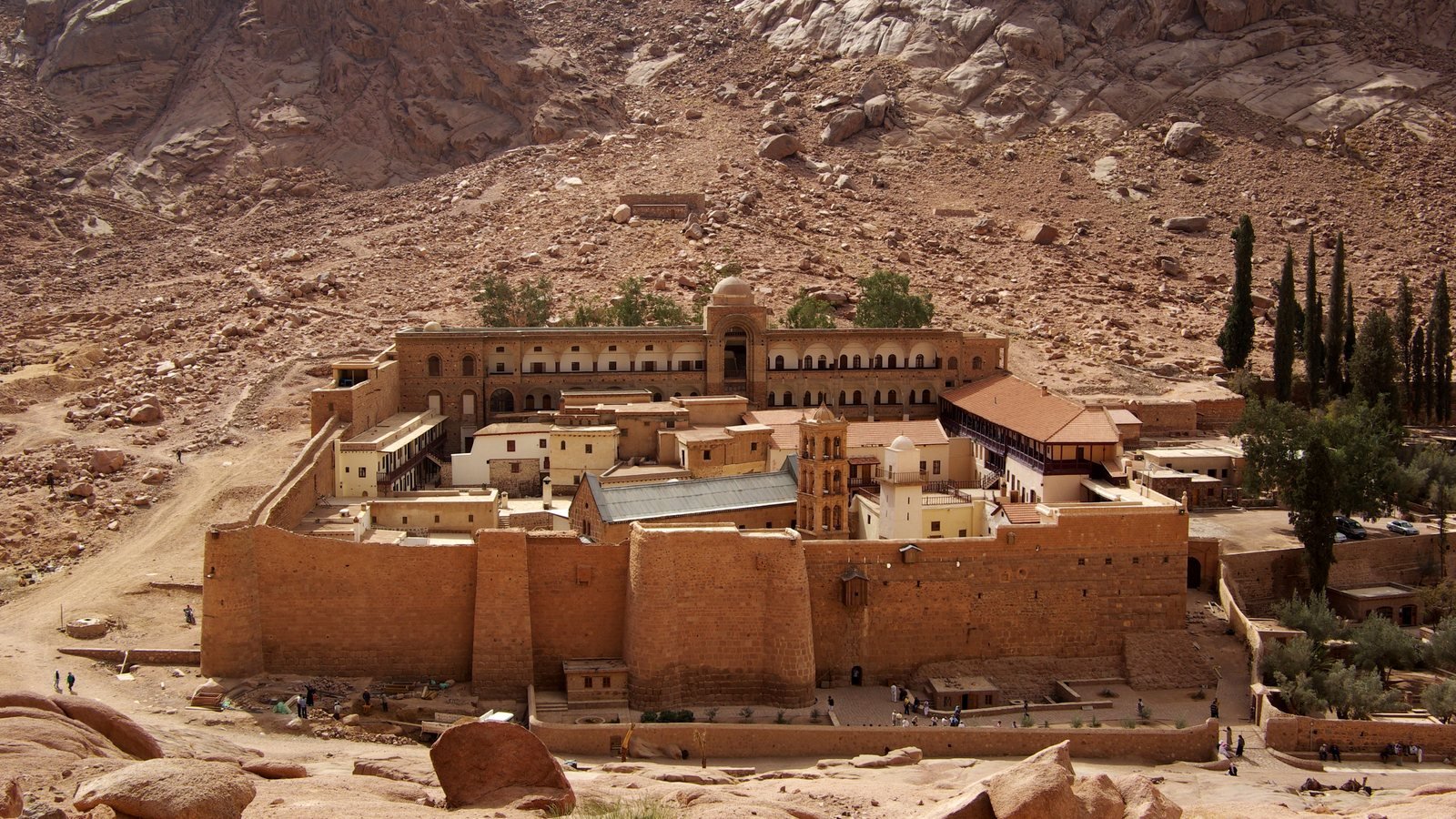
The mountain they are climbing goes by several names — Mount Sinai, Jebel Musa, Gabal Musa, 'Moses' Mountain' — and carries weight far beyond its modest 2,285-metre summit. Tradition holds this is where Moses received the Ten Commandments, a claim that makes the same patch of granite sacred ground in Judaism, Christianity, and Islam simultaneously. At its base sits St Catherine's Monastery, one of the oldest continuously inhabited Christian monasteries on Earth. Few places pack this much layered history into a single sunrise.
Two Paths, One Summit
There are two official ways up Mount Sinai, and most people only ever take one. The Camel Path (Siket El Bashait) is the longer, gentler option — roughly 7.5 kilometers of switchbacks that camels can manage with a rider, climbing steadily before narrowing into several hundred stone steps for the final push to the top. Most hikers cover it in two to three hours. The Steps of Repentance (Siket El Tarabea) is the other route: a direct, punishing staircase of more than 3,750 stone steps cut by a monk centuries ago as an act of penance, said to have been carved one at a time. It can be climbed in under an hour by someone fit and determined, or considerably longer by everyone else.
The two routes converge at a plateau below the final summit push, known as Elijah's Basin, where a 500-year-old cypress tree marks the spot tradition associates with the prophet Elijah's encounter with God. From there, a shared stretch of stone steps — steep, uneven, and cold even in summer — leads to the open rock summit itself. Most organized tours use the Camel Path going up, since doing it in darkness is considerably safer than the steep stairs, and offer the Steps of Repentance as the descent for those who want a different experience on the way down.
Why Climb in the Dark
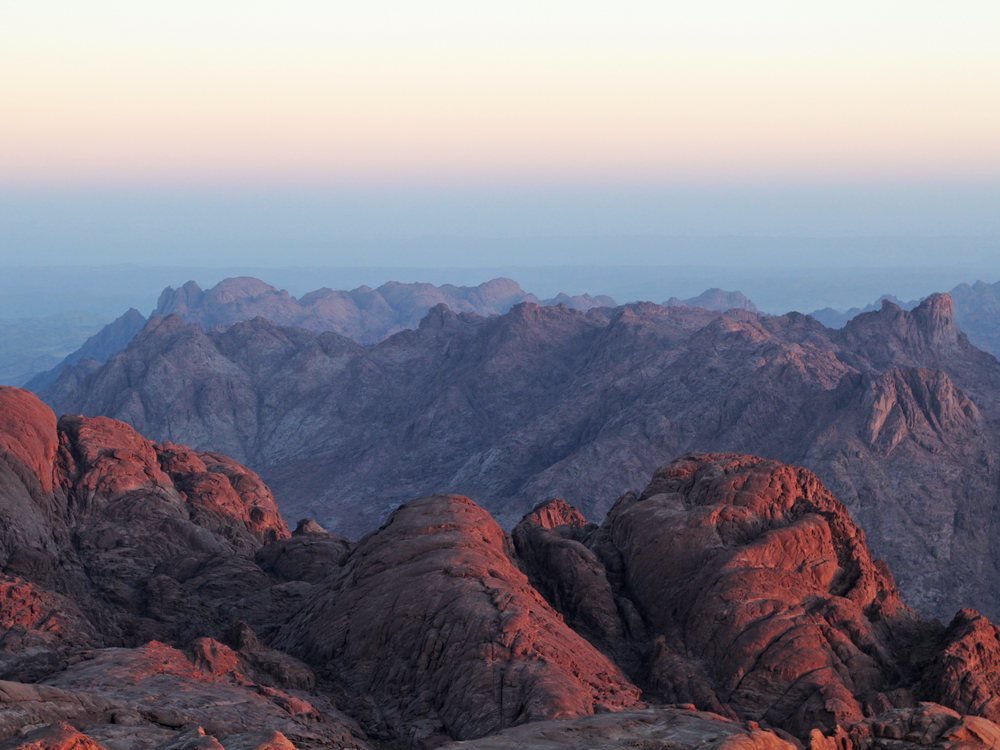
The timing is not an aesthetic choice so much as a practical one dressed up as a spiritual one. Climbing overnight avoids the Sinai's brutal daytime heat entirely, and reaching the 2,285-metre summit for sunrise means watching the sun rise over the jagged, layered mountain ranges of the Sinai Peninsula rather than over flat desert — a genuinely different kind of sunrise than most people have seen before, with ridgelines stacking into the distance in deepening shades of rust and violet before the light fully breaks.
Most guided departures leave St Catherine's town around midnight to 2am, timed so the ascent takes roughly two and a half to three hours and arrives with enough buffer to find a spot among the rocks before the sky actually changes. Temperatures at the summit before dawn can drop close to freezing even when the desert floor below was scorching the day before, which is the detail first-time climbers underestimate most often — layers matter here as much as water does.
Make the Climb Yourself
Reading about the sunrise from Mount Sinai and standing on the summit for it are two entirely different experiences. This Egypt Sun Travel tour handles the overnight logistics, the Bedouin guide, and the visit to St Catherine's Monastery afterward, so all that is left for you to do is the walk.
The Monastery That Never Closed
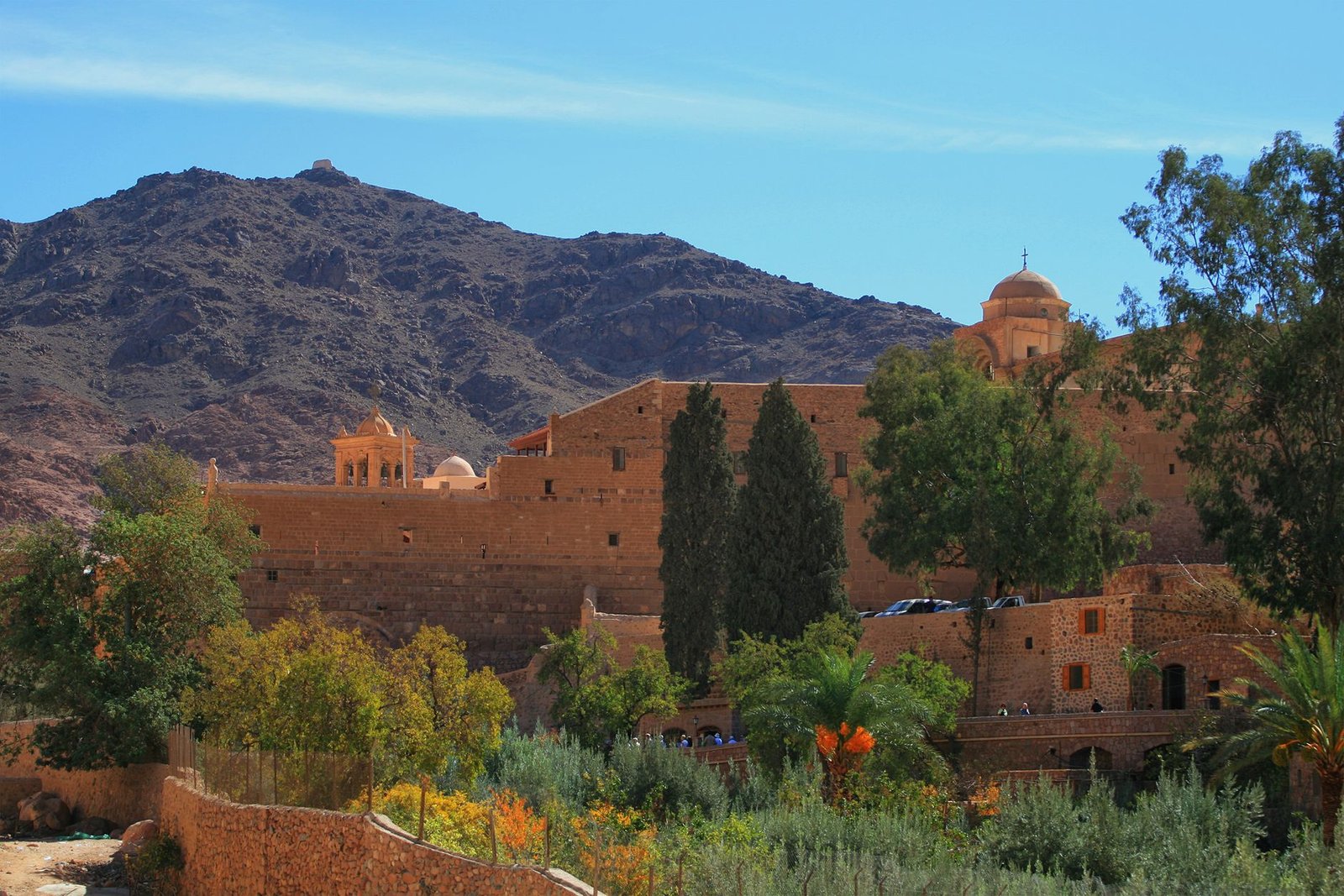
St Catherine's Monastery sits at the foot of the mountain, built on the order of the Byzantine Emperor Justinian I and completed around 530 CE — making it one of the oldest continuously inhabited Christian monasteries anywhere in the world, with monks living and worshipping inside its fortress-like granite walls for close to fifteen centuries without interruption. The monastery encloses the traditional site of the Burning Bush, the shrub tradition identifies as the one Moses encountered while tending his father-in-law's flock — visitors can still see a bramble bush growing against the chapel wall, descended, by local account, from the original.
Within those walls is something even more extraordinary to historians: a working library holding more than 3,300 ancient manuscripts, outranked in significance only by the Vatican's collection. Among its holdings are portions of the Codex Sinaiticus, one of the earliest surviving handwritten copies of the Christian Bible, and the Ashtiname of Muhammad, a document traditionally understood as a charter of protection for the monastery granted by the Prophet Muhammad himself — a detail that captures, better than almost anything else here, how this single site has somehow mattered to three different faiths for well over a thousand years.
Sacred Ground, Shared Three Ways
It is worth sitting with what makes this mountain unusual: very few places on the planet carry unbroken religious significance across Judaism, Christianity, and Islam at once. For Jewish tradition, this is the site of revelation at Sinai, where the covenant was given. For Christians, it is bound up with the Burning Bush and centuries of monastic life built around protecting that memory. For Islam, Mount Sinai (Tur Sayna) is named directly in the Quran, and the mountain and monastery carry documented protections tracing back to the earliest years of Islamic history.
None of this requires a visitor to hold any particular belief to feel its weight. Watching several hundred strangers climb the same dark mountain path for the same sunrise, for reasons that range from deeply religious to simply curious, has a way of flattening those differences into something more universal — a shared recognition, at least for one morning, that some places just matter more than others.
Part of a Larger Journey
The descent back down, in full daylight, reveals a landscape the night climb kept hidden — raw granite peaks, Bedouin settlements tucked into folds in the rock, and the monastery's pale walls growing larger against the mountain as you approach. Most visits end with a walk through St Catherine's itself, a quiet, almost disorienting contrast after the physical exertion and emotional pitch of the summit a few hours earlier.
Mount Sinai and St Catherine's Monastery sit a little apart from Egypt's more familiar itinerary of pyramids and Nile cruises, and that distance is part of what makes the experience land so differently. It is less a monument to look at than an experience to go through — and for a country built on layers of history, it is one of the few places where that history still feels genuinely, continuously alive.