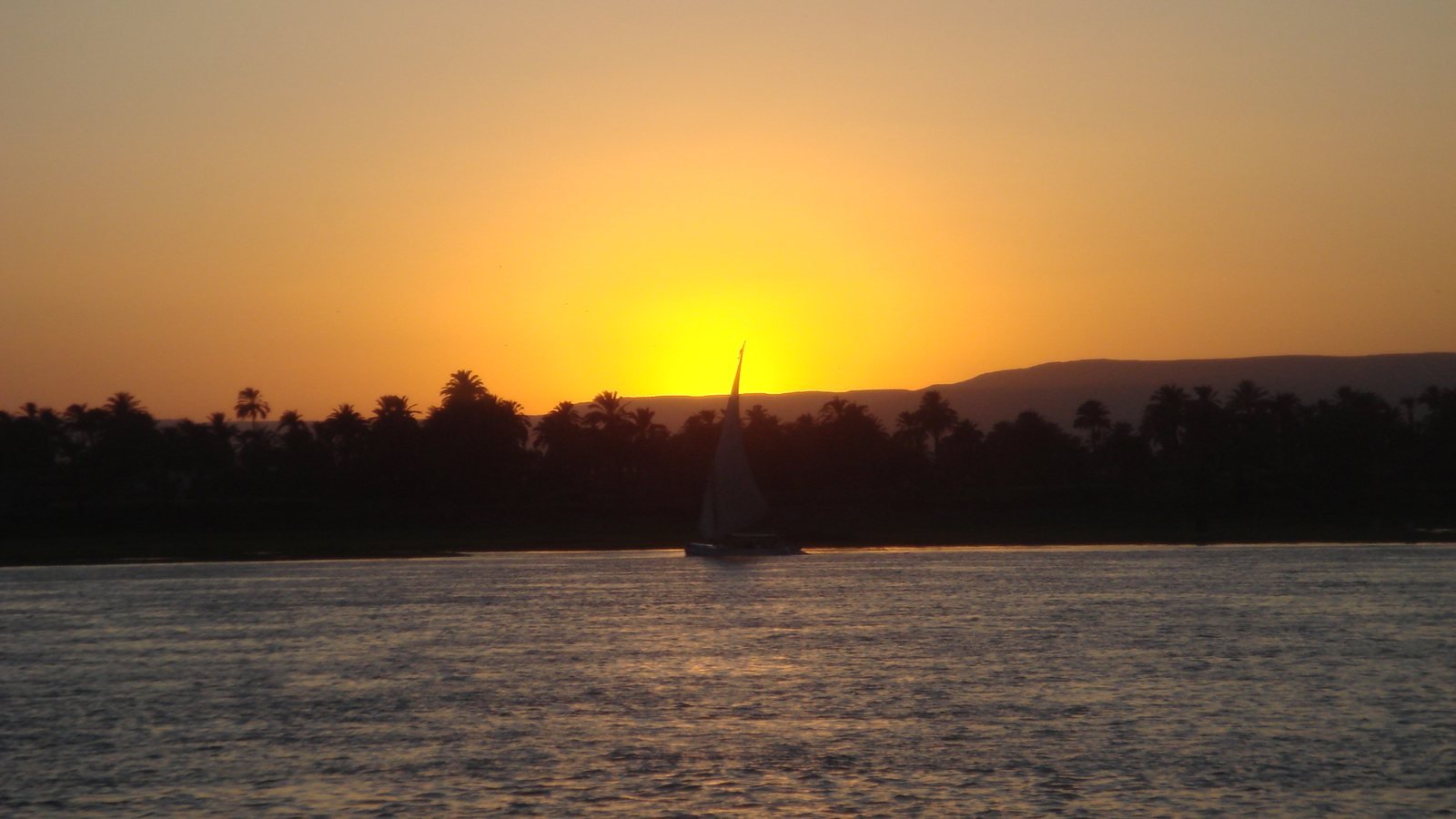
Every city built on a river eventually produces a boat that belongs to it, and Cairo's is the felucca. Long before any tour desk in Giza offered a sunset felucca ride as a line item on a brochure, the same wide-sailed wooden boats were hauling grain, stone, and entire households up and down the Nile, using nothing but wind and current to do work that today would require an engine. The tourist version that glides past the Corniche at dusk is, in almost every structural sense, the same boat.
What has changed is the purpose, not the vessel. A felucca ride in Cairo is no longer about getting somewhere — it is about being on the water at the one hour when the city's noise finally drops below the sound of a sail catching wind. That shift, from transport to ritual, is really the whole story of how the Nile still organizes daily life in a metropolis of more than twenty million people.
What a Felucca Actually Is
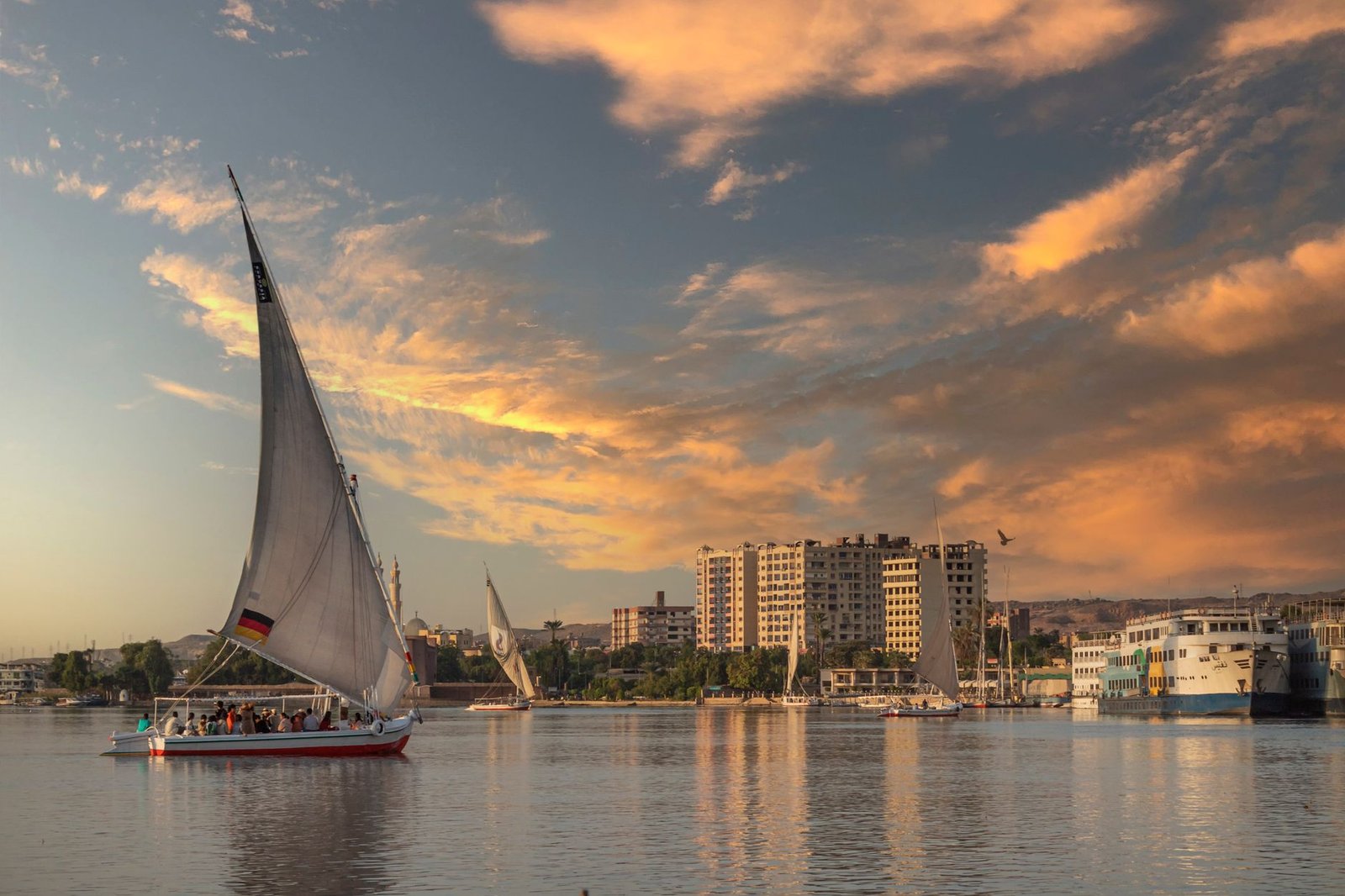
A felucca is a traditional wooden sailboat, open-decked, steered by a single tiller, and powered by one or two triangular lateen sails that can catch wind from almost any angle — a design refined over centuries specifically because the Nile's channel rarely offers a straightforward headwind. Most hold eight to twelve passengers and are crewed by one or two sailors who read the river by instinct: where the current runs faster near the bank, where a gust funnels between two bridges, when to let the sail go slack instead of fighting it.
There is no engine, and that absence is the entire point. A felucca moves at the speed the wind allows, which in practice means slower near sunset when the hot daytime thermals that drive the breeze start to settle. Sailors who grew up on the river will tell you this is also why sunset became the preferred hour for a leisure sail rather than an accident of marketing: the water goes calm, the wind turns gentle and steady instead of gusty, and the boat finally stops fighting the sailor.
Why the River Turns Gold at the Same Hour Every Evening
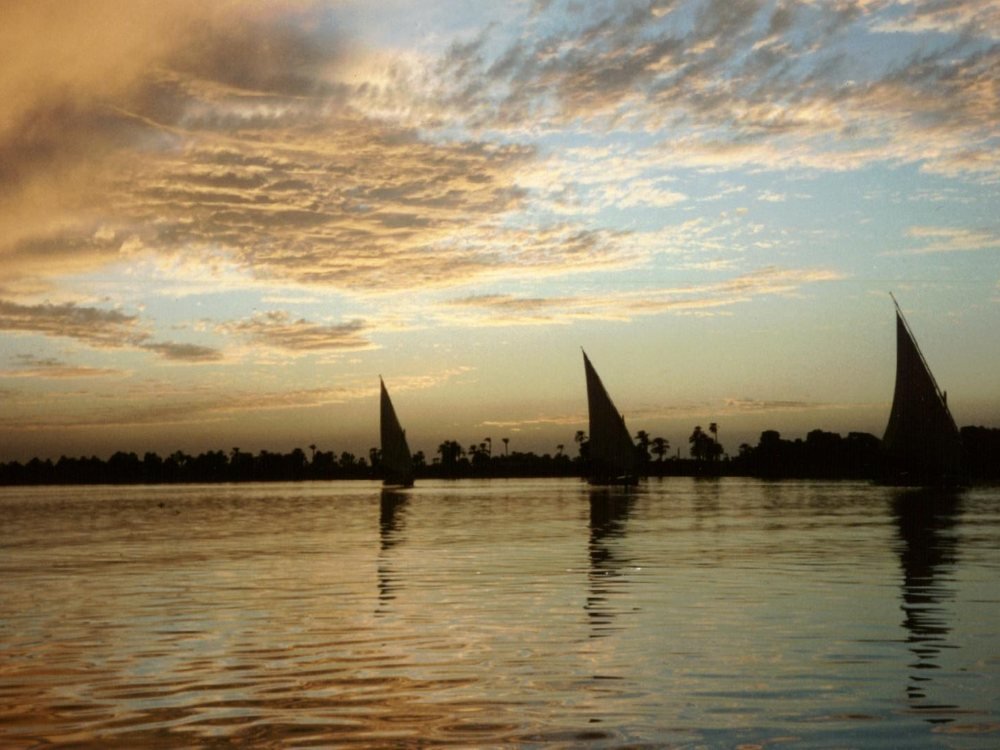
Cairo's sunset on the Nile has a specific, repeatable geometry. The river runs roughly north to south through the city, which means the setting sun tracks almost parallel to the water rather than sinking directly into it — the light comes in low and sideways, skimming the surface instead of glaring off it, and turning both the water and the undersides of the felucca sails the same shade of amber for a window of maybe twenty minutes. Photographers and first-time visitors tend to notice this before they can explain it: the river simply looks different than it did an hour earlier, less like a city waterway and more like something out of an older Egypt.
That window is short by design and nobody controls it, which is part of why a felucca ride resists feeling staged even when it is fully organized by a tour operator. The boat leaves when the wind and the booking allow, the light does what it does regardless of anyone's schedule, and the sailors have no more influence over the colour of the sky than their passengers do. It is one of the few experiences left in central Cairo that cannot be rushed, repeated on demand, or guaranteed to look exactly the same twice.
Meet the River at the Hour It Was Made For
A felucca ride on the Nile and a Nile dinner cruise with belly dance and Tanoura show cover two very different hours of the same river. Egypt Sun Travel can arrange either, or both, around the rest of your Cairo itinerary.
From a Quiet Sail to a Full Nile Dinner Cruise
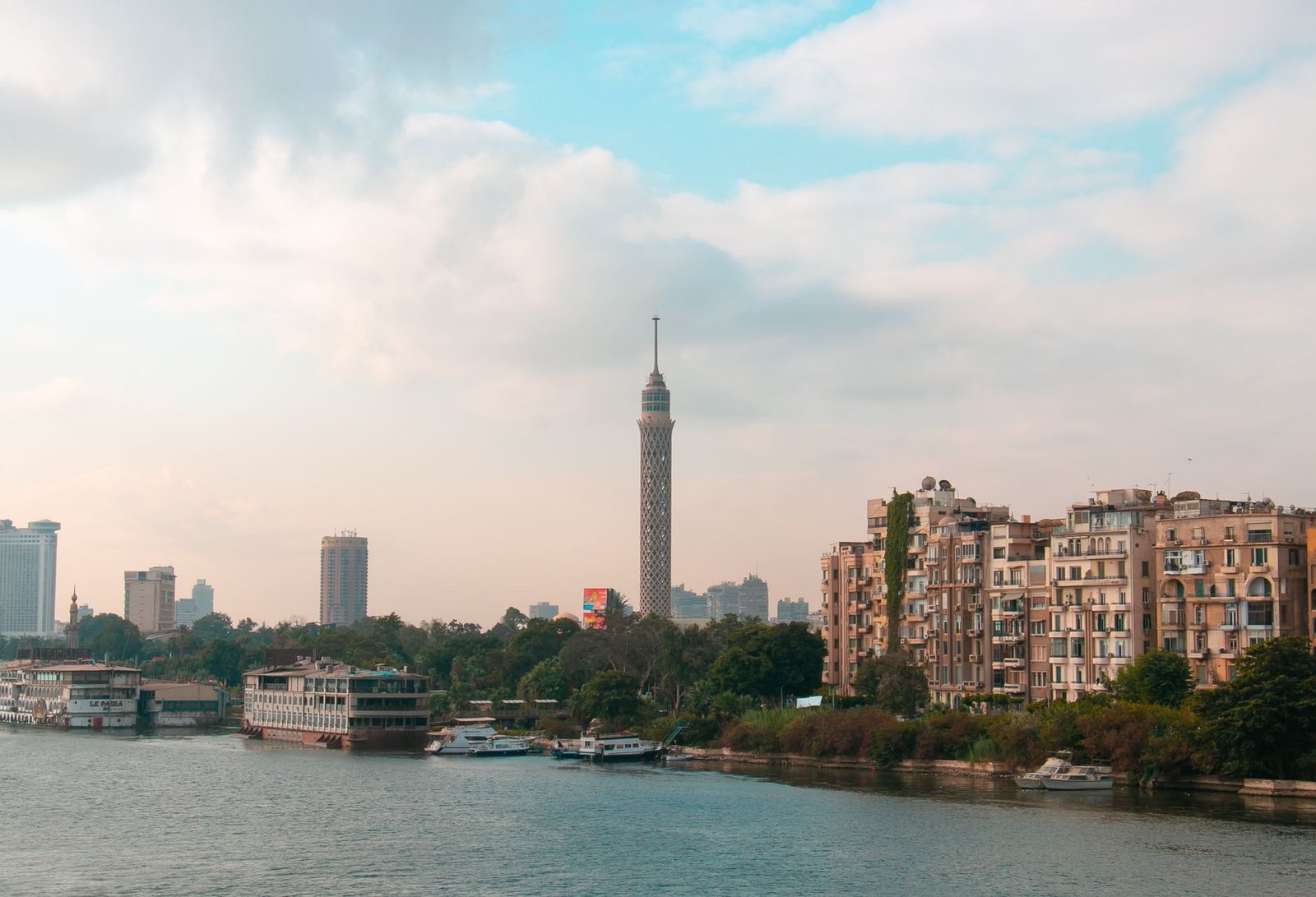
If a felucca ride is the Nile at its quietest, a Nile dinner cruise is the same river at its most theatrical. These run on larger, motorised vessels with enclosed dining decks, and the format has become a fixture of a Cairo evening for a reason: dinner, a river view of the lit-up city, and a live show, all moving at walking pace past bridges and skyline for two or three hours. The menu is typically a buffet built around Egyptian staples — grilled meats, rice, mezze, molokhia — alongside international options, served while the boat works its way along a stretch of river that looks completely different lit up at night than it does by day.
The entertainment is what distinguishes the dinner cruise from simply eating near water. A live band plays Arabic music through the meal, and the evening typically builds toward two set pieces: a belly dance performance and a Tanoura show, each drawing on a different thread of Egyptian and Sufi performance tradition rather than being generic cruise-ship filler.
Belly Dance and the Spinning Skirt of the Tanoura
Belly dance, known in Arabic as raqs sharqi, developed over generations as both folk and social dance across Egypt and the wider region, built around isolated movement of the hips, torso, and arms rather than footwork — a style distinct enough that Egyptian belly dance is still considered its own school within the wider Middle Eastern tradition. On a dinner cruise it is usually the first act, lively and audience-facing, the part most visitors expect going in.
The Tanoura that often follows is something else entirely. The word means "skirt" in Arabic, and the dance traces its lineage to Sufi whirling, the meditative spinning practice associated with the 13th-century mystic poet Jalal al-Din Rumi, in which a dervish turns continuously to reach a trance-like state representing the soul's surrender to the divine. Egypt's theatrical version, which emerged in the late 19th century, keeps the spinning but adds a brightly coloured, multi-layered skirt that the performer manipulates into expanding shapes and patterns while turning, sometimes continuously, for minutes at a stretch — more acrobatic and visually elaborate than its more austere Turkish counterpart, but still carrying the same original idea of motion as a form of devotion.
Two Ways to Meet the Same River
Between a quiet sunset felucca ride and a full Nile dinner cruise with belly dance and Tanoura, there is no better option, only a different one. The felucca gives you the Nile stripped down to wind, water, and a few minutes of impossible light. The dinner cruise gives you Cairo's river life in full performance — fed, lit, and set to music that has its own centuries of history behind it. Most travelers who have time for both come away describing them less as competing choices and more as two halves of the same evening: the quiet half and the loud half, each one true to a different side of how this city has always lived alongside its river.