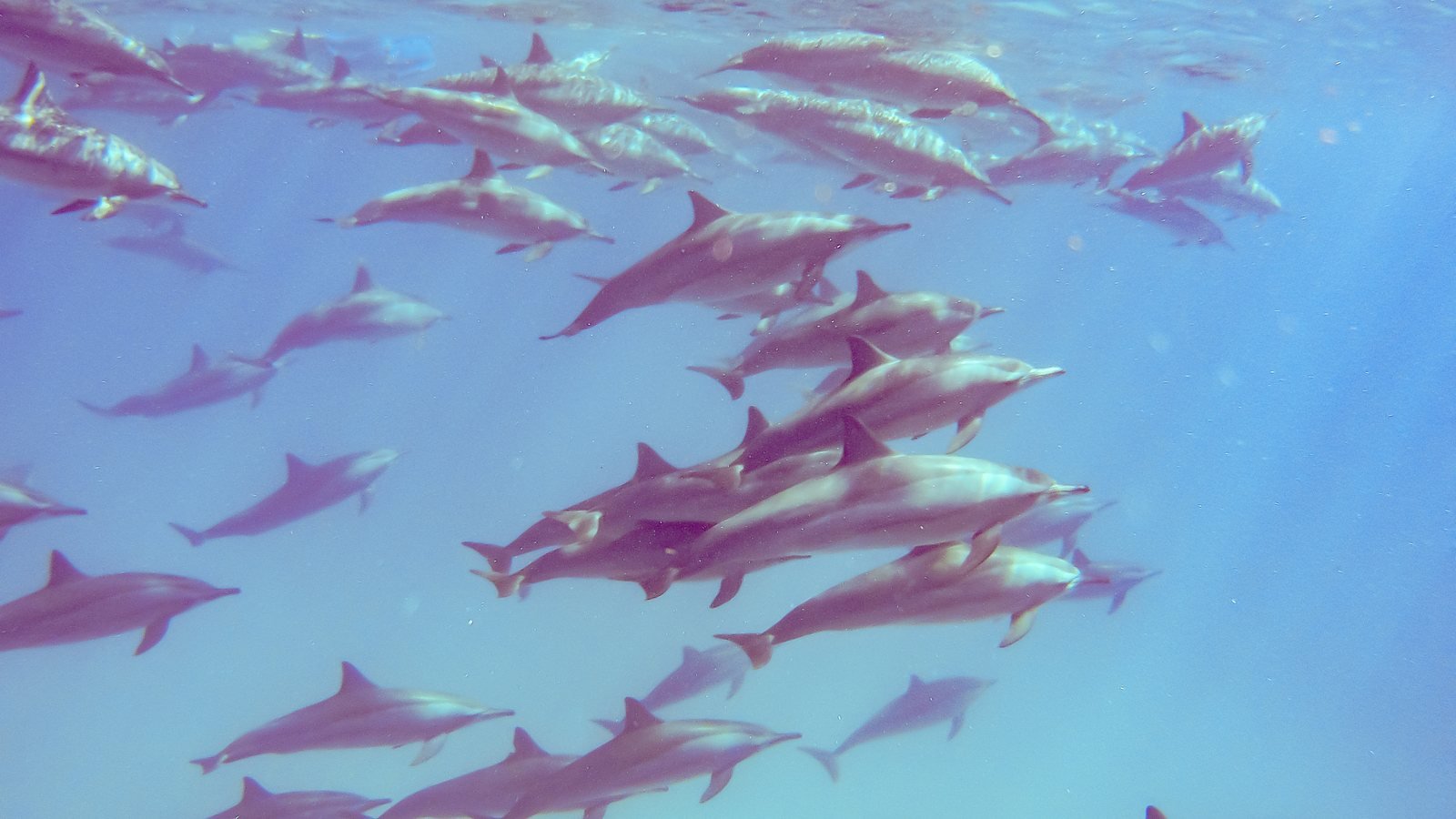
Somewhere between Marsa Alam and Hurghada, the Red Sea holds two completely different versions of the same promise: swimming with dolphins. One happens on a quiet reef seven kilometers offshore, where a resident pod of wild spinner dolphins rests and plays on its own schedule, indifferent to the boats anchored nearby. The other happens in a fenced saltwater pool a short drive from your hotel, with trainers, a show schedule, and a guaranteed photo at the end.
Neither version is a secret, and neither is automatically the right choice. Travelers planning a Red Sea trip tend to search for 'swim with dolphins Hurghada' and 'Dolphin House Egypt' in the same afternoon, often without realizing how different the two actually are. This is a walkthrough of both, told plainly, so the choice is an informed one rather than whatever the first search result happens to push.
Sha'ab Samadai: The Reef Egyptians Call Dolphin House
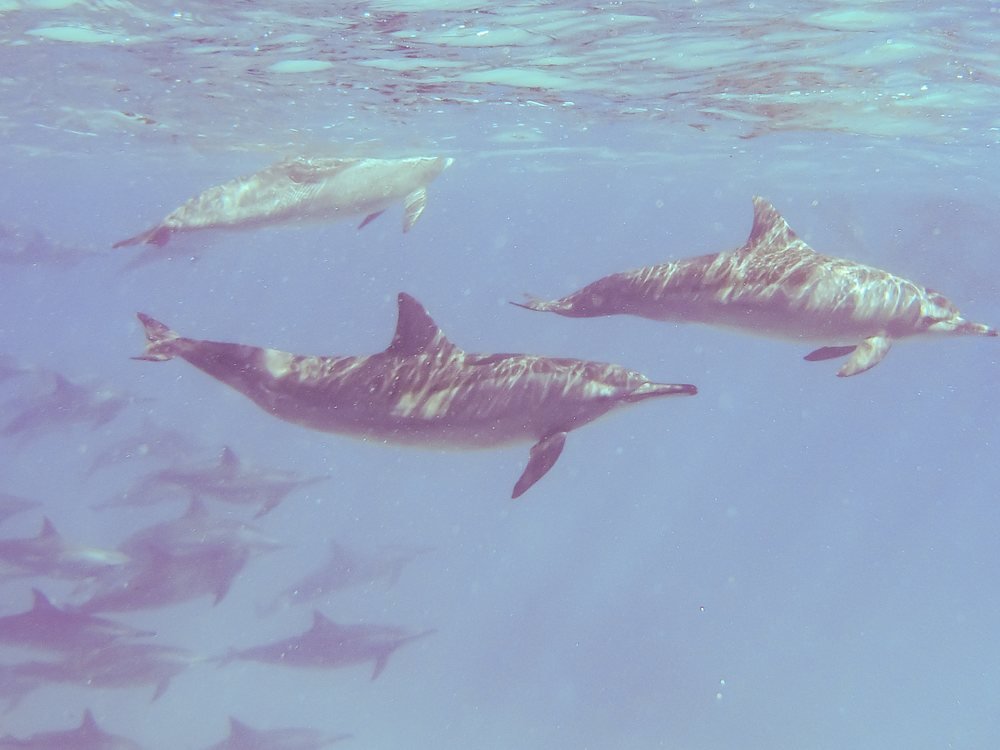
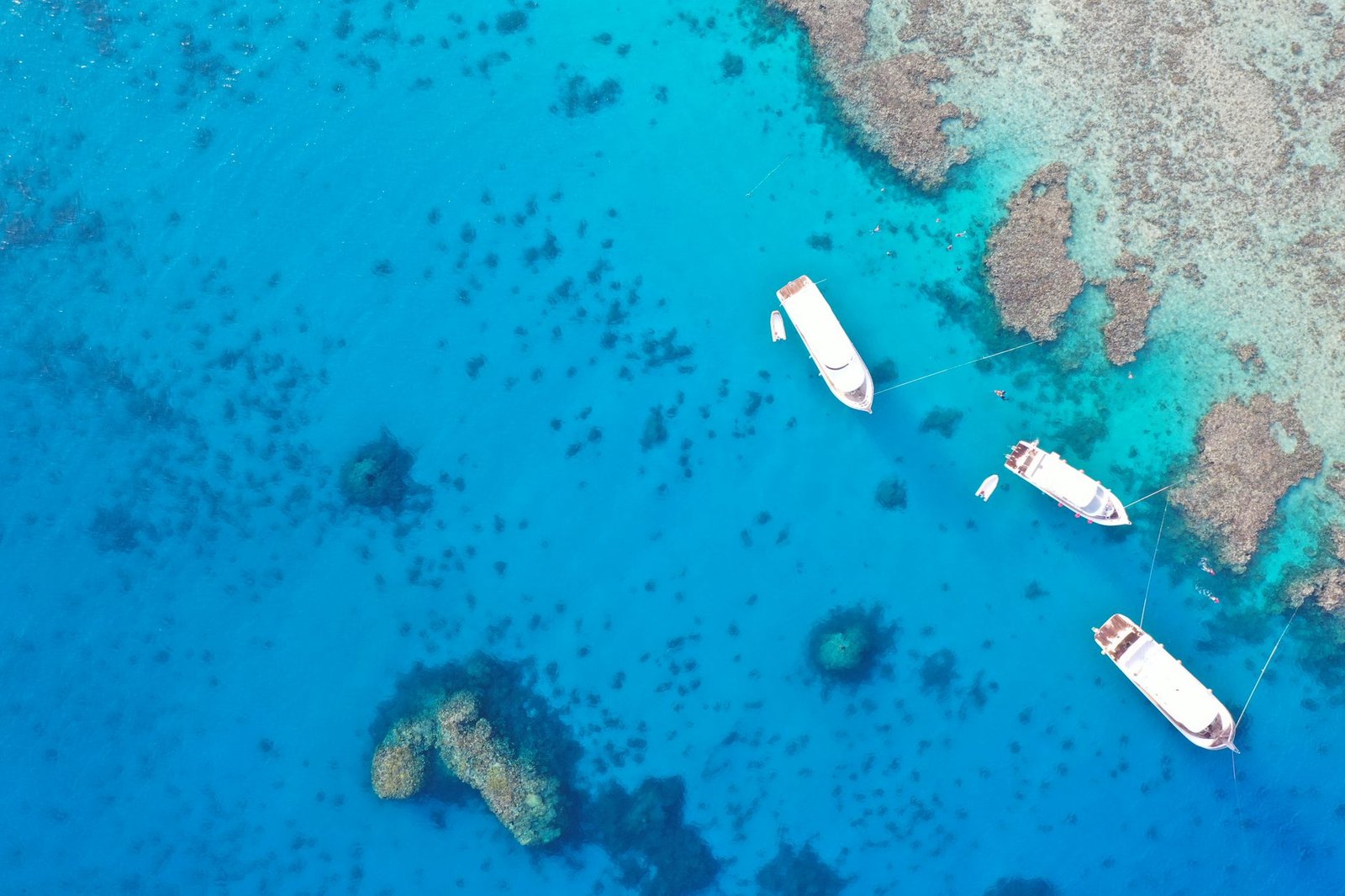
About 45 minutes by boat from Marsa Alam sits Sha'ab Samadai, a horseshoe-shaped reef that locals and tour operators simply call Dolphin House. It has carried that name for decades because of one fact: a pod of spinner dolphins — named for their habit of leaping and spinning along their body axis mid-air — uses the sheltered lagoon as a regular resting and nursing ground, day after day, season after season.
Since 2004, Sha'ab Samadai has been managed as a protected area under Egypt's Red Sea conservation program, and the protection is structured, not symbolic. The reef is split into three zones: an inner no-entry area where dolphins rest undisturbed, a guided-snorkeling-only zone around it, and an outer zone open to free snorkeling and diving. Only licensed operators holding a Dolphin House permit are allowed to bring visitors in, and the number of people in the water at any one time is capped.
What a Wild Encounter Actually Looks Like
The rules at Dolphin House are specific for a reason: no chasing, no touching, no diving down toward a dolphin to get closer, and a life jacket is mandatory for every snorkeler in the dolphin zone — partly for safety, partly to keep swimmers floating calmly on the surface rather than kicking down into the pod's space. Boats are kept out of the inner zones entirely. What this means in practice is that an encounter is never guaranteed and never choreographed. Some mornings the pod glides past at a distance, visible but uninterested; other mornings, a handful of dolphins will circle curiously beneath snorkelers for several minutes before moving on.
That unpredictability is, for many visitors, the entire point. Marine conservationists generally regard this kind of encounter — on the animal's own terms, in its own habitat, with strict limits on contact — as the more ethical and more ecologically sound way to experience wild dolphins, compared to enclosures built for daily performances. It is not a dramatic claim so much as a straightforward one: a wild pod that can simply swim away is a different relationship than an animal that cannot.
Choose Your Dolphin Encounter
Whether it's a boat out to the reef at dawn or an afternoon at a dolphin pool with the kids, these Egypt Sun Travel tours cover both ends of the experience.
Dolphina Park and the Pool Experience in Hurghada and Sharm El Sheikh
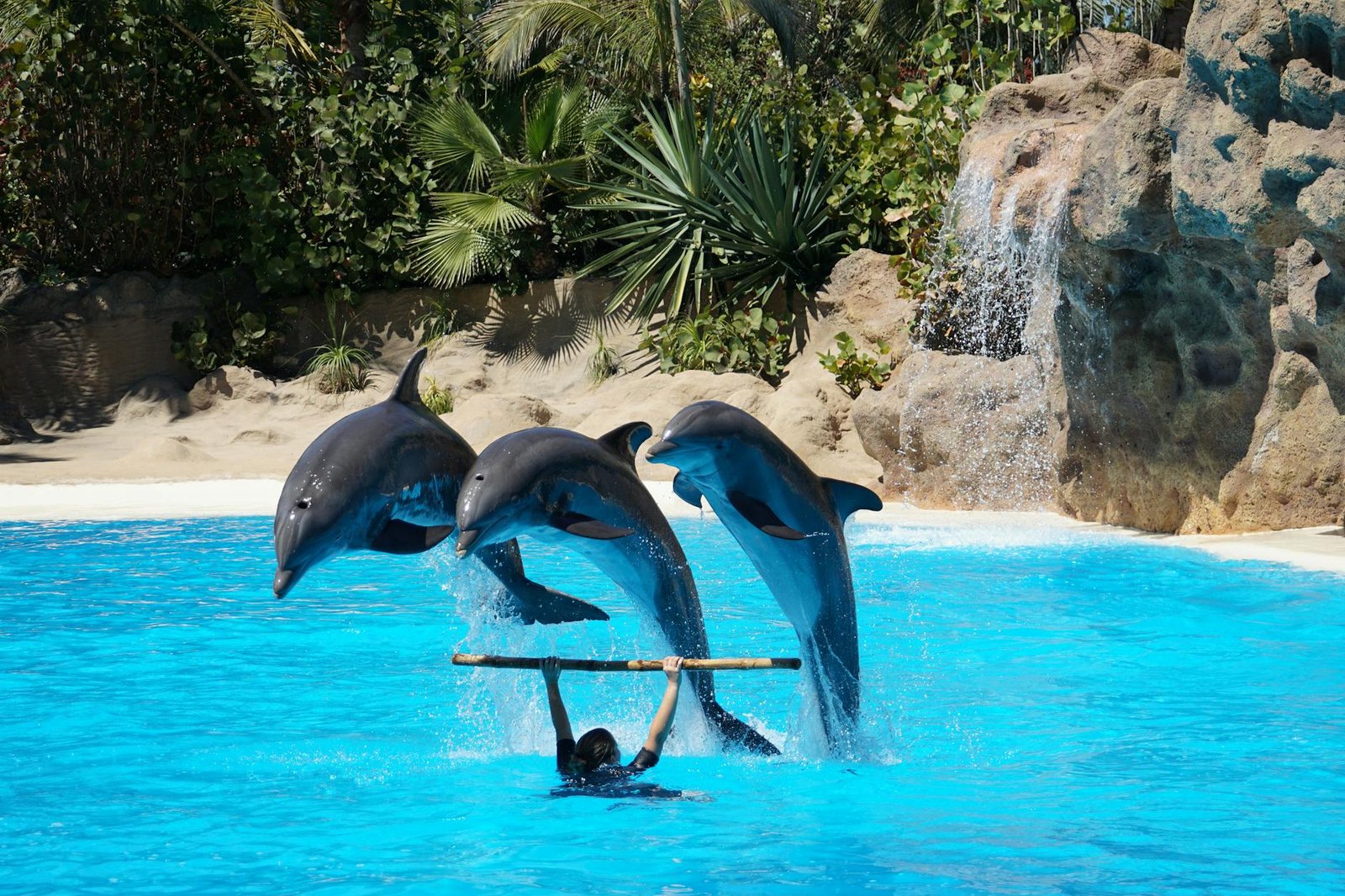
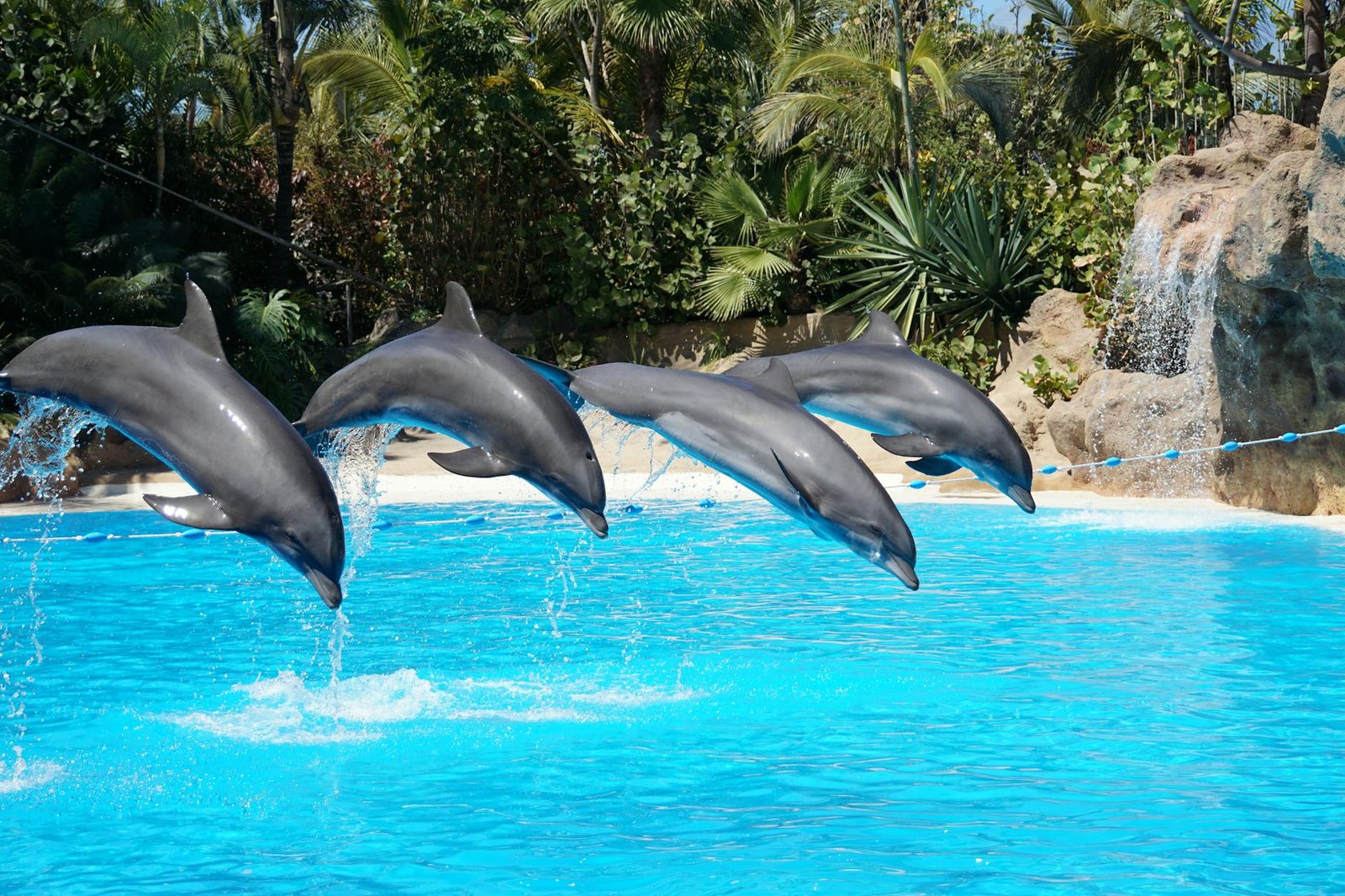
The other option sits at the opposite end of the spectrum, both in setup and in what it promises. Dolphina Park, with locations in both Hurghada and Sharm El Sheikh, runs a roughly hour-long show featuring trained dolphins alongside sea lions and other marine mammals, followed by an optional swim in a dedicated saltwater pool — typically sold in tiers, from a short 15-minute swim to a longer VIP session with a souvenir photo. Trainers are present throughout, the animals are accustomed to people, and unlike a boat trip to an open reef, direct contact — a handshake, a kiss, a supported ride through the water — is part of the package.
For many travelers, especially families with younger children or anyone uneasy about open water and unpredictable wildlife, this is the more practical and more reliably enjoyable option. There is no boat crossing, no weather dependency, and no chance of arriving at a reef to find the dolphins elsewhere. The trade-off, acknowledged plainly rather than argued over, is that these are captive animals living in a constructed environment rather than their natural one — a fact some travelers weigh heavily and others do not weigh at all. Both reactions are reasonable; they simply reflect different priorities.
Choosing Between Them Without the Guilt Trip
There is no single correct answer here, and a travel guide that insists otherwise is usually more interested in making a point than in helping a traveler plan a trip. A wild encounter at Dolphin House rewards patience, calm swimming, and an acceptance that the dolphins might not perform at all that day — it suits divers, snorkelers, and travelers drawn to the idea of seeing an animal entirely on its own terms. A dolphin show and pool swim rewards travelers who want certainty, who are traveling with children too young or too nervous for open-water snorkeling, or who simply want a guaranteed, structured afternoon with a clear beginning and end.
It is also worth knowing that these two experiences live in different parts of the country's coastline — Dolphin House is a Marsa Alam-area boat excursion, while the dolphinariums cluster around Hurghada and Sharm El Sheikh — so the choice is sometimes made by itinerary before it is made by preference. Travelers staying along the Marsa Alam coast will find the reef trip the more natural fit; those based in Hurghada or Sharm, the pool experience.
Two Versions of the Same Red Sea
Egypt's Red Sea coast has always held this kind of contrast well — ancient temples a short drive from beach resorts, desert silence a few kilometers from diving schools, and now, two entirely different ways to spend a morning near dolphins. Neither cancels the other out, and neither needs defending. What matters is knowing, before the boat leaves the dock or the show begins, exactly what kind of encounter is waiting at the other end.