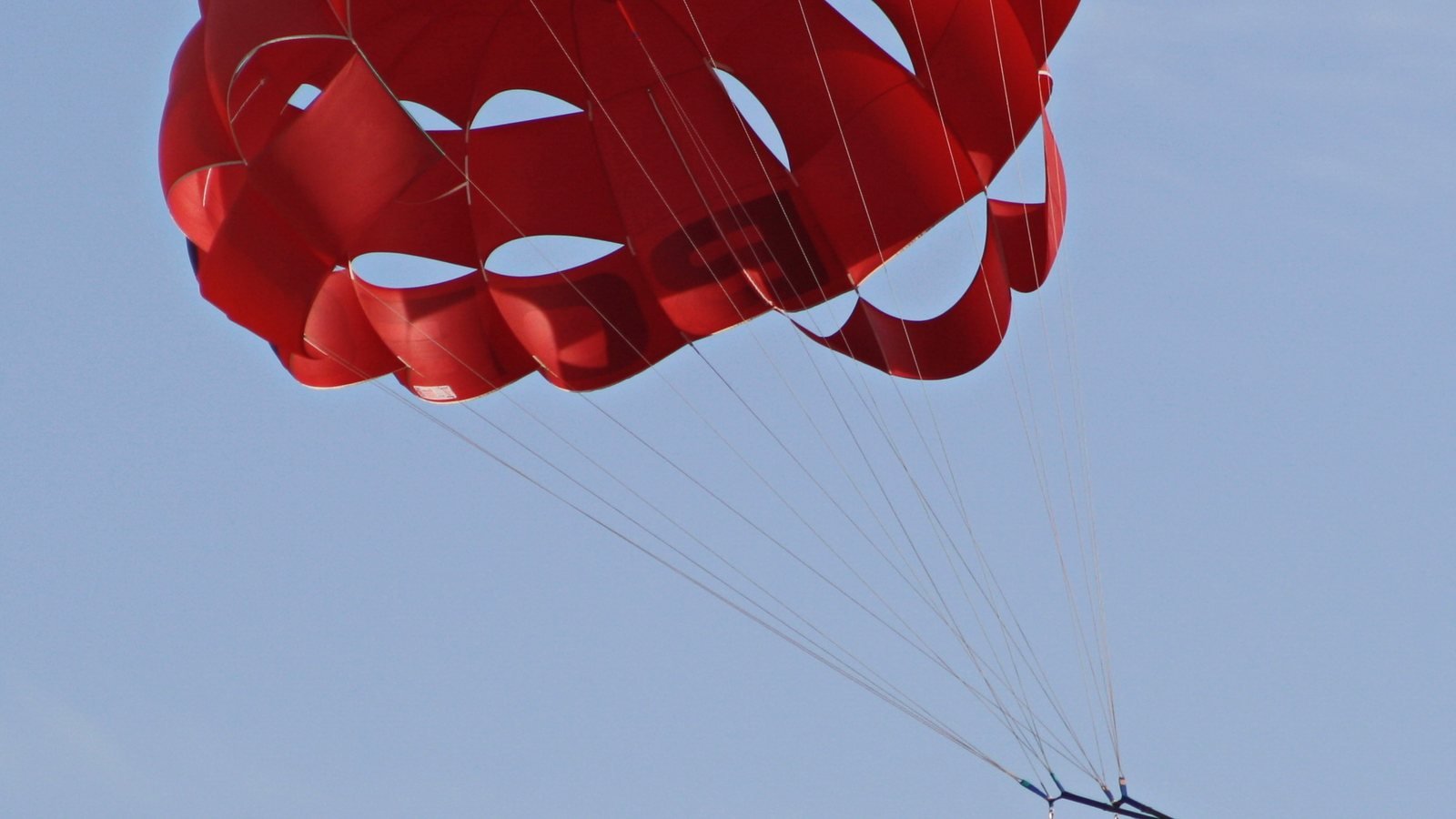
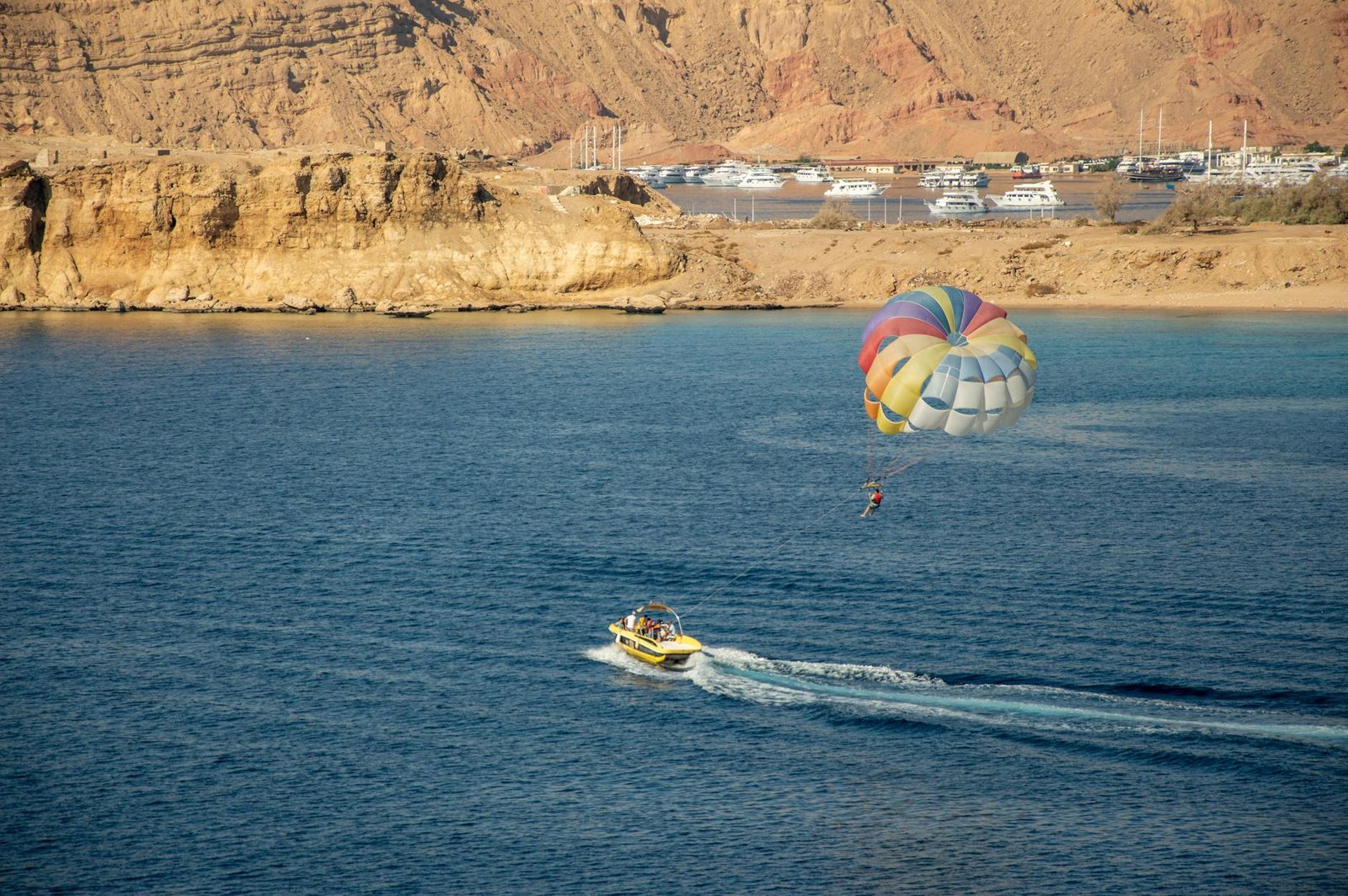
From a beach chair, parasailing in Sharm El Sheikh looks almost too simple: a speedboat pulls away from the shore, a parachute fills with air behind it, and a harnessed rider lifts off the back of the boat without so much as getting their feet wet. What that view from the sand doesn't convey is what the rider actually sees once they're up there — a shift in perspective that turns the familiar turquoise shallows of the Red Sea into something closer to an aerial map, reef patches and sandbanks suddenly visible as shapes rather than just color.
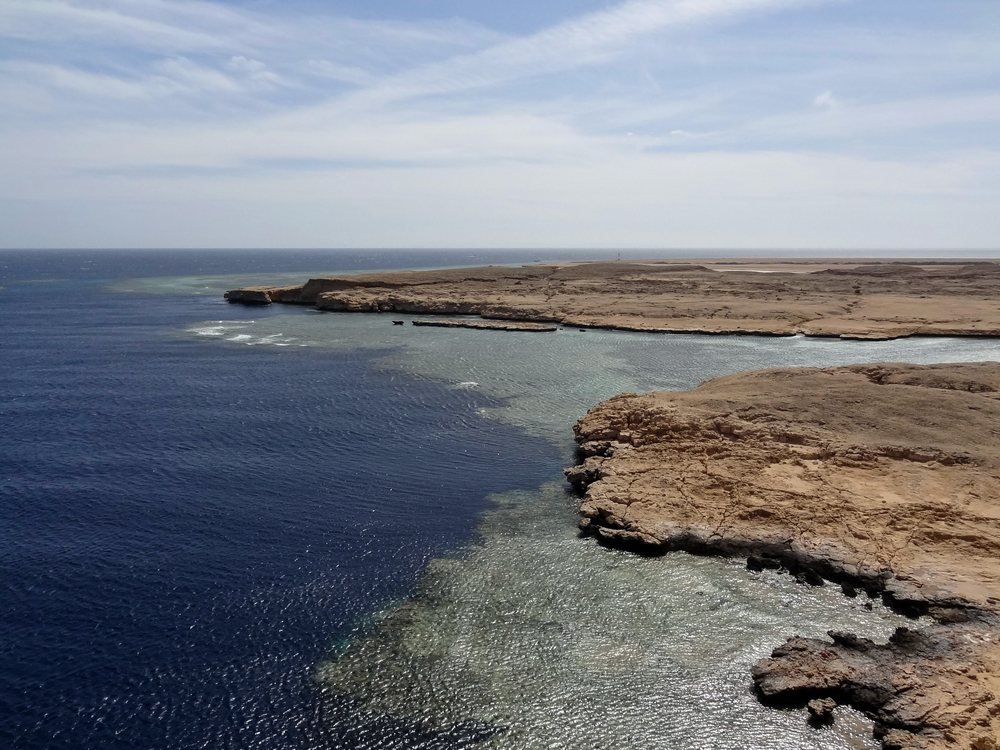
A few kilometers south, a different kind of perspective shift happens below the surface. Ras Mohammed National Park, established in 1983 as Egypt's first protected natural area, sits at the exact point where the Gulf of Aqaba meets the Gulf of Suez — a convergence of currents that helped build some of the most dramatic reef walls in the Red Sea. Between the view from above and the view from the edge of that wall, this stretch of Sinai coastline offers two genuinely different ways of understanding the same sea.
How Parasailing Over the Red Sea Actually Works
The mechanics are more straightforward than most first-timers expect. A rider (or two, since tandem flights are common) is clipped into a harness connected to a parachute-style canopy, which is itself attached by a tow line to a speedboat. As the boat picks up speed, wind resistance fills the canopy and lifts the harness — and the people in it — directly off a launch platform at the back of the boat, no running start and no water landing required for most operators along this coast. Flights over the Red Sea near Sharm El Sheikh typically reach around 50 meters above the surface, with some operators offering higher routes, and the airborne portion generally lasts somewhere between five and ten minutes depending on the package and the wind conditions that day.
What surprises most people isn't the height so much as the quiet. Once the canopy is fully open and the boat is cruising at a steady pace, the ride smooths out into something closer to gliding than flying — a far gentler sensation than the initial launch suggests. From up there, the water's color banding becomes genuinely legible: the pale shallows near shore, the darker blue-green where reef structures sit closer to the surface, and the deep indigo where the seabed drops away. Life jackets and harness checks are standard before every flight, and operators generally cap combined rider weight for tandem flights, so a short safety briefing is part of the experience rather than an afterthought.
Egypt's First National Park, and Why It Still Matters
Ras Mohammed earned its status as Egypt's first national park in 1983, protecting a headland where two gulfs, two reef systems, and two very different underwater landscapes meet. The park's most famous feature is its wall diving — reef faces that begin just below the surface and plunge to depths exceeding 800 meters in places, a drop steep enough that divers and snorkelers alike describe the sensation as swimming along the edge of a cliff rather than over a reef. That vertical terrain, combined with nutrient-rich currents moving through the strait, has made the area one of the most biodiverse marine habitats in the Red Sea.
Inland from the coral, the park also protects a mangrove channel — a tidal waterway lined with one of the few mangrove stands left on this part of the Sinai coast, home to herons, kingfishers, and juvenile fish that use the roots as a nursery before heading out to open water. It's a quieter, less photographed corner of the park, but it rounds out what Ras Mohammed actually is: not just a reef, but a working coastal ecosystem that happens to include some of the best diving in Egypt.
See It From Both Sides
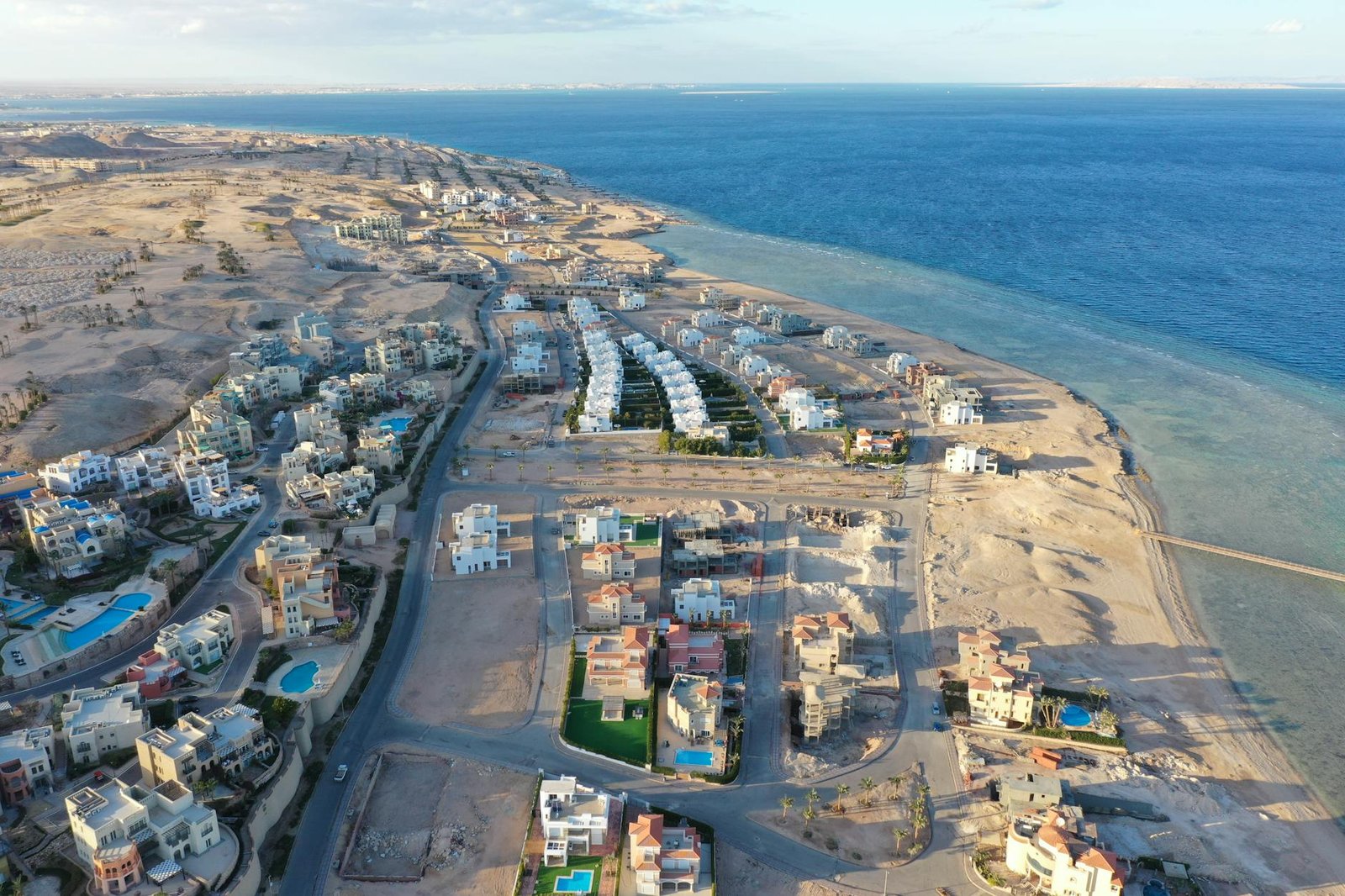
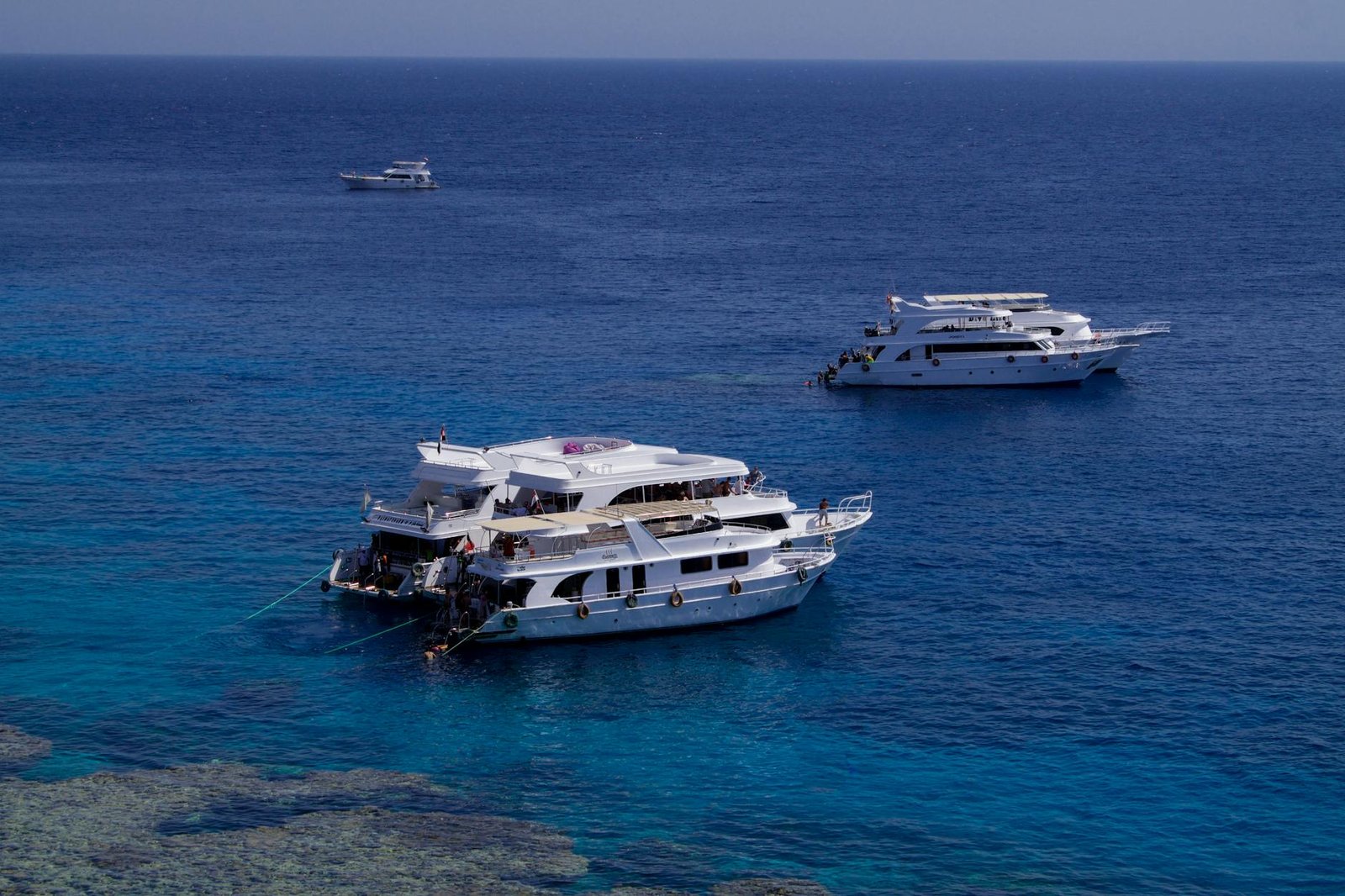
One ride puts you fifty meters above the water, harnessed to a parachute with the whole coastline spread out beneath you. The other puts a boat between you and Egypt's first national park, where the reef wall falls away into the deep blue. These Egypt Sun Travel excursions cover both.
Shark Reef, Yolanda Reef, and the Cargo That Never Made It Home
The park's two best-known dive sites, Shark Reef and Yolanda Reef, sit almost side by side off its southern tip, separated by a sandy saddle known locally as the "Yolanda Plateau." Shark Reef drops in a sheer wall thick with gorgonian fans and schools of barracuda and jack, while Yolanda Reef takes its name from a cargo ship that sank nearby in 1980 — and scattered across the sandy slope below it are the remnants of its cargo: toilets, bathtubs, and sinks that have settled into the seabed and slowly become their own strange, man-made reef feature, now colonized by coral and reef fish.
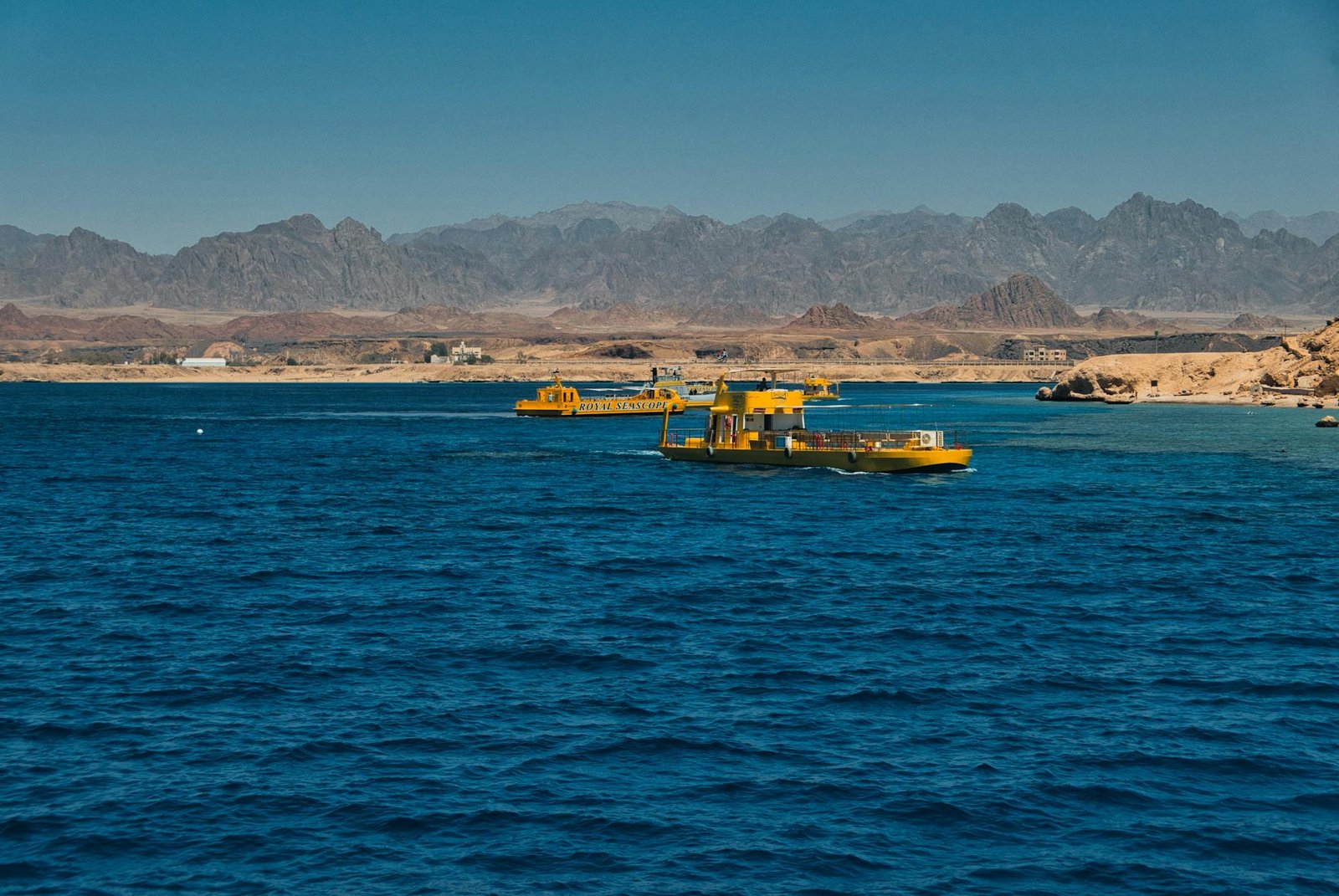
It's an odd detail to find so far from any port, but it captures something true about Ras Mohammed: a place this ecologically significant is also full of small, almost absurd human footnotes, sitting quietly on the seafloor a few meters from some of the healthiest coral in the region. Boat trips into the park typically combine time over both reefs with a stop in calmer, shallower water suited to snorkelers who aren't diving.
Planning the Day: Timing, Weather, and What to Bring
Morning departures work best for both activities. Winds tend to pick up through the afternoon along this stretch of coast, and calmer water in the morning means a smoother parasailing launch and better visibility for anyone snorkeling or diving at Ras Mohammed. Most parasailing operators run year-round, since the Sinai's water sports season rarely pauses for weather, though booking a morning slot is still the more reliable choice. A reef-safe sunscreen, a hat, and a change of clothes cover most of what the day requires — wetsuits and snorkel gear are generally provided by boat operators heading into the park.
Because Ras Mohammed is a protected marine park, entry is regulated and typically arranged through a licensed boat excursion rather than independent access, which also means a guide on board who can point out what you're looking at — useful for a reef as layered in history and ecology as this one. Pairing both activities into a single day is common among visitors based in Sharm El Sheikh, since the parasailing launch points and the boat departures for Ras Mohammed sit within a short drive of each other.
Two Views of the Same Coastline
Egypt's coast rarely asks visitors to choose between history and nature — the temples and the reefs tend to sit a short flight apart rather than competing for the same afternoon. This particular stretch of Sinai is no exception, except that here the contrast plays out within a single day: fifty meters above the water in a parasail harness, then a boat ride later, hovering at the edge of a wall that drops sixteen times that deep. Few places pack that much vertical range, in both directions, into one coastline.