Most of what travelers come to Egypt to see predates the modern era by thousands of years. Alexandria holds a much more recent royal story, barely a century old, and far less visited: the final chapter of the Muhammad Ali dynasty, the family that ruled Egypt from 1805 until the 1952 revolution, told through a palace they built for their summers and a collection of jewels that outlasted their rule.
Neither site draws the crowds of the pyramids or Karnak, which is precisely what makes a visit feel less like a tourist stop and more like stumbling into a private chapter of history that Egypt itself seems almost to have forgotten to advertise.
A Palace Built in Royal Pieces
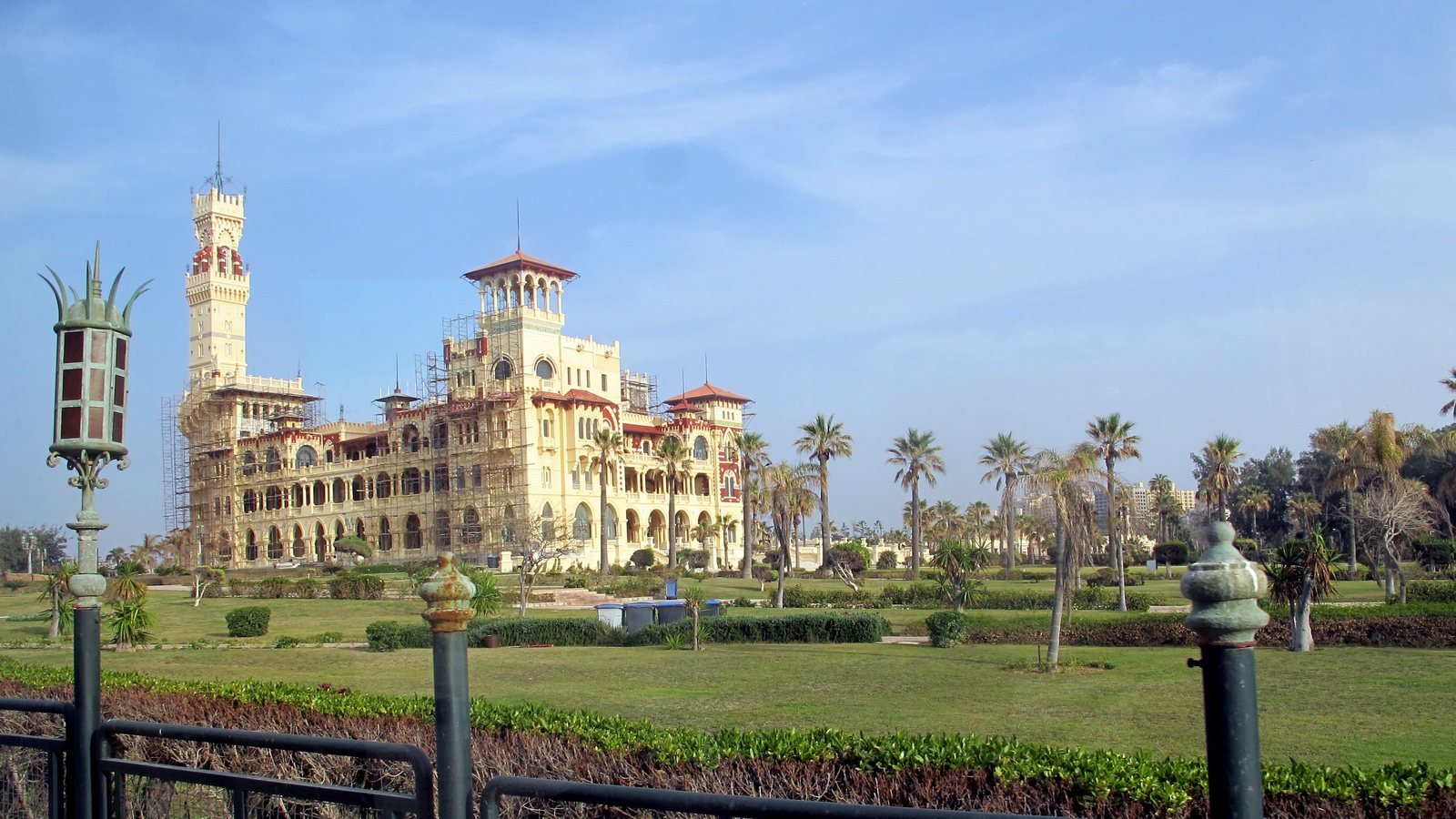
Montaza Palace was not built all at once, and it shows. The story starts in 1892, when Khedive Abbas II built a modest hunting lodge on the site. The palace that gives Montaza its grandeur today, the Al-Haramlik Palace with its Ottoman and Florentine-influenced towers, was added forty years later by King Fuad I as a summer residence, and it was his son, King Farouk, the last reigning monarch of Egypt, who used Montaza most of all — for relaxation, for entertaining, and eventually, as the 1952 revolution closed in, as a retreat from a throne that was no longer secure.
The palace stopped being royal property the year Farouk abdicated. By 1975, it had been opened to the public, its gardens and private beaches turned over to the same Egyptians who had once watched the monarchy from the outside.
The Gardens the Royal Family Actually Used
What makes Montaza worth the visit today has as much to do with its grounds as its architecture. The palace sits above a private cove on the Mediterranean, surrounded by roughly 150 acres of landscaped gardens planted with palm groves, pine trees, and flowering paths that were designed for the royal family's own daily use rather than for show — a working summer residence rather than a formal state building.
Walking those same paths today, past the towers and the sea view that drew Farouk here in the first place, gives a far more intimate sense of the last king's daily life than any single artifact could.
Step Into the Royal Era
The crown jewels and the palace grounds that once belonged to Egypt's royal family are both still standing in Alexandria. This Egypt Sun Travel tour takes you through both in a single afternoon.
The Jewels That Outlasted the Throne
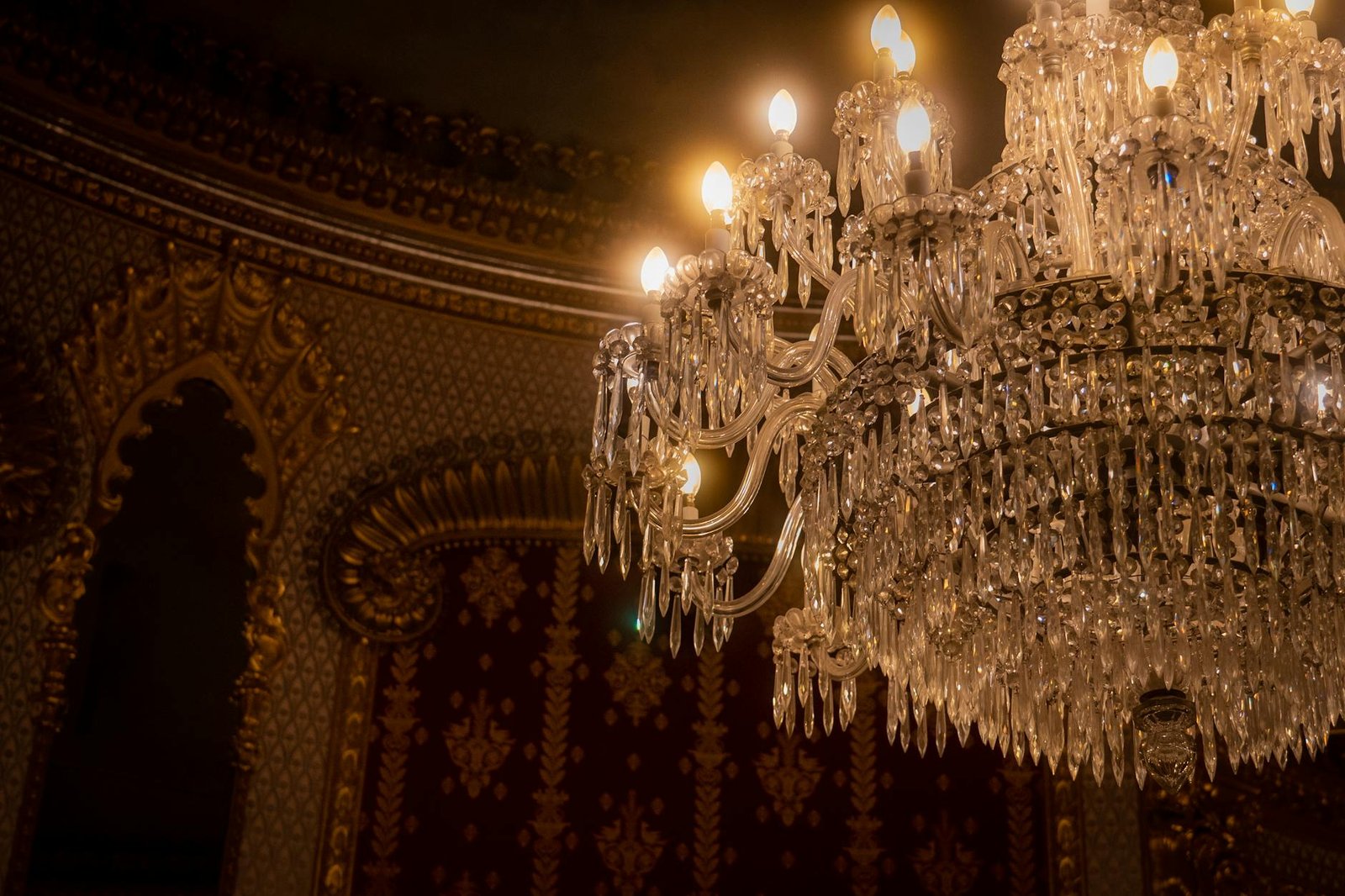
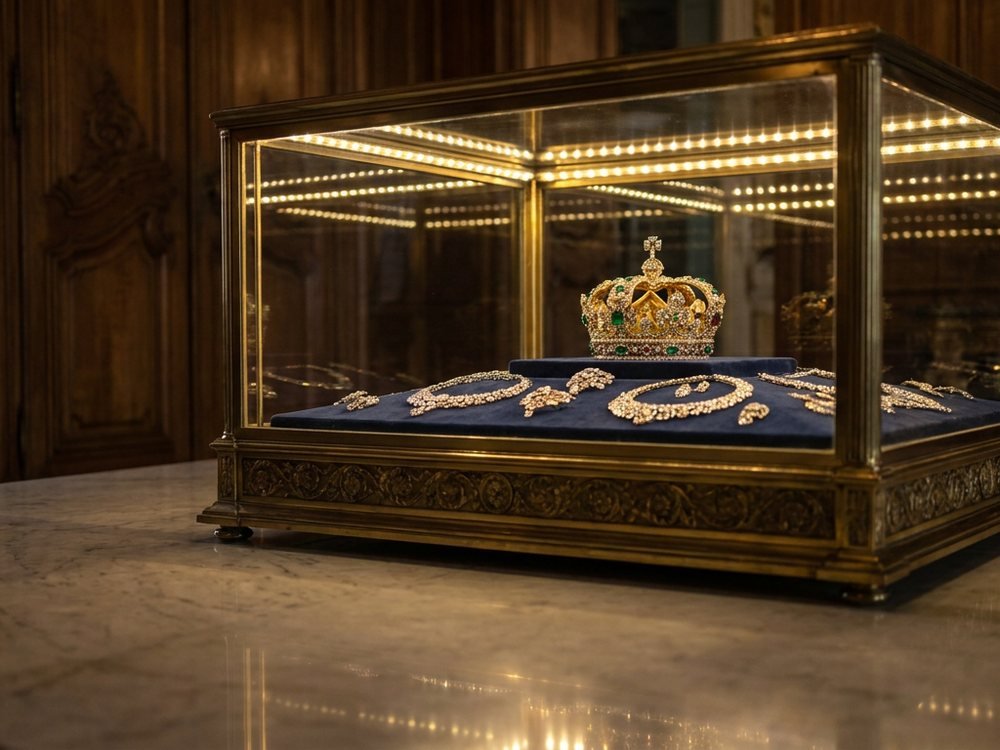
A short drive away, in Alexandria's Zizenia district, the Royal Jewelry Museum holds what the family left behind. The building itself has its own royal pedigree: it was once the private palace of Princess Fatma al-Zahra, one of King Farouk's sisters, before being converted into a museum in 1986. Its halls now display the accumulated jewelry of the Muhammad Ali dynasty across nearly a century and a half of rule — diamond-encrusted collars, platinum necklaces, jewel-studded ceremonial weapons, and ornate timepieces, alongside personal items that belonged to specific, named members of the family rather than an anonymous royal "collection."
The single piece every visitor comes to see is Farouk's own coronation crown, gold and heavy with gemstones, made for the moment in 1937 when a 17-year-old king formally took the throne his father had died leaving him. Seeing it in person, under museum glass in the city where the dynasty spent its final years, lands differently than seeing a photograph of it in a history book.
A Dynasty Most Visitors Never Learn About
The Muhammad Ali dynasty rarely features in the version of Egyptian history most travelers arrive already knowing, which tends to stop at the pharaohs and pick back up at the Suez Canal or the 1952 revolution. In between sits over a century of a royal family that modernized Alexandria's waterfront, built palaces across the city, and ruled through the final stretch of Egypt's long relationship with European colonial powers before being swept away almost overnight.
Montaza and the Royal Jewelry Museum are, between them, the most complete and tangible way to meet that family directly — not as a paragraph in a textbook, but as a palace they actually lived in and jewelry they actually wore.
The Egypt That Came After the Pharaohs
It is easy to think of Egyptian history as ending somewhere around Cleopatra and picking up again only with the modern state. Alexandria's royal sites are a reminder that the story kept going, through an entirely different dynasty, in palaces and jewel cases that are far younger than the pyramids but no less genuinely Egyptian — and considerably less crowded.