There is a particular kind of disappointment that follows a family to the Red Sea coast: the water is unmistakably, famously beautiful, and someone in the group simply isn't going in it. A grandparent who never learned to swim, a toddler too young for a snorkel mask, a traveler who gets seasick at the thought of fins and a mouthpiece — for years, the practical answer was to sit on the beach and look at a postcard instead.
That answer has quietly gone out of date. Hurghada and the wider Red Sea coast now offer at least three genuinely good ways to see coral, fish, sharks, and rays up close without swimming a single stroke: semi-submarine boats, glass-bottom boats, and a purpose-built aquarium that brings the reef to you. Each works a little differently, and knowing the difference matters more than the brochures usually explain.
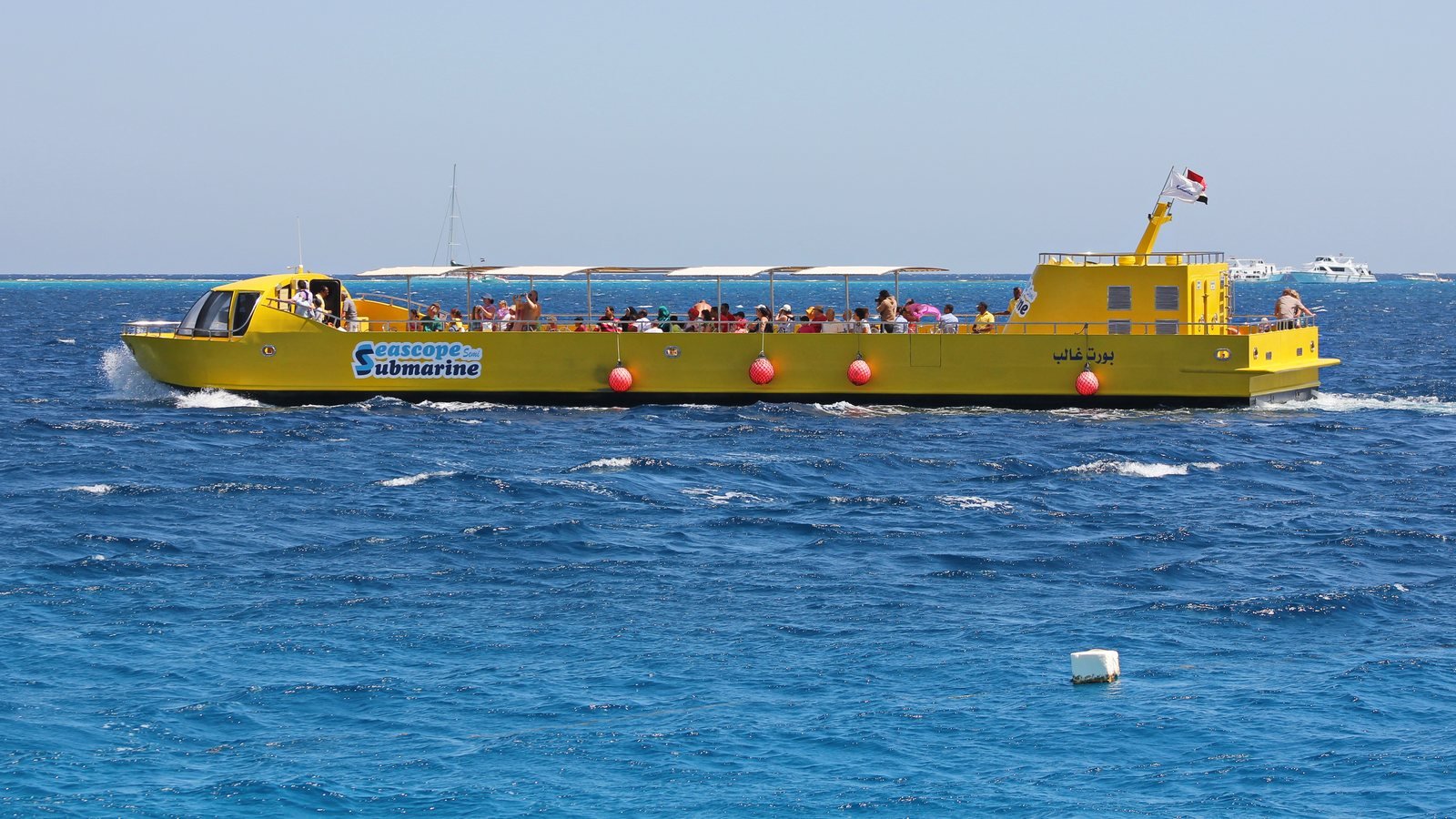
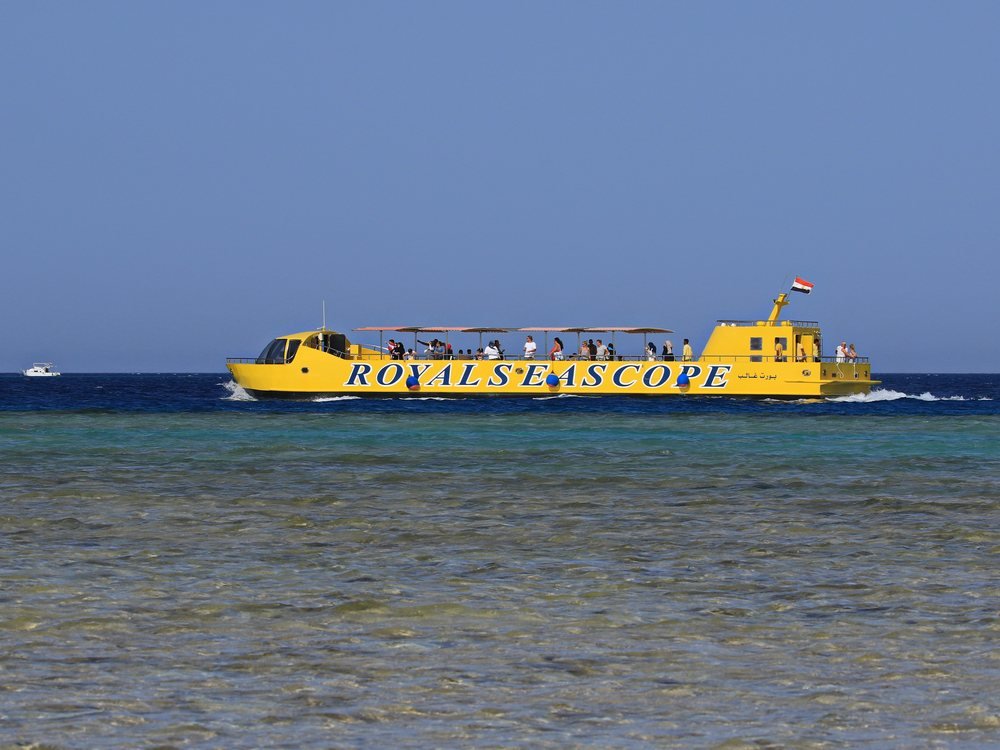
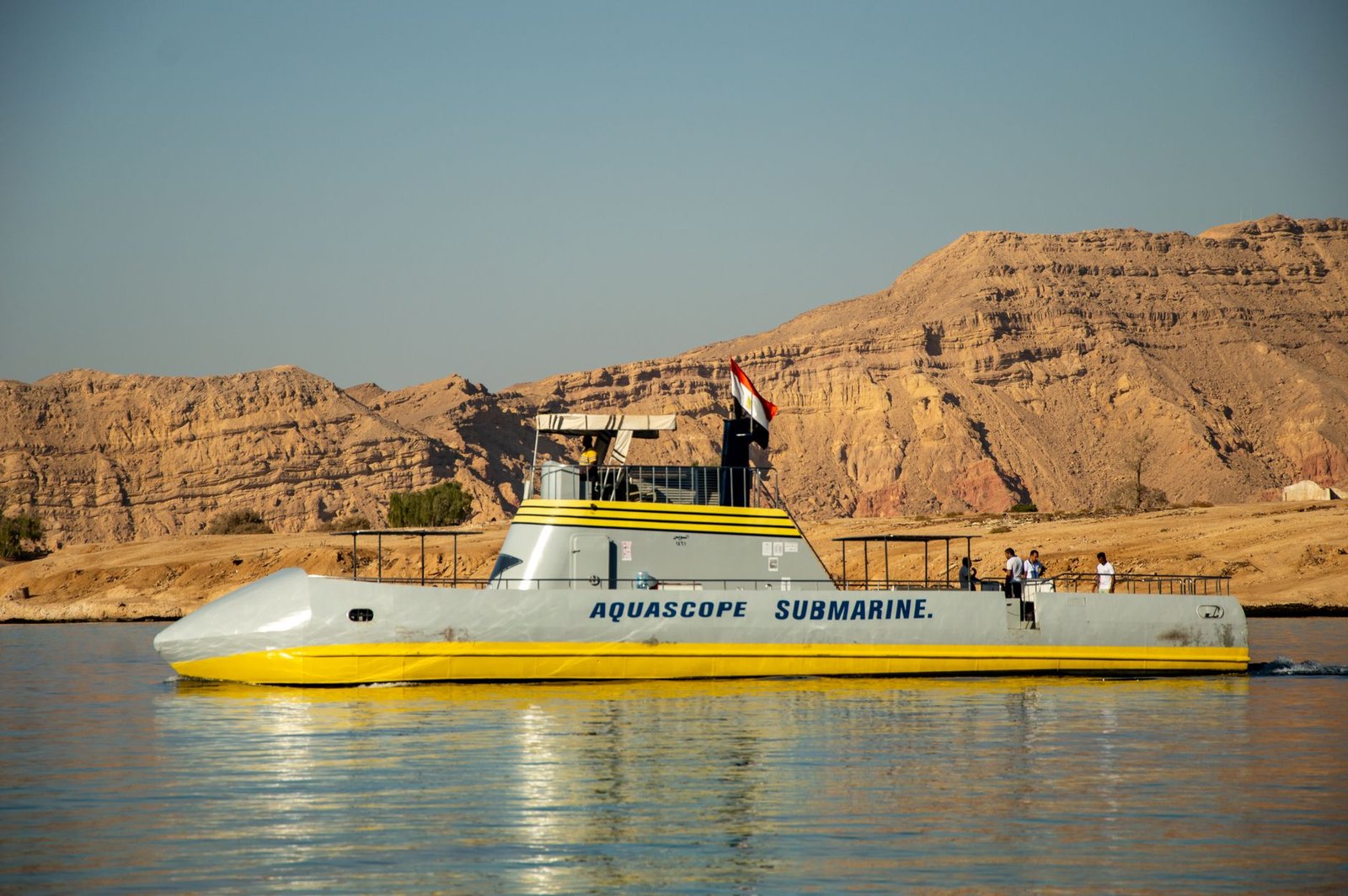
Semi-Submarine Boats: An Underwater Room That Floats
A semi-submarine looks almost ordinary from the dock — a wide, sturdy vessel with a shaded upper deck for the breeze and the view of the coastline. The difference is underneath: built into the hull is a sealed, air-conditioned cabin that sits roughly three to five meters below the surface, lined on both sides with large viewing windows. The boat never actually submerges. It simply carries that lower room through the water above the reef, which is exactly what makes it workable for people who would never set foot on an actual dive boat.
The routine is almost absurdly simple: board at the marina, cruise out ten to twenty minutes to a reef site, then head downstairs into the glassed-in cabin for the viewing stretch, usually around 45 minutes to an hour, while a guide narrates what's passing the windows — parrotfish, clownfish, sometimes a ray gliding along the sand. Nobody gets wet, nobody needs to be able to swim, and seasickness is rarely an issue once you're below deck, since the lower cabin sits more stable in the water than the open top deck does.
Glass-Bottom Boats: The Simpler, Older Cousin
It's easy to confuse a glass-bottom boat with a semi-submarine, and tour listings don't always help by using the terms loosely. The real distinction is straightforward: a glass-bottom boat has no separate underwater cabin. Instead, large glass panels are built directly into the floor of the hull, and passengers stay on the main deck, in open air, looking down through the keel at the reef passing beneath them.
That makes it a shallower, more surface-level experience in every sense — you're not actually below the waterline, just looking through it — but it also tends to be shorter, cheaper, and more flexible, often paired with a stop for anyone in the group who does want to snorkel while everyone else stays dry on board. For families where only some members want to get in the water, a glass-bottom boat trip solves that split far more easily than a semi-submarine, which is built entirely around staying out of the water altogether.
See It Without Getting Wet
None of these require a swimming lesson, a wetsuit, or stepping off a boat. These Egypt Sun Travel experiences put the Red Sea's reef right in front of you, dry seat included.
The Grand Aquarium: The Reef, Reorganized for Walking Visitors
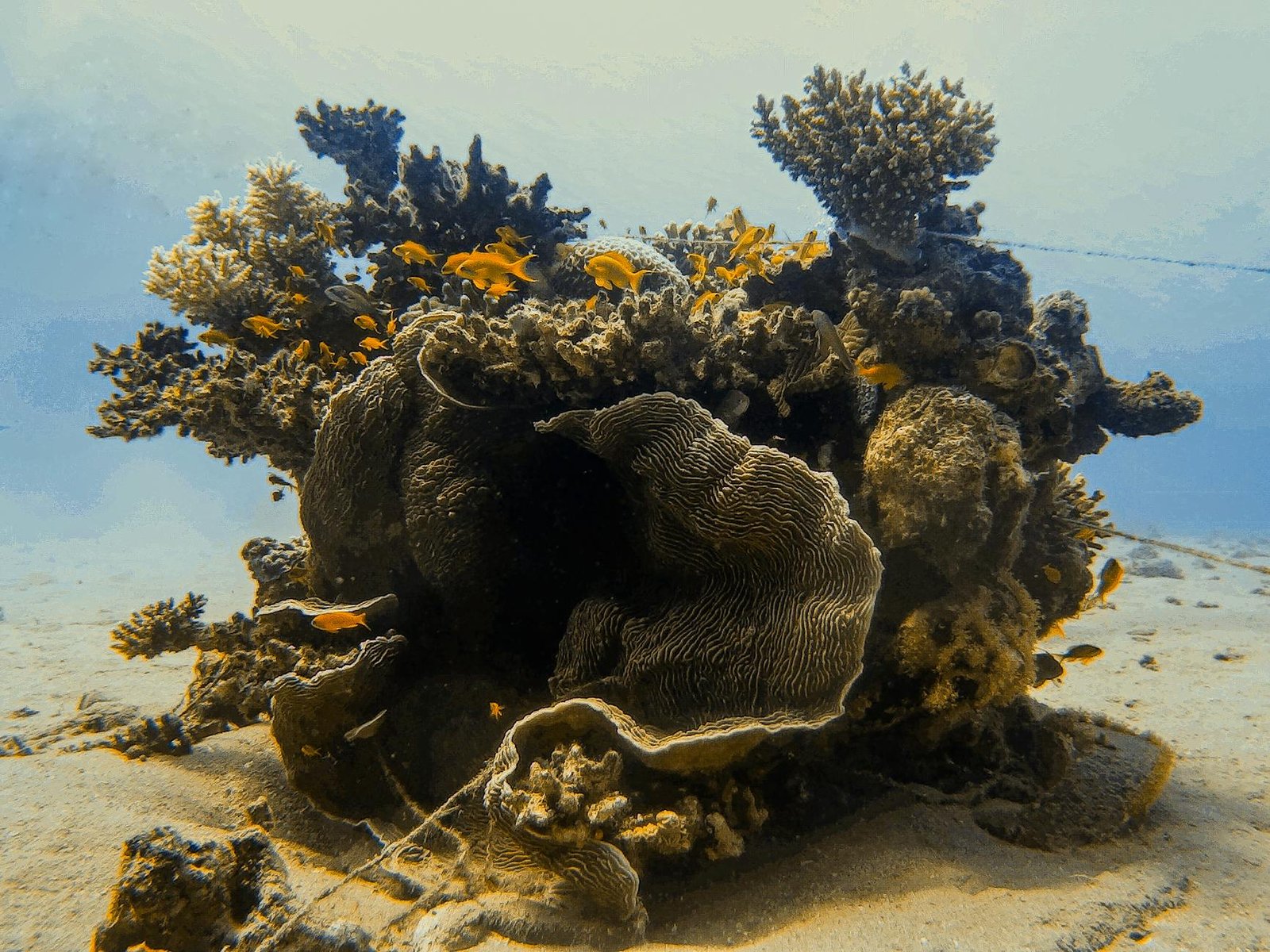
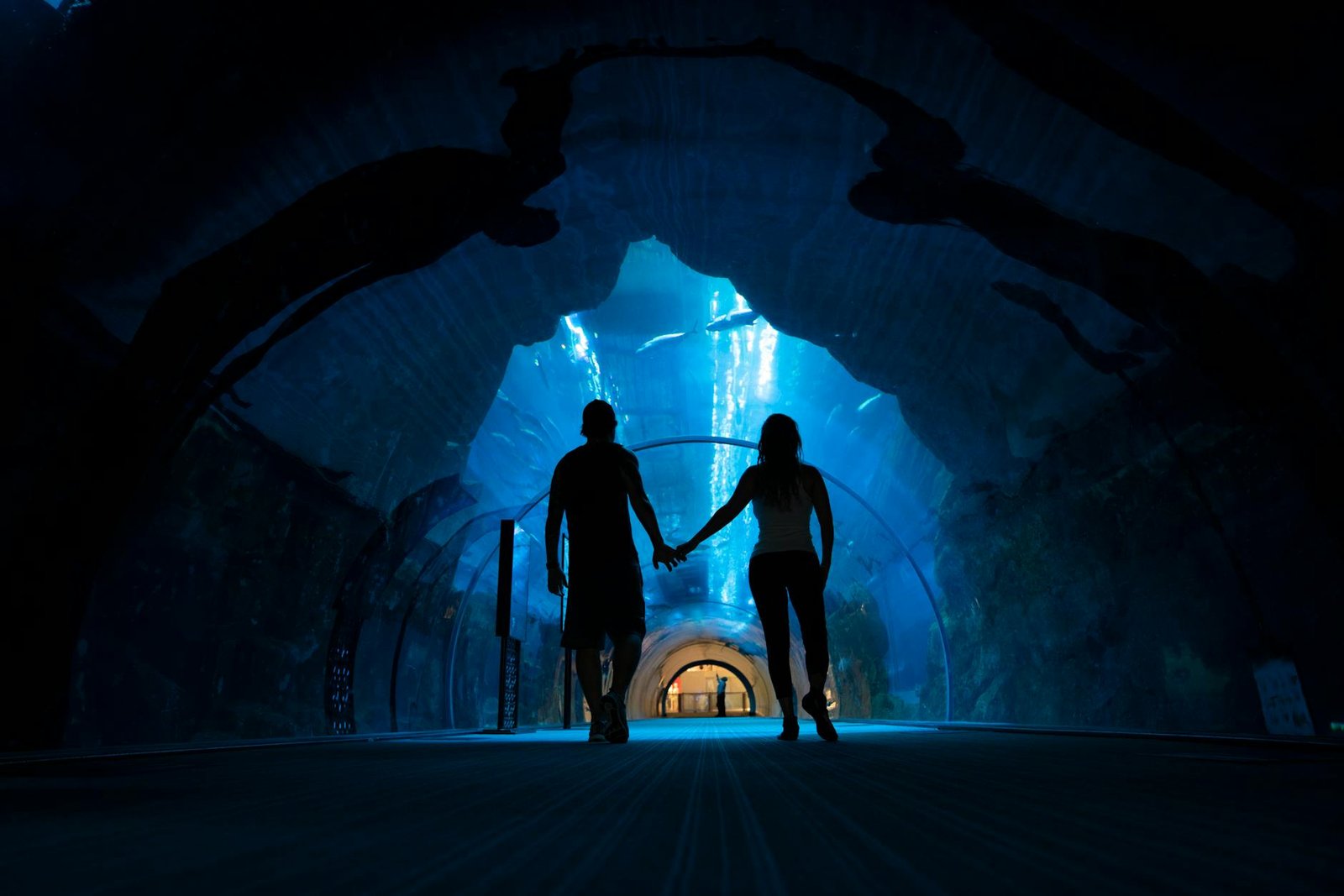
Hurghada's Grand Aquarium takes a completely different approach: instead of taking visitors out to the reef, it brings a curated version of the Red Sea's marine world onto dry land, arranged into themed galleries that walk visitors past tanks holding Red Sea species alongside other marine environments. The centerpiece for most visitors is a long walk-through tunnel, its curved glass surrounding you on both sides and overhead, with sharks, rays, and schooling fish moving past at close range — close enough that the scale of a reef shark registers in a way a reef dive rarely allows, since there's no current, no depth, and no mask fogging up to manage.
For small children in particular, this tends to be the easiest of the three options: no boat, no motion, no marina transfer, just a walk at their own pace with places to stop, ask questions, and watch a shark feeding demonstration if the timing lines up. It won't replace the open sea for anyone chasing the specific thrill of a live reef, but it reliably delivers the one thing a rough boat day can't guarantee — a calm, dry, unhurried look at what the Red Sea is actually known for.
Choosing Between Them
If everyone in the group is a confident swimmer except one or two people, a glass-bottom boat trip tends to work best, since it keeps the group together while giving non-swimmers their own view. If the whole group wants a calm, guided, fully dry experience with real depth and a longer look at the reef, the semi-submarine is built exactly for that. And if a toddler, an elderly relative, or simply bad weather makes any boat trip impractical that day, the Grand Aquarium is the fallback that still delivers on the promise of seeing the Red Sea's marine life properly, rain, wind, or waves notwithstanding.
None of these are consolation prizes. They're simply different instruments pointed at the same thing — a reef system that happens to be one of the most photographed and talked-about in the world — and each one answers a slightly different version of the same question: how do I see this without getting in?
Part of a Bigger Coastline
The Red Sea coast has always asked a little more of travelers than the rest of Egypt's classic itinerary — it rewards people willing to get in the water, which quietly excludes a lot of genuinely interested visitors. What semi-submarines, glass-bottom boats, and the Grand Aquarium add up to is a coastline that no longer makes that demand. A grandparent, a four-year-old, and a seasoned diver can spend the same afternoon near Hurghada and each come away having actually seen the reef, just through a different window.